It is wrong to put the blame of cult killing in Ekpoma on the authority of Ambrose Alli University. Last week cult killing did not happened in the compound of the university in Ekpoma. Today, there are several related cults killing in Benin City and other places in Nigeria. Do we blame universities authority for cult related killings outside the school? I want to correct the erroneous impression that FIVE persons, including graduating students and ex-students of Ambrose Alli University, Ekpoma, Edo State, were reportedly murdered in cold blood in A Bar Near A Private Hostel in the university town and not the school last week. A bar near a private hostel is not Ambrose Alli University and we should stop blaming the university authority for an issue that happened in Ekpoma. The youths were said to be having a party in Ekpoma and not inside the university when a fracas that culminated in the shooting and killing of the victims broke out. One of the parties to the misunderstanding had reportedly escaped from the scene of the mayhem with a bruised ego only to allegedly return with fully armed friends to execute the dastardly act. There is rarely no academic session without reported incidents of cult related violent clashes in most schools in country, which usually result in the loss of lives of promising youths. Cultism in Nigeria could be traced to pre-colonization when a group of people with the main aim of seeking protection from their ancestors conducted rituals. Secret cults have always existed in many parts of the country, with the Ogboni secret cult notable among the Yorubas, the Ekpe secret cult among the Efiks, Ekine cult in the Delta region and Owegbe cult among the Edos.
Today, almost all tertiary institutions across the country has confraternities otherwise known as secret cults, some of which include Supreme Eiye Confraternity, also referred to as Air Lords. Cultism in Nigeria has no doubt taken a new trend as it has relocated from tertiary institutions’ campuses where it hitherto holds sway to the streets in various communities across the country. In Edo State, particularly in Benin-City, the rate at which teenage youths are initiated (blend) into cult groups is alarming, and this has become a major cause of concern to the state government and the law enforcement agents, especially the Nigerian Police, which oftentimes close in and try to stop them during initiations at the odd hours of the night.
The Edo State police command has declared that the killings were cult-related but the university authorities claimed they had nothing to do with cultism. The university’s position is understandable because it does not want to be associated with cultism but the police are best suited to determine the nature of a crime as well as the motive based on their investigation.
In Ekpoma, the host community of Ambrose Ali University (AAU), it is difficult to tell who is a cultist. The town has become a tapestry of cultism, as membership of a cult group is no longer a special privilege enjoyed by students of the university. Locals, including farmers, commercial cyclists, mechanics, electricians and other artisans/technicians are members of one cult group or another.
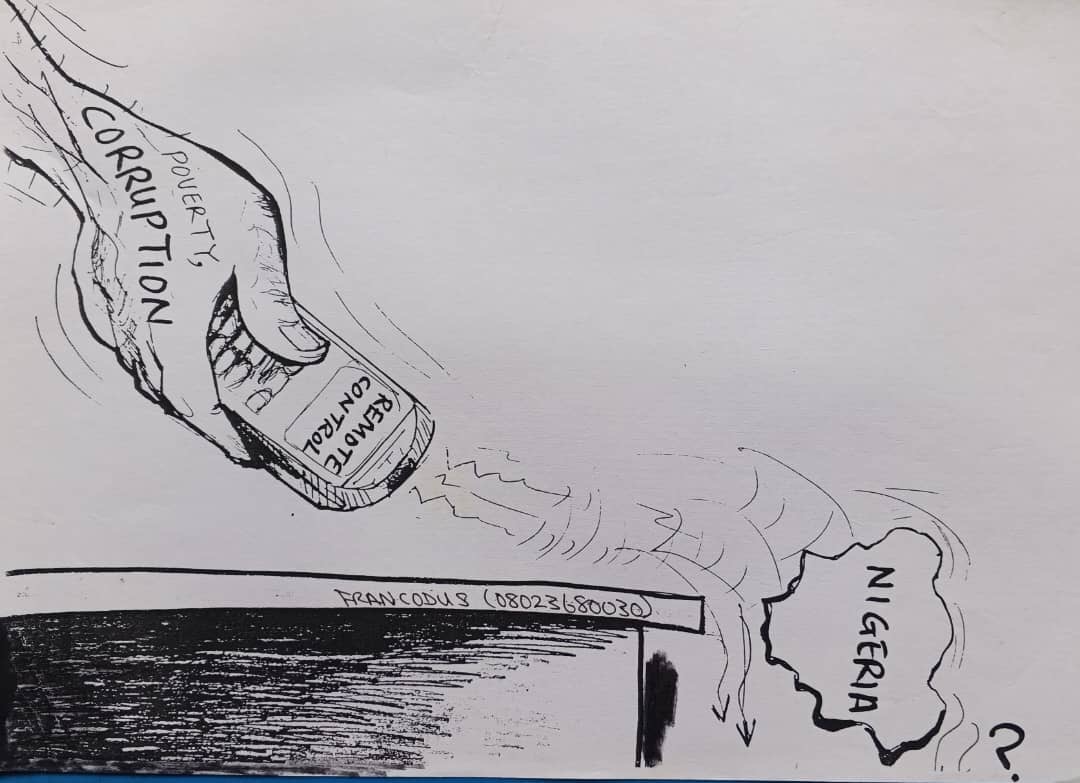
The renewed cult war, which has left a lot of casualties the street of Ekpoma, Benin City and other major cities in Nigeria has left so many people dead. Cult war is not restricted to only Ekpoma in Edo State. There is no gainsaying the fact that Nigeria is presently on the grip of alarming social vices, notable among which is cultism, following screaming headlines on activities of cultists which have led to loss of lives and wanton destruction of property, almost on daily basis.
Since the introduction of democracy in Nigeria, Nigerians have experienced election rigging, which has also produced the highest wave of hooliganism and violence amongst politicians at the local, state and federal levels. The return of democratic rule in 1999 marked the watershed in the uprising of bloody cult clashes across the country. The dire urge of political dominance impelled political parties and politicians to engage the services of the cult gangs.
A number of these politicians surround themselves with the cult gangs, using them as private armies and bodyguards, and supplement them with the law enforcement agents, who are willing to carry out their commands.Together with these politicians, these students’ fraternities have been linked to violent activities in the country. For decades, these cult groups have flourished following the support and patronage of influential political figures, who are using them as instrument to settle political scores.
Even those who laid claim to patriotic zeal and some other noble intentions in introducing a confraternity into the country’s first university, the University of Ibadan, in the early 1950s can hardly believe the kind of monster that it has become and the violence unleashed on the society. Today, diverse cult groups, strangely populated by artisans and school dropouts, are ubiquitous in the streets of cities and towns in the country, regularly visiting deadly violence on one another and members of the public in their unending supremacy battles. That is the level of social disorientation and criminality that cultism has engendered in the country.
Painfully, the dreams of five young graduates were cut short brutally just like that at a party. It is rather difficult to fathom why this type of barbaric behaviour is found among youths in a supposedly enlightened and civilised environment. Why would educated people commit such atrocities? This dangerous propensity clearly calls to question the kind of orientation some students have as well as the quality of moral instructions they receive from the family. The seeming resurgence of cultism in the country’s tertiary institutions has to be checked and very swiftly too. The polity is already beset with myriads of economic and social maladies and adding the evils of cultism on campuses to them may drive it to a breaking point.
The Ambrose Alli University authorities should not be blamed. I want to advise Nigerians to stop blaming AAU authority for killings around Ekpoma. We should blame politicians, tribal bigots and a section of the media on the spread of wrong information about killings around the university town. Nigerian lawmakers should take the lion share of the blame, followed by the citizens and the media. They should all accept their culpability in this peculiar mess instead of blaming the school since the latter has done what is humanly possible within the law. It is unfair to AAU authority for Nigeria’s inability to stop killings because security is a collective responsibility, particularly the different arms of government. The executive, judiciary, legislature and the press as the fourth estate of the realm also has a vital role to play as well as the citizens.
____________________________________________________________________________________
Inwalomhe Donald writes from Benin City [email protected]