Elections have come and gone and Nigeria needs to move forward economically. It is good that President Muhammadu Buhari will still be on the saddle for the next four years and improving the economy is one of his cardinal agenda. Boosting the economy requires a lot of work and programming. It requires new ideas and new ways of doing things.
All over the world, the landscape of infrastructure financing is changing and Nigeria needs to tag on with the changing time. Nigeria must not be left behind by the rest of the world. Governments across the globe are under intense economic pressure and are finding it difficult to fund. infrastructure projects. A number of countries have turned to Public-Private Partnerships to provide new and well-maintained railways, roads, bridges, waterways, airports, ports, waterways as well as in efficient water and sanitation infrastructure.
Looking ahead, the Buhari administration should put in place a clear delivery framework for all PPPs that would relate to infrastructure construction in the country. A situation where Private companies will take possession of state assets to improve services and turns out to be the reverse as has been the case of the Electricity Distribution Companies should not be condoned. In fact, the Buhari administration should review the contracts of all DISCOs and inject clauses that would make them deliver 24/7 electricity to Nigerians. In the past few years, governments have explored alternative sources such as long-term bonds to finance infrastructure projects. Only recently, the Federal Government of Nigeria issued a N100 billion Sukuk Bond to fund the construction and rehabilitation of key economic infrastructure projects such as roads. There will be the need to effectively monitor the execution of projects under such arrangements to ensure that there is no fund diversion.
The current value of Nigeria’s total infrastructure stock stands at 35 per cent of GDP, which from every consideration is far below the level of peer emerging market countries where the average is 70 per cent. Nigeria, in the next four year must bridge this gap if it has to be on the path of growth and prosperity. Poor capital expenditure in the national budget in the past couple of years is worrisome and must be reversed. Even as government makes promises and commitments towards tackling the infrastructure deficit, government often does not and indeed cannot source the funds to follow through. Government need to assemble some think-thanks to evolve very creative ways of funding infrastructure in the country. It is an obvious fact that the costs of developing physical infrastructure are enormous, government must think outside the box this time around to ensure it comes up with a framework that would create enabling environment for private sector.
As noted above, even the privatised power sector is presently hindered in a liquidity crisis and is unable to attract new investments. The challenge for the new Buhari government is to turn infrastructure into a domestic political priority as well as a valuable business opportunity. This requires removing obstacles to maximizing the value of infrastructure investments, exploring alternative financing options and putting in place innovative models and partnerships that will accelerate investments in infrastructure.
Also, economic cooperation between states generates an equilibrium for cross-country growth trajectories and competitiveness by exploiting the economies of scale created by clusters and corridors. Initiatives such as the LAKE rice, a partnership between Lagos State and Kebbi State governments as well as the Lagos-Oyo Agricultural Initiative are good examples of economic partnerships amongst states that should be sustained and even replicated going forward.
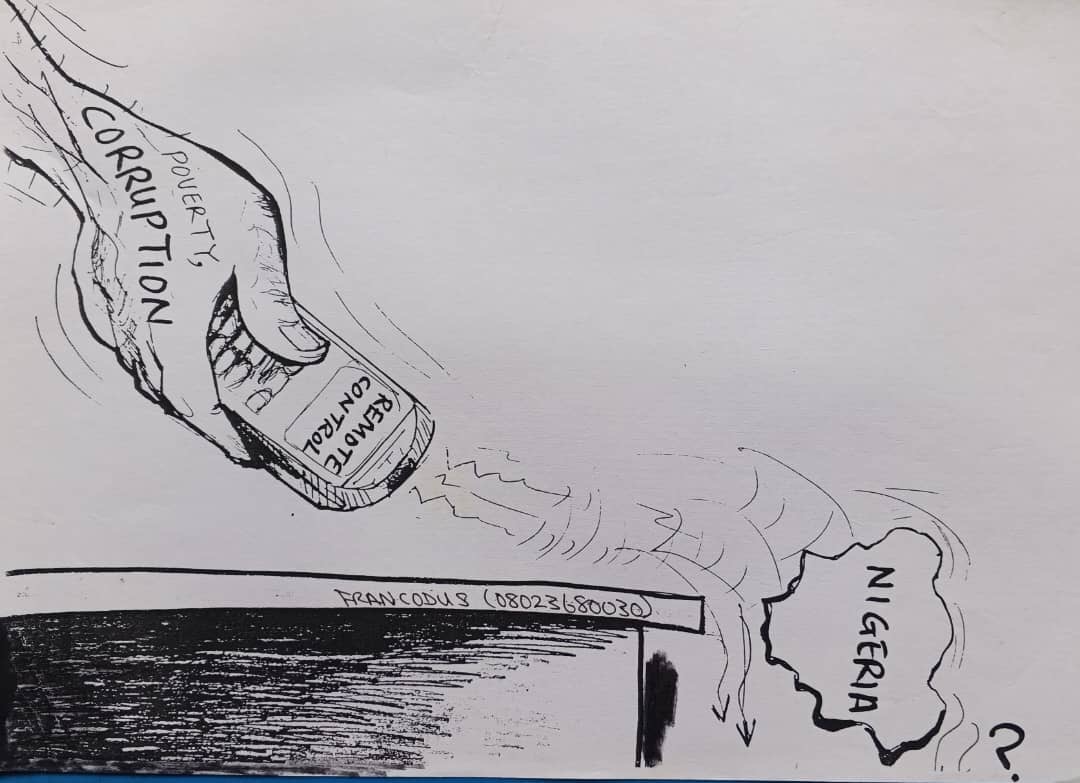
Also worthy of note is the second leg of President Buhari’s priority area which is the war against corruption. As a fact, corruption undermines the rule of law and erodes the effectiveness of public and private institutions and President Muhammadu Buhari has been in the fore combating corruption these past four years. Corruption has also put Nigeria in a poverty trap. Nigeria is today, the world’s poverty capital, having overtaken India with the highest population of the poorest of the poor. Despite initiatives of the past and present administrations, Nigeria still has a long way to go in addressing the key elements of corruption and the rule of law. The country currently ranks 144 out of 180 on Transparency International’s 2018 Corruption Perception Index. It is a truism that businesses thrive where laws are well defined and clearly applied. Nigeria must create a system that prevents the diversion of public funds, enforce public sector accountability, improve on access to justice, ensure expeditious conclusion of litigations and undertake comprehensive reform of police services for it to move to the next level. Selective application of justice will not help Nigeria. All Nigerians must be equal before the law. Tackling corruption, therefore must follow the principles of the blindfolded woman in the insignia of Justice used by the Judiciary. The National Assembly, on the other hand must play their oversight roles in ways and manners that complements the role of the other two arms of government devoid of partisanship.
- Mr. Dan Owegie is a chieftain of the All Progressives Congress, APC, Edo State.