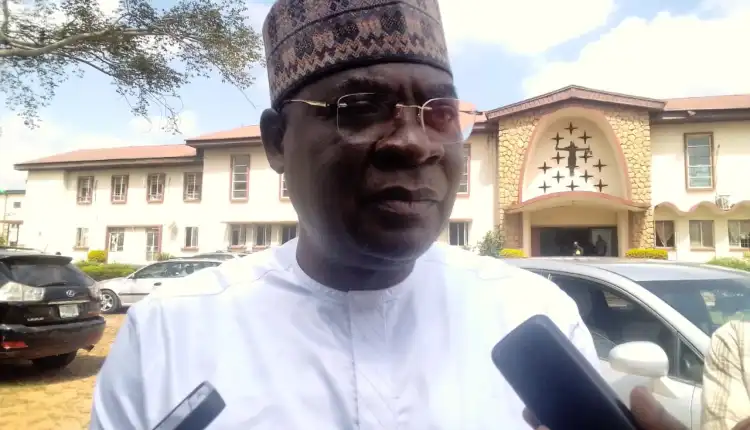
BENIN CITY -Edo State Commissioner for Infrastructure, Hon. John Inegbedion has reiterated that unless and until the issue of haulage in Nigeria roads is put forth as a matter for national discuss Nigerian government would continue to waste resources fixing failed roads.
The commissioner made the assertion in Benin City, during an interview with the newsmen.
According to the Commissioner, “the issue of failed roads is a national challenge which is not peculiar to Edo State alone.
He noteded that Nigeria roads are designed to accommodate specified amount of haulages, but overtime, heavy duty vehicles have defiled the specifications by going beyond the haulages the roads were designed to accommodate.”
According to him, the menace of failed roads and severe impact on users have reached unpleasant level with huge effect on the economy of the state and the country at large.
He therefore advised that attention be shifted to rail transportation to move heavy haulages so as to reduce the recurrent issue of failed roads in the state and Nigeria at large.
The Commissioner lauded the State Governor, Mr. Godwin Obaseki for his infrastructural developmental stride and for being responsive to needs of the people.
Stressing that the Governor is working hard in tackling the menace of failed roads across the State, he assured that the Governor was working out modalities for tackling the menace of flooding at the State Central Park.
“As a matter of urgency, the Governor has already started palliative measure in the park; designs have been tendered and it is at the final stage of award.
“Hopefully, work will commence fully after the raining season and the project will be on Public Private Partnership (PPP).
“The Governor is proactive; already, 25 roads have been mapped out for construction and rehabilitation across the three Senatorial District.
“These roads were recently advertised on the national dailies, he added.
The commissioner therefor enjoined people living in rural areas to key in to the Rural Access and Mobility Project (RAAMP) which is aimed at improving road access and connectivity in rural communities, adding that good roads give communities greater sense of belonging.