… says 67% of Nigerian doctors practise in UK
The new National Policy on Health Workforce Migration will help bring back Nigerian healthcare professionals, including doctors who are currently working in various countries abroad.
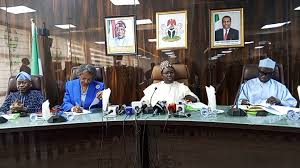
The coordinating Minister of Health and Social Welfare, Professor Muhammad Pate, said this following the Federal Government’s approval of the health policy to address the continued exodus of Nigerian doctors.
According Channels TV, Pate in a post on his official handle on X on Monday reaffirmed the government’s commitment to tackling the challenges surrounding healthcare human resources in Nigeria.
He said President Bola Tinubu had approved the policy while presiding over the Federal Executive Council meeting at the Presidential Villa in Abuja.
“This policy is more than just a response to the ongoing exodus of healthcare professionals; it’s a comprehensive strategy to manage, harness, and reverse health worker migration.
“It envisions a thriving workforce that is well-supported, adequately rewarded, and optimally utilized to meet the healthcare needs of all Nigerians.
“By establishing streamlined registration processes and providing attractive incentives, the policy not only encourages the return of our talented professionals but actively reintegrates them into our health system. This approach leverages the expertise of our diasporas to bridge gaps within the health sector.
“Also, the policy champions reciprocal agreements with other nations to ensure that the exchange of health workers benefits Nigeria. These bilateral and multilateral agreements are designed to protect national interests while respecting the rights and aspirations of our healthcare professionals. We call on recipient countries to implement a 1:1 match—training one worker to replace every publicly trained Nigerian worker they receive.
“Recognising the importance of work-life balance, the policy includes provisions for routine health checks, mental well-being support, and reasonable working hours, especially for younger doctors. These measures aim to create a supportive work environment, reducing burnout and enhancing job satisfaction,” the minister stated.
As a follow-up to Monday’s announcement, the minister on Tuesday said the policy signed by the president was a comprehensive strategy to manage, harness, and reverse health workers’ migration.
“The National Policy on Health Workforce Migration addresses the critical challenges facing Nigeria’s health human resources. As the AU Champion for Human Resources for Health and Community Health Delivery Partnership, Mr President’s commitment to a resilient and robust healthcare system is powerfully reflected in this forward-looking policy.
“This policy is more than just a response to the ongoing exodus of healthcare professionals; it’s a comprehensive strategy to manage, harness, and reverse health worker migration. It envisions a thriving workforce that is well-supported, adequately rewarded, and optimally utilised to meet the healthcare needs of all Nigerians.”
Many Nigerian healthcare workers have left the country for greener pastures as a result of inadequate equipment, worsening insecurity, poor working conditions, and poor salary structure.
The minister noted that central to this vision was the Nigeria Human Health Resource Programme, which sets a framework for regular reviews of working conditions, ensuring that health workers, especially in rural and underserved areas, receive the recognition and rewards they deserve.
Meanwhile, Pate also said doctors and nurses trained in Nigeria are sought-after globally, and that 67 percent of them work in the United Kingdom (UK).
The minister, on Channels Television’s Politics Today programme on Tuesday, said if health workers of Nigerian origin pull out of the National Health Service (NHS), the service will struggle.
He said Nigerian doctors and nurses are attractive and the country should be proud of that. He noted that not all Nigerian health workers leave the country and that those who leave have their reasons for exiting.
He added the policy “is really about health diplomacy and promoting ethical recruitment practices.
“The recruitment countries; that recruit our professionals, should they not have some responsibilities to help us expand the training? Because the strain of health workers’ migration is continuous; it’s not going to stop tomorrow.
“The UK will need Nigerian doctors. 67% of our doctors go to the United Kingdom and 25% of the NHIS workforce is Nigerian.
“Does the UK, for instance, want to consider expanding the pre-service education? Can we have corridors that allow us to have a compact that ‘you’ll take so but you will also help us train more so you will replace them’? That is in the realm of health diplomacy and ethical replacement,” he said.
“Nigerians are very vibrant, very entrepreneurial, and very capable wherever they are. If Nigerians hold back from the UK, for instance, the NHS will struggle to provide the services that many Nigerians are going there to get,” he said.
He said over 75% of health workers trained in the last year have left Nigeria for other countries as economic migrants, saying, “We have good training centres here, and the universities are doing a great job”,