…vows to stem migration, end automatic citizenship for immigrants’ children
…as China, Russia present balancing act
As Donald Trump wins the US presidential election for a second time, concerns are mounting, particularly in Nigeria, Africa and the rest of the developing world about the implications of his victory for international trade, immigration, strategic support and relationships.
There are also concerns about the granting of automatic citizenship to children born to immigrants in the United States, a rule that Trump has vowed to upturn.
Trump has vowed to reinstate his first-term policies targeting illegal border crossings and to forge ahead with sweeping new restrictions.
He has pledged to limit access to asylum at the U.S.-Mexico border and to embark on the biggest deportation effort in American history, which would likely trigger legal challenges and opposition from Democrats in Congress, Reuters reports.
He has said he will employ the National Guard, and, if necessary, federal troops, to achieve his objective, and he has not ruled out setting up internment camps to process people for deportation.
Trump has said he would seek to end automatic citizenship for children born to immigrants, a move that would run against the long-running interpretation of the U.S. Constitution’s 14th Amendment.
Trump says he will reinstitute the so-called “travel ban” that restricts entry into the United States of people from a list of largely Muslim-dominant countries, which sparked multiple legal battles during his first term.
Professor Bolaji Akinyemi, the chairman of National Think Tank and Nigeria’s one-time external affairs minister, in an interview with Arise News, suggested that Nigeria and Africa would continue to hold little interest for Trump, much like during his previous tenure.
“We were not of value to him the first time around. I don’t want to use the term he used for us, but …we are not going to be of any interest to him. He would have other areas of the world that are of more immediate interest.”
“He never mentioned Africa throughout that campaign. He only mentioned Congo, and that was because of the imports coming from there.”
Akinyemi described the outcome of the US election as reflecting “a victory for crudity over refinement” and undermining America’s reputation as a global beacon of democracy and integrity.
He urged Nigeria to prioritise self-reliance, stressing the importance of reducing dependence on foreign aid. “Let this be a lesson to us that we should turn inward.
“A country like Nigeria, with its natural resources, should not have to depend on loans, aid, or assistance from the United States. We need to buckle up and develop ourselves. We have lost so many years. Think of where we were in 1966, 1975, compared to now.”
Also speaking on Arise News, former Nigerian diplomat, Joe Keshi said the re-election of Donald Trump as the President of the United States is set to bring significant challenges for global relations, particularly in Nigeria.
Keshi said Trump’s tenure could affect international relations and how Nigeria fares in the coming years.
He added: “I think a lot of world leaders are waking up this morning, and re-strategising on how they will deal with the next four years of Donald Trump.” He described the probable Trump presidency as one that promises to be “stormy” just like his previous presidency.
For Nigeria, Keshi cautioned that while there is a cordial relationship with the US, the country is not seen as a strategic partner.
“We like to use that word, but we are not a strategic partner to the United States,” he remarked.
Despite periodic consultations with Nigeria on matters of interest, Africa, including Nigeria, remains largely peripheral to global policies. “Nothing will change much under Donald Trump,” he added, forecasting a continued period where Africa and Nigeria are not likely to be high on Trump’s priority list.
African governments hope that next year the U.S. will renew the African Growth and Opportunity Act, a Clinton-era policy that gives countries duty-free access to the U.S. market.
Ray Hartley, research director of South African Brenthurst Foundation think tank, does not have high hopes for a second Trump presidency.
“I think that a Trump presidency would reinforce America’s isolationist approach in international affairs, and that might not be good for trade,” he said.
Other analysts say they believe general U.S. policy toward Africa won’t differ radically regardless.
They say that while Africa was often neglected in terms of U.S. foreign policy, that has shifted in recent years amid renewed competition with Russia and China on the resource-rich continent.
Moscow has strengthened military ties with many African governments, while U.S. troops have been kicked out of Niger and Chad. Beijing, meanwhile, is Africa’s largest trade partner and has been building infrastructure throughout the continent.
Ebenezer Obadare, senior fellow for Africa studies at U.S. research organisation Council on Foreign Relations, says, “Insofar as the United States is intent on competing with those powers in Africa, keeping its old alliances and building new ones, I don’t think one administration is likely to differ much from another, strictly in terms of their Africa policy.”
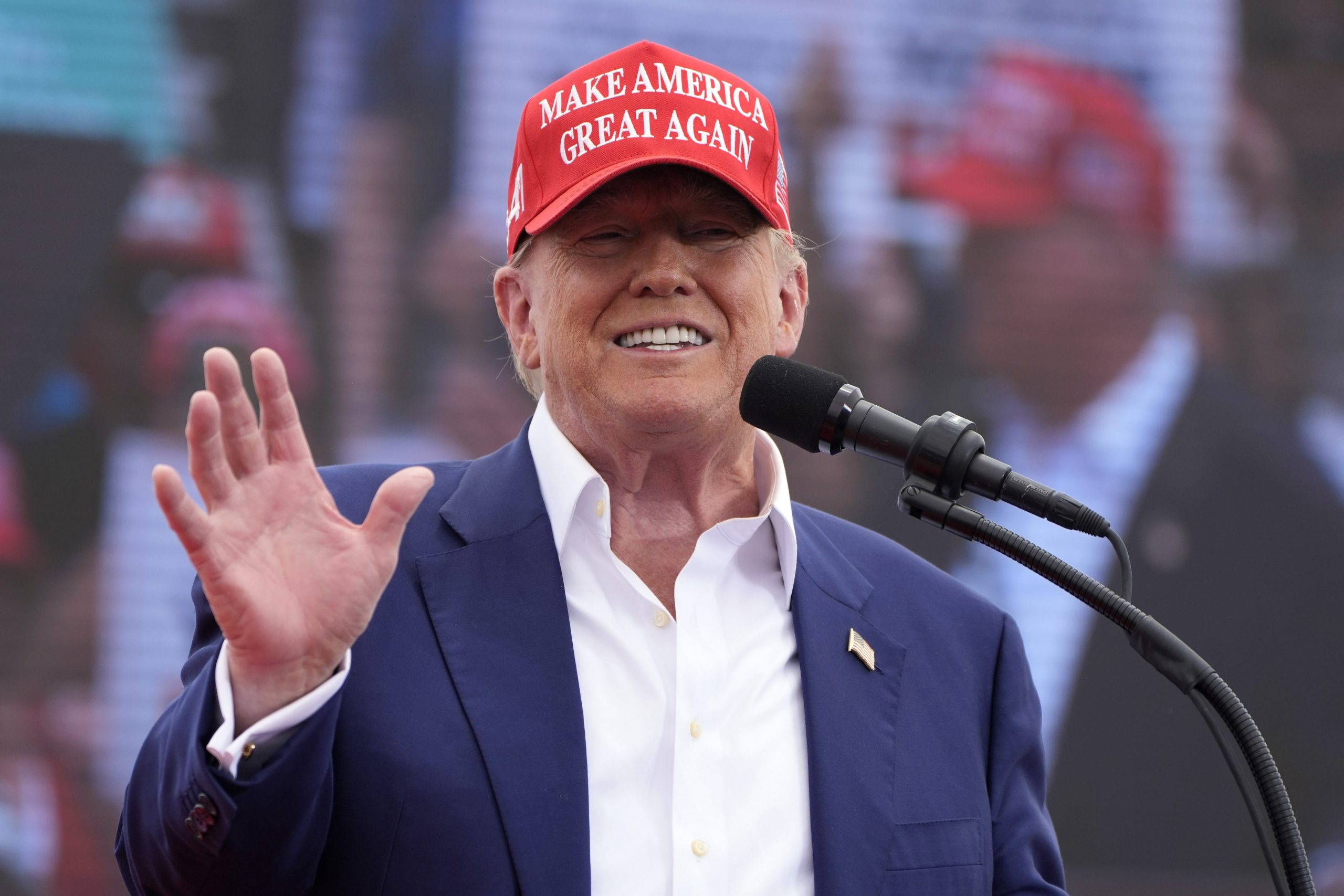
Donald Trump won the US presidential election on Wednesday, defeating Kamala Harris in a stunning political comeback that is sending shockwaves around the world.
The polarising Republican’s victory, following one of the most hostile campaigns in modern US history, was particularly remarkable given an unprecedented criminal conviction, a near-miss assassination attempt, and warnings from a former chief of staff labelling him a “fascist.”
“It’s a political victory like our country has never seen before,” Trump told a victory party in Florida.
Vice President Harris, who entered the race in July after President Joe Biden stepped down, ran a centrist campaign that highlighted Trump’s inflammatory messaging and use of openly racist and sexist tropes.