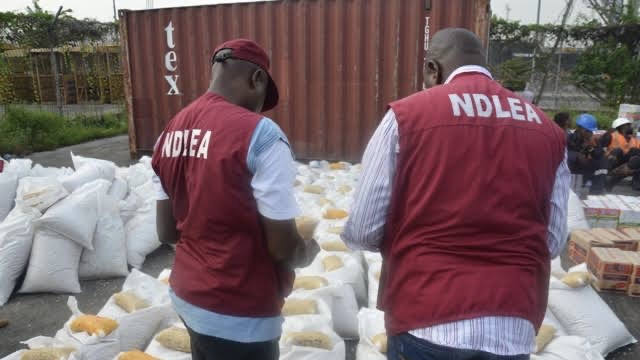
In a strategic move to combat the growing menace of drug trafficking and substance abuse in Edo State, the National Drug Law Enforcement Agency (NDLEA) has initiated a series of high-level engagements with top security stakeholders across the state.
The working visit, led by the Edo State Commander of the NDLEA, Commander Mitchell Ofoyeju, underscores the Agency’s resolve to strengthen inter-agency collaboration as a core pillar of its anti-narcotics operations.
The NDLEA Commander visited the Commander of the Nigerian Army 4 Brigade, Brigadier General Ebenezer Oduyebo; the State Director of the Department of State Services (DSS), Mr Isaac Uka Chikere; and the Managing Director of the Edo State Geographical Information Service (EDOGIS), Dr Tony Ikpasaja.
The series of meetings centred on developing a unified and intelligence-driven response to the drug epidemic affecting communities across Edo.
Commander Ofoyeju stressed the devastating impact of illicit drugs on public health, security, and the economy.
He warned that drug trafficking often serves as a gateway to broader criminal networks, including cultism, armed robbery, human trafficking, and terrorism.
“Drug trafficking is a sophisticated and deeply entrenched threat that cannot be tackled in isolation,” Ofoyeju said.
“We must work together, military, intelligence, civil institutions, and communities to dismantle the drug cartels operating within our borders. This is a national security imperative.”
The NDLEA Commander also called for enhanced intelligence sharing, joint operational planning, and community-level surveillance systems, noting that traffickers are increasingly using rural communities, forests, and farmlands to conceal operations and evade law enforcement.
Brigadier General Ebenezer Oduyebo of the Nigerian Army 4 Brigade echoed the call for synergy, affirming the military’s readiness to support the NDLEA’s mission through intelligence, logistics, and manpower deployment.
He noted that drug trafficking is often linked to insurgency and arms smuggling, both of which pose a grave threat to Nigeria’s internal stability.
“Security collaboration is key,” Oduyebo said. “The Nigerian Army is prepared to provide rapid response capabilities, especially in hard-to-reach areas where drug cartels operate. We can support joint raids, provide secure transport, and enhance operational coordination.”
In a significant contribution to the dialogue, Mr Isaac Uka Chikere, State Director of the DSS, emphasised the importance of proactive intelligence in drug law enforcement.
He said that timely information sharing could help avert large-scale trafficking operations before they take root.
“Intelligence is our first line of defence,” Chikere noted. “We need to intercept these operations at the planning stage before distribution, before sales, before harm is done. That’s where our agencies must integrate their surveillance and communication networks.”
Dr Tony Ikpasaja, Managing Director of EDOGIS, introduced a geospatial perspective to the anti-drug efforts by proposing the use of Geographic Information Systems (GIS) to map drug hotspots, movement patterns, and supply chain routes.
He noted that EDOGIS is equipped to support security agencies with digital terrain analysis and real-time mapping tools that can improve decision-making.
“With the right geospatial data, we can target our interventions more effectively,” Ikpasaja said.
“From tracking transportation corridors to identifying remote production sites, GIS will allow us to outmanoeuvre drug syndicates who rely on terrain to hide.”
Ofoyeju applauded the willingness of all security partners to unite in the fight, describing the visit as a turning point in Edo’s anti-drug strategy.
He revealed that the NDLEA is also working closely with schools, religious institutions, and civil society groups to deepen awareness on the dangers of drug abuse, especially among youth.
“Our job doesn’t end with seizures and arrests,” he said. “We’re also committed to prevention, rehabilitation, and education. It is a whole-of-society task, and we must win.”
As part of ongoing reforms, the NDLEA is scaling up its intelligence units and logistics teams in Edo State, as well as building a database of offenders and suspected traffickers to facilitate tracking and prosecution.
The Agency is also lobbying for stronger laws and swifter judicial processes to ensure convictions are timely and deterrent.
The collaborative working visit comes at a time when Nigeria is grappling with a surge in drug trafficking, driven by both domestic abuse and international cartels exploiting porous borders.
With this renewed partnership across military, intelligence, and geospatial systems, the NDLEA believes it can build a formidable front against the illicit drug trade in Edo State and beyond.