BY FRED ITUA
In every society that has aspired to greatness, education has always been the cornerstone, the forge where children are molded into citizens, innovators, leaders, and custodians of tomorrow. In Edo State, however, as in many parts of Nigeria, that forge had for long shown troubling cracks. Schools became prey to mercantilist excesses, exploiting the pockets of parents; shallow graduation carnivals were organised for toddlers barely out of nappies; the revolving door of ever-changing textbooks enriched publishers, but impoverished families; and education itself was narrowed down to rote memorization, rather than being a holistic preparation for life.
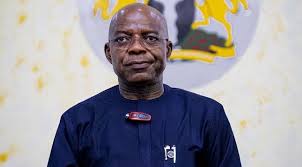
It is against this backdrop that the reforms introduced by Governor Monday Okpebholo, working through the Commissioner for Education, Dr. Paddy Iyamu, must be understood. They are not routine policy adjustments, but a profound moral, social and philosophical reset, a determined effort to restore sanctity to Edo’s education system and to redefine what it truly means to prepare a child for the future. The clampdown on ostentatious graduation ceremonies for pre-nursery, nursery, primary and even junior secondary exit classes may appear to be a matter of culture or taste. In reality, it goes far deeper. Over the years, what should have been solemn moments of progression had been converted into carnivals of vanity. Parents were pressured to spend beyond their means on attires, cakes, photo shoots and frivolities, while the real foundations of learning—literacy, numeracy, discipline and character—were neglected. What dignity lies in a kindergarten child “graduating” in rented robes while still struggling to read? What sense does it make for a child to “pass out” of Primary One with pomp when the true test of learning lies years ahead? By outlawing such premature festivities, Governor Okpebholo has enacted a symbolic cleansing, cutting away distractions so that genuine learning can take root. He is reminding the people that education is not a circus but a covenant, not an indulgence but a pathway to destiny.
Equally significant is the policy on textbooks, which addresses one of the deepest financial burdens of parents. For decades, families endured the imposition of “new” editions every session, even when the only difference from the previous one was a cover design or a re-ordered page. This profiteering widened inequality, turned learning into a market transaction, and forced parents to agonise over whether to pay school fees or buy yet another “new” textbook. Okpebholo’s intervention has standardised textbooks for a minimum of four years. More importantly, siblings are now allowed to reuse books previously purchased by their brothers and sisters. This is not just financial relief; it is a moral correction, a statement that education is a right, not a racket. Parents can finally breathe easier, knowing that knowledge is not disposable but enduring, and that a family of three children can recycle learning across the same volumes. In this single stroke, the governor has shifted education away from the stall of traders and back into the sanctified space of the classroom.
Perhaps the most visionary and history-making of these reforms is the compulsory introduction of skill acquisition for every secondary school student beginning from JSS3. For decades, Nigeria’s schools have been accused of producing certificate-rich but skill-poor graduates. Young men and women could recite Shakespeare but could not wire a room, could define photosynthesis but could not plant a seed. Engineers memorised formulas but could not fix a car engine, while agriculture graduates knew academic theories but could not cultivate a farm. In a country where unemployment is a scourge, such one-sided learning amounts to betrayal. By embedding vocational and entrepreneurial skills such as garment making, solar installation, GSM repairs, agriculture, digital literacy, robotics and event management into the school curriculum, Okpebholo’s policy breaks the cycle. It is more than pedagogy; it is prophecy. It is preparation for a future where jobs are unpredictable, but adaptability, creativity and competence will always command value. A 14-year-old who learns tailoring alongside algebra could start a small shop while waiting for admission. A girl who acquires solar installation skills may, within a few years, join Nigeria’s renewable energy revolution. A boy who learns coding and robotics could begin designing applications even before completing secondary school. This is how societies leapfrog—not by waiting endlessly for elusive white-collar jobs, but by cultivating a generation capable of creating, innovating and sustaining themselves.
Underlying all of these policies is a broader philosophy: that education is not merely a race to pass exams but a holistic cultivation of intellect, hands, heart and character. It is the weaving together of knowledge, discipline, creativity and resilience into a seamless fabric. For too long, that fabric was torn, leaving Nigerian youths exposed to the harsh winds of life. Governor Okpebholo’s reforms represent an effort to stitch it back together. They are, at once, a moral act of restoration, a political act of courage and a social act of justice. Reform, of course, is never without resistance. It is a struggle against inertia, against entrenched interests and habits. But leadership is precisely about moving societies from the comfort of the familiar to the challenge of the necessary. By daring to begin, Okpebholo has struck a match that lights a candle. The responsibility now falls on teachers, parents, administrators and communities to keep that flame alive.
In the long run, these interventions may be remembered not as isolated decisions but as the cornerstone of an educational renaissance in Edo State. Long after the politics of today has faded, what will endure are the children who were spared meaningless graduation circuses, the families relieved from endless textbook extortion, and the thousands of young men and women who, because they acquired a skill in secondary school, discovered dignity in labour and independence in self-reliance. This is how true leaders are remembered—not only for the roads they built or contracts they awarded, but for the lives they reshaped, the futures they secured and the paradigms they shifted.
Governor Monday Okpebholo has dared to re-imagine education in Edo State. His vision is one where schooling becomes less about pomp and paper and more about substance and survival; less about draining parents’ purses and more about enriching children’s minds and hands. He has restored sanctity where there was exploitation, equity where there was oppression, and vision where there was mediocrity. It is a bold beginning. If nurtured and sustained, it may well be remembered as the dawn of a true Edo renaissance, one in which the child of a roadside trader in Uromi or the fisherman’s daughter in Ovia is not only taught to dream but equipped to achieve. And that, ultimately, is the highest calling of education: not to make children performers in parades of vanity, but warriors of destiny, armed with knowledge, anchored in character and empowered with skills to build a better tomorrow.
____________________
Fred Itua is the Chief Press Secretary to Governor Monday Okpebholo of Edo State