By Francis Odupute, Okwuokei Ijeoma and Ubiomo Oghenedoro Efe
(Continued from last week)
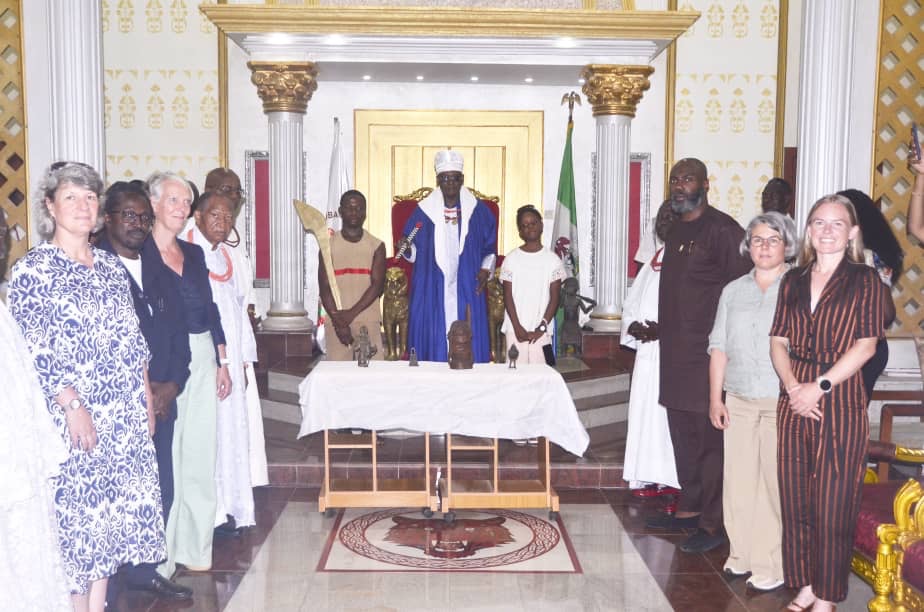
The return of looted Benin artefacts has continued to generate wide reactions among stakeholders, artists, and cultural enthusiasts in Nigeria. Many have described the development as both culturally symbolic and economically promising.
Mr. Chukwuebuka Okwuba, Programme Coordinator for the Society of Nigerian Artists (SNA), Edo State chapter, described the return of the artefacts as a matter of deep cultural essence.
He said:
“The return of the artefacts is of great cultural importance. I think it is good when you have your history with you because there is this confidence and assurance it brings when you engage anybody.”
Speaking further, he emphasized the spiritual and symbolic value of the artefacts, noting that their return would reconnect present-day artists with the essence of their heritage.
“For the cultural value, I feel that returning these artefacts would reignite some certain spirits it is meant to reignite, both indigenously and culturally. From the time those works were created till now, there has been a shift in both idea and representation. With their return, I believe there will be a certain level of symbolism which the present artists or the Oba’s artists must have lost touch with. So, seeing these artefacts will have a way of reuniting them with the lost touch,” Okwuba explained.
On the economic angle, he stressed that the artefacts are “supposed” to be of great value. “Emphasis on supposed because, where it is coming from, the Western world, it really boosted their economy. But on our side of the world, owing to the fact that we are a growing economy, or rather third world where managing hunger is still the major focus, how many people will visit the museum in a year? In other words, how many people will want to go and view the artefacts apart from we artists?” he queried.
Similarly, Samuel Alex, a student of Auchi Polytechnic, said the return of the artefacts would benefit Nigeria in the long run. “Art is very profitable and is a source of employment. It will also serve as a reference to history,” he noted.
Also speaking, Jeremiah Omoghene, Public Relations Officer of the Society of Nigerian Artists, Edo State chapter, said art remains a major force in the economic and social life of any nation.
“Just as it is in every other major city in the world, art is a driving force not just in the economic aspect but also to create interest in people. Art expresses the history of a people. An example is the Prado Museum in Spain and others. People are drawn to these places for their art, and in no time, the case will be the same for the great Benin City because of the large return of the original works. This will cause art to flourish both in Benin and Nigeria at large and also encourage other artists to remain in the country because they are being heard,” Omoghene said.
On the economic potential, he added:
“Of course, anywhere tourists come to, the market must sell. When these tourists come, they would most likely want to go back with a souvenir, which are also similar works of contemporary times due to their great significance. These artefacts have come back to be a source of growth and prosperity even for the future. Hence, artists should keep their hopes up, bring out their creativity and content as there is a community of art ready to help them blossom.”
In the same vein, Mr. Uche Cyrinus Umeh told The Observer that the return of the artefacts has “reawakened our consciousness to the value of our assets.”
Economically, he noted that it would increase tourist engagement in Benin City, adding that new structures and institutions were being raised to accommodate the works.
“In my words, the Museum of West African Art (MOWAA) is one of them, and the Oba’s museum, which is yet to be declared open, will also keep some of these works. When these works arrive, international tourists will come here instead of going to foreign countries to find these bronzes, thereby producing financial returns,” Umeh concluded.
—
Why these objects matter to Nigerian people — more than just “pretty things”
They are living pieces of history:
The bronze plaques, heads, figures, and ivory carvings are not just old art. They tell real stories about Benin kings, events, trade links, and how people lived and celebrated. When these items are back in Benin City or displayed in Nigerian museums, students and families can see and learn from their own history — not from a textbook written by outsiders. This helps heal a gap in memory that colonialism created.
They have deep spiritual and cultural meaning:
In Benin traditional belief, some of these objects carry spiritual power and are part of rituals. Returning them means communities can reconnect with spiritual practices that were interrupted when the objects were taken. For many people, this is an emotional and sacred healing, not simply a cultural one.
They are symbols of identity and national pride:
The artefacts are powerful symbols of who the Edo people are and, by extension, part of Nigerian identity. Seeing them in Nigerian hands sends a message: this was taken by force, and now we can reclaim our story and dignity. That matters greatly for national confidence and deep cultural pride.
They foster art, creativity and new futures (Afrofuturism and beyond):
When artists and filmmakers see these original works, they are inspired. Designers combine traditional motifs with modern and futuristic ideas — that is Afrofuturism — creating new art that speaks to young people worldwide. Digital projects and online exhibits also let people everywhere experience the artefacts in ways that follow Nigerian storytelling and interpretation.
There are real-world benefits — jobs and tourism:
Returned artefacts help build museums, create conservation labs, train curators, and attract tourists. These generate jobs, help local businesses, and support cultural industries that can grow into long-term economic benefits.
To be continued