… Sends new Oil and Gas Regulatory nominees for Senate approval
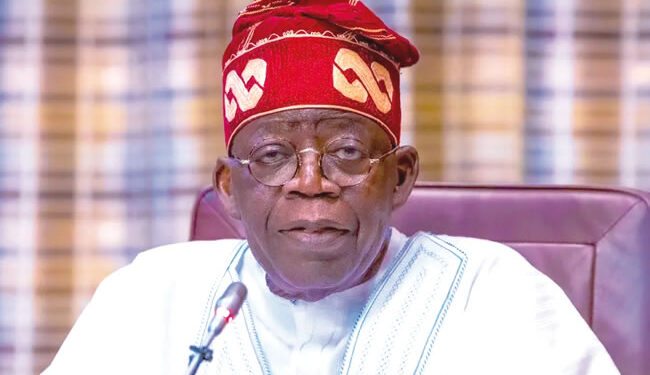
ABUJA – President Bola Tinubu has urged the Senate to approve the Appropriation Repeal and Re-enactment Bill II of 2024.
The request was conveyed in a letter addressed to the Senate President, Godswill Akpabio, and read at plenary on Wednesday.
Tinubu said the request aligns with established constitutional and legislative appropriation processes.
He explained that the proposal seeks authorization for the issuance of N43.5 trillion from the consolidated revenue fund of the federation for the year ending December 31.
The sum comprises N1 trillion for statutory transfers, N8.2 trillion for debt service, N11.2 trillion for recurrent non-debt expenditure, and N22.2 trillion for capital expenditure and development fund contributions.
According to the president, the bill is designed to end the practice of running multiple budgets while ensuring high capital performance rates for the 2024 and 2025 capital budgets.
Tinubu noted that the proposal provides a transparent, constitutionally grounded appropriation mechanism for orderly consolidation of critical and time-sensitive expenditures in response to emergency exigencies.
He said the bill would advance the collective well-being of Nigerians, safeguard national security, and reinforce fiscal discipline, accountability, and broader public financial management.
“The bill will ensure that appropriated funds are released and applied strictly for purposes specified in the schedules,” Tinubu said.
He added that the proposal allows virement only with prior approval of the National Assembly and sets conditions for corrigenda where genuine errors may hinder implementation.
The president further stated that the bill ensures separate recording of excess revenue while limiting its expenditure to acts or approval of the National Assembly.
It mandates due process compliance and periodic reporting on fund releases and revenue of MDAs.
Meanwhile, President Tinubu has forwarded nominations of two new chief executives for Nigeria’s petroleum regulatory agencies following the resignations of Engineers Farouk Ahmed and Gbenga Komolafe.
Ahmed, former CEO of the Nigerian Midstream and Downstream Petroleum Regulatory Authority (NMDPRA), and Komolafe, former head of the Nigerian Upstream Petroleum Regulatory Commission (NUPRC), both resigned from their positions.
They were originally appointed in 2021 by former President Muhammadu Buhari under the Petroleum Industry Act (PIA).
In separate letters to the Senate, Tinubu requested expedited confirmation of Oritsemeyiwa Amanorisewo Eyesan as CEO of NUPRC and Engineer Saidu Aliyu Mohammed as CEO of NMDPRA.
The nominees bring decades of experience in the oil and gas sector. Eyesan, an Economics graduate of the University of Benin, spent nearly 33 years with the Nigerian National Petroleum Corporation (NNPC) and its subsidiaries, retiring as Executive Vice President, Upstream (2023–2024).
She previously served as Group General Manager, Corporate Planning and Strategy at NNPC from 2019 to 2023.
Engineer Mohammed, born in 1957 in Gombe, holds a Chemical Engineering degree from Ahmadu Bello University (1981).
He recently joined Seplat Energy as an independent non-executive director.
His career includes leadership roles as Managing Director of Kaduna Refining and Petrochemical Company and the Nigerian Gas Company, and chairmanships of West African Gas Pipeline Company, Nigeria LNG subsidiaries, and NNPC Retail.
Mohammed also served as Group Executive Director/Chief Operating Officer, Gas & Power Directorate, leading major gas projects and policy frameworks, including the Gas Masterplan, Gas Network Code, and contributing to the Petroleum Industry Act.
His projects include the Escravos–Lagos Pipeline Expansion, the Ajaokuta–Kaduna–Kano (AKK) Gas Pipeline, and Nigeria LNG Train.
The President’s Special Adviser on Information and Strategy, Bayo Onanuga, confirmed the nominations in a statement
The Senate is expected to review and confirm the appointments, pivotal for implementing the Petroleum Industry Act and Nigeria’s oil and gas sector growth.