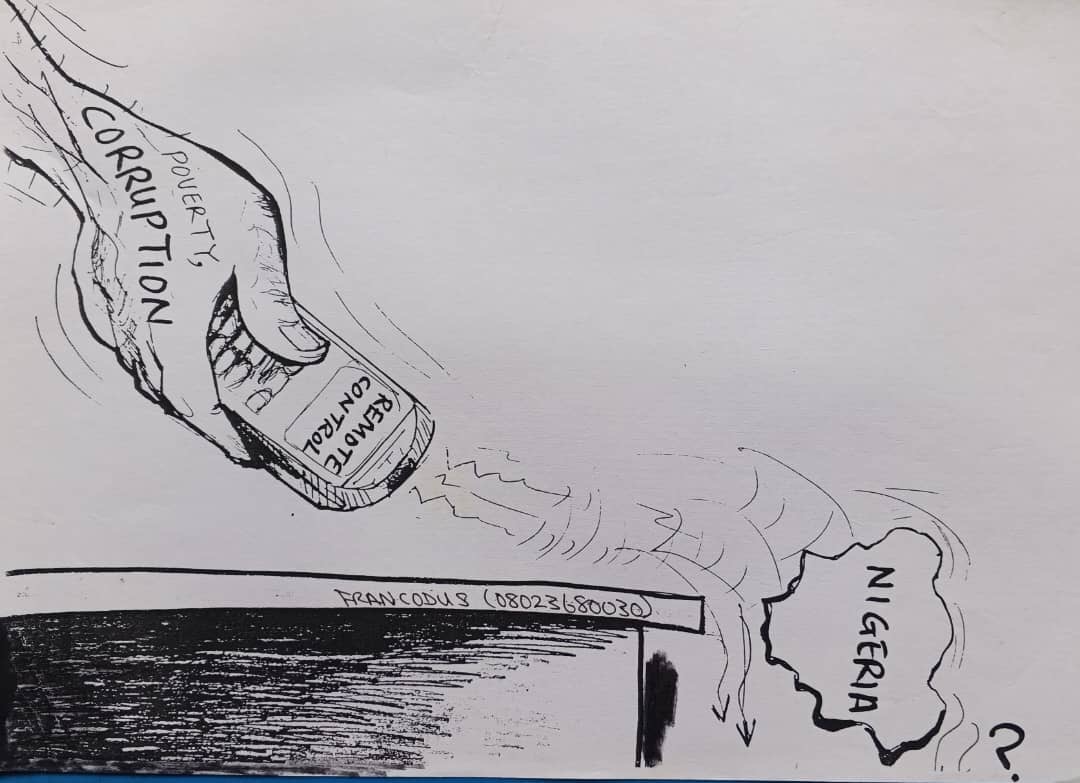
Splendid! We made it to the year 2026. A hearty congratulations to resilient Nigerians and everyone reading this column. The arrival of a new year is always accompanied by a deep sense of gratitude and reflection. It is symbolic, marking the crossing from what was to what could be. It is a moment that invites both celebration and sober introspection.
Beyond personal resolutions and goodwill messages, a new year ought to usher in renewed thinking, better governance, and policies that genuinely prioritise the welfare of the people. It should be accorded with fresh, pragmatic, and people-oriented policies by governments at all levels, policies that speak directly to the lived realities of citizens.
The outgone year, 2025, was one of the most challenging periods in Nigeria’s recent history, just like the previous years in over a decade. It was a year that stretched the resilience of the people to their limits.
The economy was harsh and largely unfriendly. Inflation continued its upward climb; wages, even with the increment by President Bola Tinubu lagged behind the cost of living, and basic necessities became luxuries for many households. Nigerians worked harder but earned less in real terms, and the gap between effort and reward widened painfully.
Insecurity further compounded this economic distress. Kidnapping-for-ransom remained rampant, spreading fear across highways, farmlands, and even residential areas. Communities lived under constant threat, with farmers abandoning their fields and travellers embarking on journeys with anxiety rather than confidence. More troubling were the repeated reports of mass killings of innocent citizens by terrorists, with Christian communities often disproportionately affected. These acts of violence left deep scars, not only on families but also on the nation’s collective conscience.
Road accidents were another grim feature of the year. Bad roads, reckless driving, poor vehicle maintenance, and weak enforcement of traffic regulations combined to claim countless lives. One particularly emotional incident was the accident involving globally celebrated boxer Anthony Joshua, who lost two close friends. Although he survived, the tragedy served as a stark reminder that life is fragile and that public safety must never be treated as an afterthought.
The year also witnessed a rare intervention by the United States government, which carried out air strikes against terrorists in Sokoto State on December 25, the last Christmas Day, following intelligence that the group was planning attacks on Christian worshippers.
Thankfully, the year 2025 also witnessed a welcome reduction in the cost of rice and few other food items. A 50-kg bag of Nigerian rice now sells for between N65,000 and N70,000, a significant relief for households and traders alike. This development is particularly remarkable when compared with previous years, during which the price of rice had remained consistently high, placing a considerable strain on family budgets.
Similarly, the cost of baking flour has also decreased, offering further respite to consumers and small-scale bakers. Yet, curiously, the price of bread has remained stubbornly high, refusing to reflect the drop in flour costs. This disparity continues to puzzle many and underscores the complexities of price dynamics within the Nigerian food sector. Besides, despite the reduction in pump price of petrol, transport fares for intra- and inter-state travel remain exorbitant.
Amid these national challenges, however, it is important to recognise areas where leadership has attempted to respond positively. In Edo State, the administration of Governor Monday Okpebholo has, within barely a year, demonstrated a commendable inclination towards action rather than empty promises. While no government is beyond criticism, fairness demands that visible achievements be acknowledged, especially when they align with the needs and aspirations of the people.
One of the most striking aspects of Governor Okpebholo’s administration has been its emphasis on infrastructure development as a catalyst for economic growth and urban renewal. In Benin City, the changing architectural and aesthetic outlook of the city has been a source of renewed civic pride. Roads that were once nightmares are being reconstructed, drainage systems improved, and urban spaces reimagined to reflect order, beauty, and functionality.
Particularly, noteworthy are the flyover projects at strategic points within the metropolis. The flyover bridges at the Ikpoba Hill axis and the one along Sapele Road by Adesuwa Junction are not merely engineering feats; they are practical responses to long-standing traffic congestion that has plagued these corridors for years. These flyovers will certainly ease traffic flow, reduce travel time, and enhance safety for motorists and pedestrians alike, when completed. They also signal a government that understands the importance of modern urban planning in a growing city.
Beyond Benin City, road construction and rehabilitation projects are ongoing in other parts of the state. From inter-city roads that facilitate trade and movement, to rural access roads that connect farming communities to markets, the administration has shown awareness that development must be inclusive. Good roads are not just about convenience; they are lifelines for economic activity, education, healthcare delivery, and social integration. More so, Governor Okpebholo is making significant strides in combating kidnappers and demolishing their dens and hideouts in the state.
Another significant intervention under Governor Okpebholo’s watch is the resuscitation of the Edo Line Transport Company. Once a vibrant symbol of efficient public transportation, Edo Line had been comatose for years, reduced to a shadow of its former self.
Its revival represents more than the return of buses to the roads; it symbolises the restoration of public confidence in state-owned enterprises. A functional and affordable transport system reduces the burden on commuters, creates jobs, and contributes to safer, more organised movement of people and goods across the state.
The Commissioner for Transport, Hon. Saturday Uwuilekhue-Idehen is not a neophyte in the ministry, he was also the Commissioner during Oshiomhole’s administration and performed well. Hence, I trust in his capacity to take the New Edo Line Transport Company to greater and enviable height.
Agriculture, a sector with immense potential to address food insecurity and unemployment, has also received renewed attention. The acquisition and deployment of heavy-duty agricultural equipment signal a deliberate effort to modernise farming practices and boost food production. Mechanised agriculture reduces drudgery, increases yield, and attracts young people who might otherwise shun farming. At a time when food prices are soaring and hunger is becoming a pressing concern, such investments are not only timely but essential.
These people-oriented projects— flyovers, roads, transportation revival, and agricultural mechanisation reflect an administration that appreciates the interconnectedness of infrastructure, economic growth, and social wellbeing. They also demonstrate that governance, when properly conceived, can have immediate and tangible impacts on the daily lives of citizens.
In fact, the Commissioner for Information and Strategy, Prince Kazeem Afegbua, has repeatedly emphasised Governor Okpebholo’s commitment to revitalising Edo State, which for too long had been neglected by the previous administration in delivering people-focused policies and programmes.
However, even as these achievements deserve commendation, governance is an ongoing process that must continually respond to emerging challenges. One such challenge that now demands urgent and decisive action is the menace posed by scavengers, popularly known as ‘iron-condemn’ dealers. In Edo State, what should ordinarily be a regulated form of waste recycling has degenerated into widespread vandalism and organised theft.
Across Benin City and other parts of the state, scavengers now operate with alarming audacity. Uncompleted buildings are broken into, sometimes overnight and sometimes in broad daylight. Doors are removed, aluminium window profiles carted away, burglary protectors dismantled, roofing sheets stripped, and electrical cables ripped out. In extreme cases, entire structures are reduced to skeletal frames within days. For property owners, many of whom are struggling middle- and low-income earners, this amounts to economic sabotage.
The consequences are severe and far-reaching. Years of savings, cooperative loans, and retirement benefits invested in building projects are wiped out in a matter of hours. Construction is stalled, dreams are deferred, and families are pushed deeper into financial distress. At a time when the economy is already hostile, such losses further compound hardship and erode trust in the ability of the state to protect property.
Beyond individual suffering, the scavenger menace threatens public safety and urban order. The theft of electrical cables disrupts power supply, plunges communities into darkness and increases crime. The removal of metal components weakens structures and raises the danger of collapse. In effect, criminal scavenging undermines both private investment and public infrastructure.
It is important to state clearly that economic hardship cannot justify criminality. While poverty and unemployment are real challenges, a society that excuses theft and vandalism on these grounds risks normalising lawlessness. When criminal scavengers are allowed to operate unchecked, it sends a dangerous signal that impunity thrives while honesty suffers.
Other states have confronted this problem and acted decisively. In Delta State, for example, the government once dealt firmly with scavengers who had turned scrap collection into a criminal enterprise. Through resolute action, these criminals, many merely disguising as scavengers were evicted from Asaba, restoring a measure of sanity and security to the state capital. That example remains instructive and relevant.
Edo State urgently needs a similar show of political will. The government must establish and enforce a clear regulatory framework for scrap collection. Genuine recyclers should be registered, monitored, and restricted to approved activities and locations. Any scavenger found vandalising property or tampering with public infrastructure should face immediate arrest and prosecution. Law enforcement agencies must be empowered to act swiftly and without compromise.
Community engagement is equally critical. Traditional rulers, community leaders, and residents must be actively involved in monitoring suspicious activities and reporting offenders. When citizens are confident that their reports will be acted upon, cooperation with security agencies improves significantly. Community-based intelligence can play a decisive role in dismantling scavenger networks.
At the same time, the government must address the socio-economic dimension of the problem. While criminality must never be condoned, structured alternatives such as organised recycling programmes, skills acquisition centres, and public works initiatives can provide lawful livelihoods for those willing to work honestly. In this way, environmental sustainability can be pursued without sacrificing security and order.
Governor Monday Okpebholo has already shown that he possesses the resolve to initiate meaningful change. The same determination that is reshaping Benin City, constructing flyovers, reviving Edo Line, improving road networks, investing in agriculture, improving the monthly subvention of Ambrose Alli University, Ekpoma, and confronting violent crime should now be deployed against the scavenger menace. Taking drastic action to evict criminal scavengers from Edo State would send a powerful message that the government stands firmly with law-abiding citizens.
As the new year unfolds, this should be a defining resolution for both leadership and followership: to prioritise security, protect public and private property, deepen people-oriented governance, and uphold the rule of law. Development is not measured solely by new roads or flyovers; it is measured by the extent to which citizens feel safe, respected, and protected in their own communities.
A new year resolution, therefore, must transcend personal aspirations and embrace collective responsibility. For Edo State, the path forward is clear— consolidate infrastructural gains, sustain people-centred projects, strengthen security, and act decisively against emerging threats such as the scavenger menace.
If these commitments are pursued with sincerity and consistency, the new year will not merely be new in name, but truly transformative in impact.
May Nigeria experience enhanced economic activities and be free from terrorism; and may we toil like ants and relish the grandeur of an elephant.
A blissful and productive new year to you and yours.
______________
Odaro, a columnist, lectures in the Department of Mass Communication, Auchi Polytechnic, Auchi.