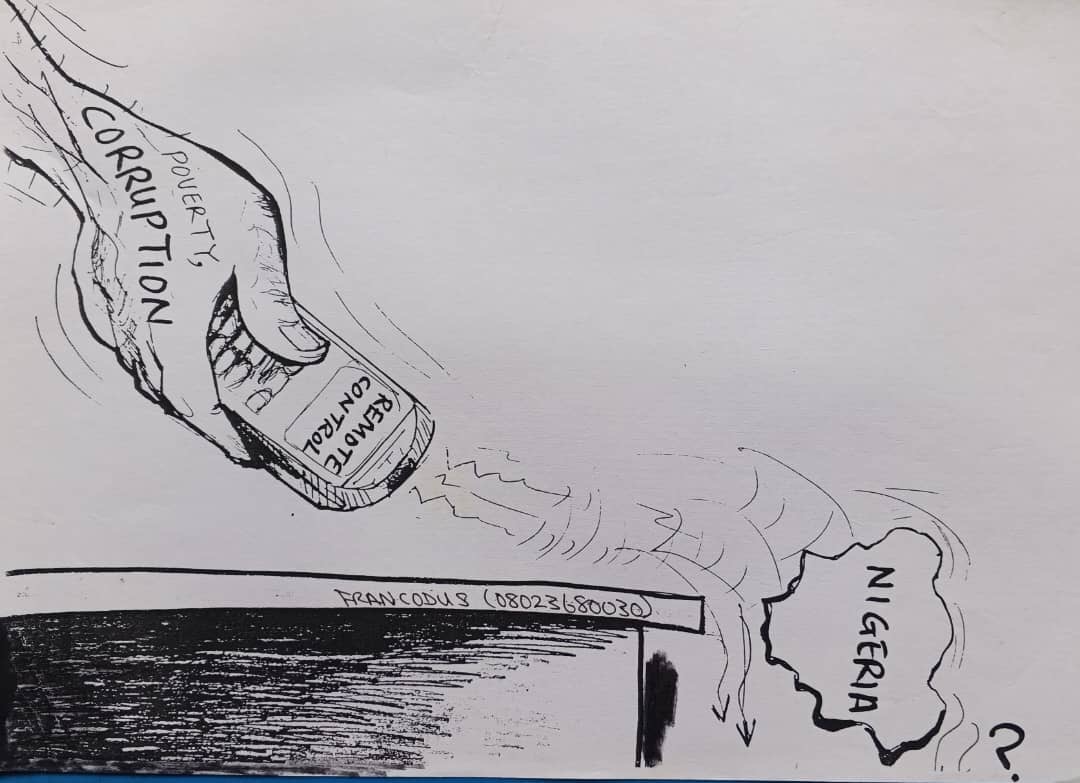
It was the first day of January in Auchi, the administrative headquarters of Etsako West Local Government Area of Edo State, South-South, Nigeria. This nerve centre of Afemai land and host community of the renowned Auchi Polytechnic was ecstatic as residents welcomed the New Year 2026, embracing hope, celebration, and the promise of fresh beginnings. Streets were filled with joviality, music, and the effervescent energy that marks the start of a new calendar, as families and friends savoured the festive spirit.
The euphoric moment, however, was cruelly shattered as devastating news began to filter in that two siblings, Dr. Babatunde Abu and Dr. Tahir Abu, had been kidnapped along City Pride Road, Igbira Camp. A whopping ransom of N200 million was demanded.
While the family frantically struggled to raise the sum, the younger brother, Dr Tahir Abu, was gruesomely killed, while the elder brother remains in captivity at the time of crafting this piece. What should have been a moment of communal bliss thus became a painful reminder of Nigeria’s deepening insecurity and the growing cruelty associated with kidnapping-for-ransom.
Despite the tireless efforts of Edo State Governor Senator Monday Okpebholo, who set up a special committee and security outfit to support the regular agencies in dismantling criminal networks and destroying their hideouts, these criminals continue to resurface, perpetuating kidnapping across the state.
This distressing incident is not isolated. Across Nigeria, similar narratives recur with frightening regularity— abduction, ransom demand, public anxiety, payment negotiations, and, in many cases, death. From highways and farms to residential neighbourhoods, kidnapping-for-ransom has assumed an organised and commercial character. While poverty, unemployment, and weak security architecture are frequently identified as root causes, far less scrutiny has been directed at a silent but potent enabler of this crime: the mass media.
The central argument of this column is that the persistent disclosure of ransom payments by both traditional and social media has significantly escalated kidnapping-for-ransom in Nigeria. By routinely foregrounding ransom figures in headlines and stories, the media inadvertently publicise the profitability of the crime, glamorise its outcomes, and embolden both existing and prospective criminals. In doing so, reportage shifts from informing the public to unintentionally advertising criminal enterprise.
In my encounter with kidnappers on 15 September 2012, two members of the criminal gang, with whom I had a conversation while in captivity, explicitly emphasised that they were educated and, after enduring the rigours of higher education, could not find employment. They explained that constantly reading in the media about millions of naira being paid in ransom by victims’ families created a powerful lure into the world of kidnapping-for-ransom.
This revelation became the catalyst for my empirical study and content analysis of media coverage on ransom disclosure, which I subsequently incorporated into my Ph.D. thesis. The findings confirmed what the kidnappers’ own words suggested: the frequent publicisation of ransom payments by both traditional and social media exacerbates the menace of kidnapping-for-ransom in Nigeria.
Far from deterring criminal activity, the visibility of such transactions inadvertently provides prospective kidnappers with benchmarks for negotiation, heightens public fascination with the crime, and normalises the act in the national consciousness. The study thus underscores the pressing need for ethical restraint in reporting, reminding media practitioners that sensational coverage, however unintended, can fuel criminal enterprise and endanger lives.
The mass media are indeed, powerful agenda setters. What they emphasise becomes socially significant. When ransom figures dominate kidnapping reports, attention subtly drifts from the criminality and moral depravity of the act to its financial returns. To criminally-minded individuals, especially in a society where legitimate economic pathways are increasingly constricted, such narratives are not cautionary tales but motivational cues. This explains why scholars and pundits have long described the media as the ‘oxygen of publicity’ for criminals. Without sustained exposure, many crimes would struggle to achieve the notoriety that sustains them.
Empirical studies conducted within Nigeria reinforce this concern. Findings consistently indicate a correlation between ransom disclosure and the proliferation of kidnapping. Media reports, intentionally or otherwise, provide criminals with intelligence on ransom benchmarks, perceived victim value, and negotiation trends. In effect, reportage becomes a learning manual for criminal operations, refining tactics and lowering entry barriers for new participants.
This challenge has been amplified by the rise of social media. What was once filtered through editorial gatekeeping now circulates instantly, emotionally, and often irresponsibly. Unverified claims, speculative ransom amounts, and dramatic updates spread rapidly, turning private family tragedies into public spectacle. For families negotiating under extreme emotional distress, such exposure compounds trauma and, in some cases, provokes kidnappers to escalate demands after gauging perceived financial capacity from media narratives.
Beyond its operational impact, ransom-focused reportage produces a more insidious effect: moral desensitisation. When the public is repeatedly exposed to stories in which kidnappers demand money, receive it, and sometimes kill regardless, kidnapping gradually loses its moral shock value. It becomes normalised, a routine occupational hazard rather than an extraordinary crime.
Outrage diminishes, empathy dulls, and society begins to subconsciously accommodate criminality as part of everyday life. This erosion of collective conscience is one of the gravest consequences of irresponsible reporting.
Equally troubling is the way ransom disclosure distorts public discourse on insecurity. Media attention becomes fixated on “how much was paid” rather than why crimes persist, why arrests are rare, or why prosecutions fail. Structural issues such as intelligence failures, poor community policing, porous borders, and judicial inefficiency are pushed to the margins. In this sense, ransom-centred reporting not only fuels crime but also impoverishes national conversation and policy focus.
There is also a generational dimension to this crisis. Young people, already battered by unemployment and social dislocation, are daily confronted with media narratives that reward criminality with money and attention. When lawful endeavour offers little hope and crime appears lucrative and visible, moral boundaries become dangerously blurred. The media must recognise that every sensational kidnapping headline competes directly with civic education, ethical instruction, and the promotion of legitimate aspiration.
The ethical burden on the media, therefore, cannot be overstated. Journalism is not merely about relaying events as they occur; it is about understanding the consequences of publication. The right to inform must be balanced against the responsibility to protect lives. Publishing ransom figures, negotiation details, and family responses fails this ethical test. It may boost readership, but it also endangers citizens.
It is instructive that countries which successfully curtailed kidnapping did so partly through media restraint. Where ransom disclosure was discouraged or prohibited, kidnapping lost its allure as a profitable crime. Nigeria, regrettably, continues to learn this lesson through blood and tears.
This is not a call for censorship or media gagging. Rather, it is an appeal for professional restraint and ethical consciousness. Kidnapping incidents can be reported without advertising their financial outcomes. Stories can and should emphasise the human cost, the trauma endured by victims’ families, the long-term psychological damage, and the legal consequences awaiting perpetrators.
Professional bodies must rise to the occasion. The Nigerian Union of Journalists, the Nigerian Guild of Editors as well as the Nigerian Press Council as media regulators, should strengthen ethical guidelines on crime reporting, particularly in the digital age. Sanctions for reckless reportage must be clear and enforceable. Self-regulation, rather than state coercion, remains the most credible safeguard of press freedom.
Security agencies, including the Nigeria Police Force and other security agencies, must also deepen engagement with the media through briefings and training sessions that clarify how certain disclosures compromise rescue efforts and endanger lives. Cooperation, not confrontation, should define this relationship.
The public, too, bears responsibility. Citizens must resist the urge to share unverified kidnapping stories and ransom figures on social media. What appears to be harmless information-sharing often serves as fuel for criminal networks.
In fact, Citizen Journalism, which emerged alongside the rise of social media, has also become complicit in the escalation of kidnapping-for-ransom. While it has democratised information flow and empowered ordinary citizens to report events in real time, it has equally eroded professional gatekeeping and ethical restraint.
In the absence of editorial oversight, many citizen-generated reports prioritise speed over accuracy and sensation over sensitivity. Graphic narratives, speculative ransom figures, live negotiation updates, and unverified claims are often circulated without consideration for their consequences, inadvertently supplying kidnappers with publicity, intelligence, and psychological leverage.
Moreover, the viral nature of citizen journalism amplifies harm in ways traditional media rarely could. Once shared, misleading or sensitive information spreads rapidly across platforms, beyond correction or retraction. Families negotiating under extreme duress suddenly find their private ordeal exposed to public commentary, scrutiny, and even judgement.
In some cases, such exposure emboldens abductors to increase ransom demands or harden their stance, having gauged public interest and perceived victim value through online discourse. Thus, while citizen journalism holds immense potential for civic engagement, its unregulated practice in matters of insecurity has transformed it into an unintended accomplice in the kidnapping economy.
Ultimately, media reform alone cannot end kidnapping. Government must address the structural conditions that sustain it— poverty, youth unemployment, weak justice systems, and inadequate intelligence gathering. However, without responsible media practices, other interventions will remain undermined.
The murder of Dr. Tahir Abu, his brother in captivity and the N200 million demanded as ransom should provoke more than fleeting outrage. It should compel sober reflection on how narratives shape behaviour and how publicity can either deter or enable crime. Every ransom figure published, every sensational headline circulated, potentially places another Nigerian at risk.
For mass media channels, whose mandate includes public enlightenment and social stability, this responsibility is especially profound. Responsible journalism is not a favour to the state; it is a duty to society.
Until the mass media embrace restraint and ethical responsibility in reporting kidnapping-for-ransom, the cycle of abduction, ransom, and bloodshed will persist. Nigeria deserves better and the media must be part of the solution, not the problem.
____________________
Odaro, a columnist, lectures in the Department of Mass Communication, Auchi Polytechnic, Auchi.