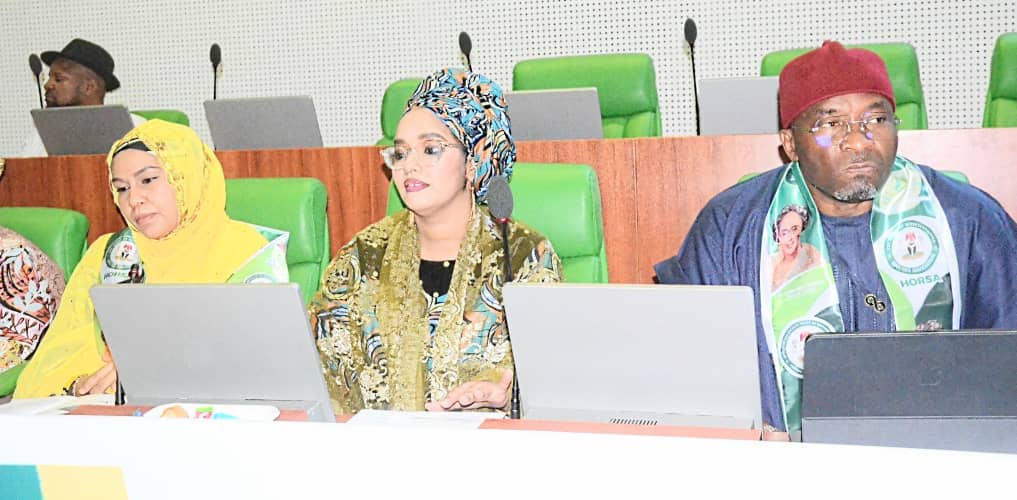
ABUJA: In a move signalling a broader view of governance, the Federal Government has launched a digital capacity-building programme for spouses of federal lawmakers.
The move underscores the growing recognition of informal influence networks in public administration.
The initiative, organised by the National Information Technology Development Agency, in partnership with the House of Representatives Spouses Association, commenced with a two-day workshop focusing on leadership, wellbeing and digital competence.
Delivering the keynote address, Mrs Fatima Tajudeen Abbas, wife of the Speaker of the House of Representatives, described the role of political spouses as an emotionally demanding form of public service.
She said that the behind-the-scenes stabilisation, advisory responsibilities and constant public scrutiny amount to “invisible labour” requiring structured psychological support.
Her remarks placed mental health alongside leadership development, a rare emphasis in Nigeria’s political space, where resilience is often presumed, rather than institutionalised.
Participants were encouraged to cultivate emotional balance, stress-management skills and digital awareness to navigate heightened public exposure driven by social media.
Organisers noted that technology has transformed the operating environment of political families, warning that a single online post can shape public perception nationwide within minutes.
Sessions therefore covered digital footprint management, cyber protection for families, financial and digital literacy, and responsible social media engagement.
Addressing participants, Chief of Staff to the President, Mr Femi Gbajabiamila, described lawmakers’ spouses as vital bridges between government institutions and citizens, citing their informal roles in health advocacy, youth programmes and community mediation.
Officials linked the programme to President Bola Ahmed Tinubu’s digital economy drive, including the 3-Million Technical Talent Programme, arguing that digital literacy among influential community actors would accelerate grassroots acceptance of government initiatives.