… Moves to curb spending, rigging risks
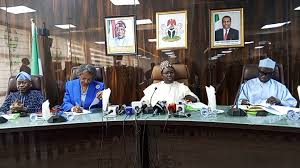
ABUJA — The Independent National Electoral Commission (INEC) on Tuesday unveiled draft regulations and guidelines for political parties ahead of the 2027 general elections, signalling a major overhaul of the electoral framework following the enactment of the Electoral Act 2026.
INEC Chairman, Prof. Joash Amupitan, presented the draft at a consultative meeting with leaders of political parties in Abuja, stressing that the review was imperative to align the commission’s processes with the new law.
He declared that “Nigeria cannot navigate a 2027 horizon using a 2022 map,” underscoring the need for reforms driven by emerging realities.
Amupitan urged political parties to pay close attention to Clause 40(4) and (5) of the draft regulations, which address election expenses relating to party primaries and general elections, noting that INEC had undertaken a clause-by-clause realignment to ensure both legal compliance and operational efficiency.
According to him, the review was informed by empirical findings from the Political Party Performance Index (PPPI), developed with support from the Westminster Foundation for Democracy, which exposed a disconnect between party constitutions and grassroots practices.
He explained that the draft regulations cover key areas such as party registration, mergers, and internal operations, with streamlined processes designed to enhance accessibility while safeguarding democratic standards.
On party administration, the INEC chairman said the new guidelines establish clear rules to govern day-to-day operations, promote accountability, and ensure compliance with the law.
He added that the reforms are aimed at sanitising party primaries by eliminating opaque processes that often impose unpopular candidates, fuel voter apathy, and trigger avoidable litigation.
Amupitan further stated that the commission had outlined procedures to guarantee fairness and transparency in primary elections, while also introducing measures to ensure that campaigns are conducted peacefully and with respect for citizens’ rights.
He noted that the draft includes stricter provisions on political financing, emphasising transparency and accountability in the management of party funds and campaign expenditures, as well as clearly defined conditions for party deregistration to ensure fairness.
The guidelines, he added, also incorporate measurable benchmarks to boost the participation of women, youths, and persons with disabilities in the political process.
He urged political parties to view the draft not as a constraint but as a safeguard for strengthening Nigeria’s democracy.
However, in his remarks, the National Chairman of the Inter-Party Advisory Council (IPAC), Yusuf Dantalle, called on the National Assembly to urgently amend the Electoral Act 2026, warning that certain provisions could undermine the credibility of the 2027 elections.
Dantalle argued that despite public input during hearings, the final legislation represented a setback that placed undue pressure on political parties, particularly those outside government.
He specifically faulted the mandatory adoption of direct primaries, insisting that political parties should retain the option of indirect primaries as candidate selection remains an internal affair.
The IPAC chairman also criticised the requirement for parties to submit membership registers, including National Identification Numbers, within a tight April 1–21, 2026 window, describing it as impractical and potentially exclusionary for millions of Nigerians lacking access to registration facilities.
He further demanded the restoration of mandatory electronic transmission of election results to the INEC Results Viewing portal immediately after polling unit announcements, without conditions.
Dantalle expressed concern over what he described as weakened penalties for vote buying in the new law and reiterated calls for the establishment of an Electoral Offences Commission to ensure accountability.
He disclosed that IPAC had already appealed to the National Assembly to revisit and repeal the Act in the interest of a more credible and transparent electoral process.
