Nothing is more unsettling than a worker who labours faithfully for a month yet receives no wages. It strikes at the very foundation of dignity, productivity and trust.
Across some federal institutions in Nigeria, including Auchi Polytechnic, a disturbing salary anomaly has left a segment of staff unpaid for December 2025. What should have been a season of joy became, for many, a season of anxiety, embarrassment and quiet despair.
As of the time of crafting this piece, over one hundred affected members of staff of Auchi Polytechnic have yet to receive any payment notification for their December 2025 salaries. It is disheartening; it is exasperating!
Christmas and the New Year traditionally represent periods of reflection, reunion and modest celebration. Families gather. Obligations are met. Children anticipate small gifts and festive meals. Yet for several staff members in federal institutions, December 2025 was marked, not by celebration, but by uncertainty. Salaries that should have been credited before the holidays were simply not paid, even till this moment.
The immediate impact was obvious: a gloomy Christmas and a restrained New Year. But, beyond the emotional toll lies a deeper issue — the systemic fragility of public sector payment mechanisms and the culture of blame-shifting that often accompanies administrative failure.
For many affected staff whose salaries are domiciled in Fidelity Bank, the first instinct was to attribute the delay to the bank’s network instability. It therefore seemed plausible, at least initially, that the December salaries had been processed, but were simply caught in the usual web of digital inefficiencies.
Hope lingered through the Christmas week. Some waited for the familiar vibration of a credit alert. Others refreshed their banking apps repeatedly. A few made anxious trips to automated teller machines, just in case the balance had changed without notification. Days turned into weeks and weeks turned into months. The expected alert never came.
Gradually, it became clear that this was not merely a routine case of poor network performance. Something more fundamental was wrong.
It is now approximately three months since the December 2025 salaries were due, yet a number of affected staff members remain unpaid. This is not a minor delay measured in days. It is a prolonged withholding of earned income.
In a country where inflation continues to erode purchasing power and the cost of living rises steadily, even a short delay in salary can destabilise households. Three months is catastrophic. Rent, school fees, medical bills and daily sustenance cannot be deferred indefinitely. Creditors do not accept “system error” as legal tender.
The prolonged delay raises troubling questions. How can a federal institution complete a payroll cycle for some employees while others remain unpaid? Why was the problem not detected and resolved immediately? And perhaps most importantly, why has there been no clear, authoritative explanation?
As is often the case in bureaucratic crises, responsibility has travelled in circles.
According to informal explanations circulating among staff, the bank insists that it processed all valid instructions received. On the other hand, some staff believe the difficulty may have originated from the central payroll processing system under the Office of the Accountant-General.
In the absence of a single, credible statement that outlines the problem, its cause and a timeline for resolution, distrust flourishes.
There are lecturers who prepared examination scripts while uncertain how to provide for their families. There are administrative officers who reported for duty daily despite knowing that their December wages had vanished into bureaucratic limbo. There are junior staff whose modest earnings sustain extended families in rural communities.
For them, December is not merely a calendar month; it is often a period when additional financial obligations arise. School fees for the new term must be paid. Travel expenses increase. Cultural and religious expectations intensify. Being unpaid in December carries emotional weight far beyond the numerical value of the salary itself.
The humiliation of borrowing to survive while colleagues who use different banks were paid in full adds another layer of quiet resentment. Inequality within the same payroll cycle breeds suspicion and weakens institutional cohesion.
It would be unfair to suggest that the management of Auchi Polytechnic and the various staff unions have been indifferent. Reports indicate that efforts have been made to escalate the matter and seek redress. Yet despite these attempts, the problem persists.
When institutional advocacy proves abortive, morale declines. Workers begin to question not only the efficiency of the payment system but also the strength of representation structures meant to protect their welfare. The situation therefore risks evolving from a salary dispute into a broader crisis of confidence.
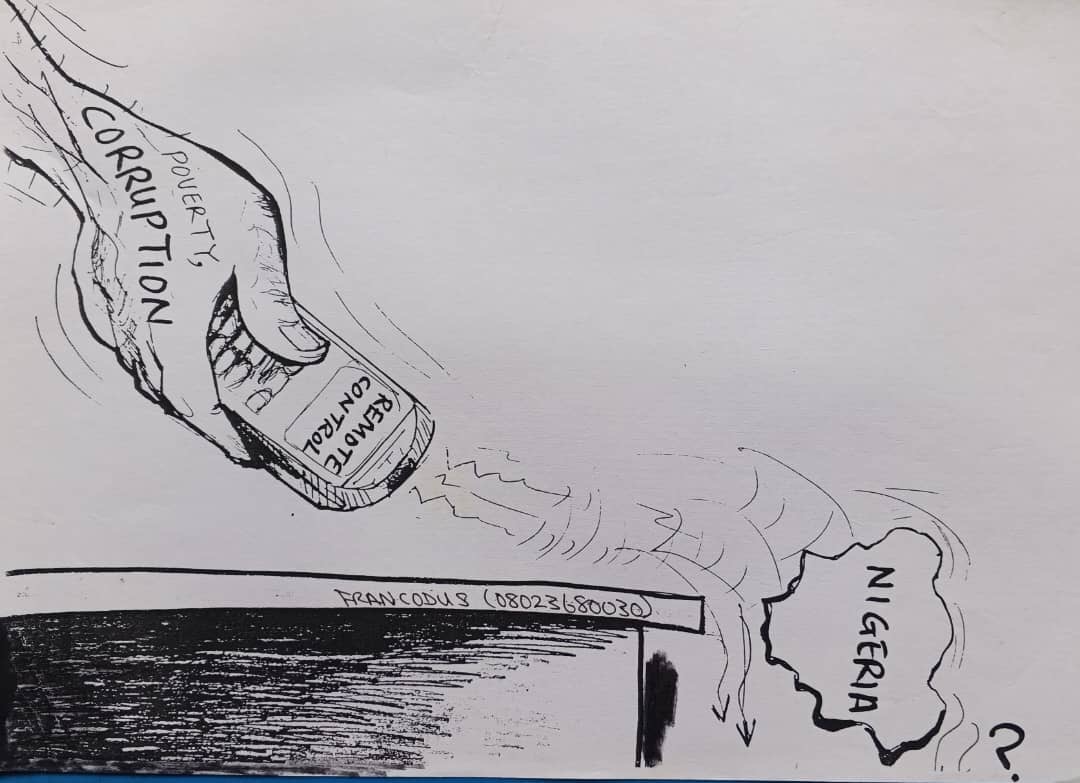
This episode highlights a chronic vulnerability in Nigeria’s public payroll architecture. Centralised systems, while designed to enhance transparency and eliminate ghost workers, can become paralysed by technical or procedural bottlenecks. When errors occur at a central node, the ripple effect is nationwide.
Moreover, the absence of real-time accountability mechanisms means that affected workers often receive no immediate explanation.
In a digital era where private financial institutions process millions of transactions daily with remarkable efficiency, it is troubling that salary disbursement for federal employees can remain unresolved for months.
An unpaid worker is rarely a motivated worker. Although many affected staff members continue to perform their duties professionally, it would be unrealistic to assume that morale remains unaffected.
Anxiety about unpaid wages can reduce concentration, increase irritability and dampen enthusiasm. Institutions thrive on morale. When trust in remuneration falters, productivity inevitably suffers.
At the heart of this crisis is not merely the delayed salary itself, but the absence of transparent communication. If the problem lies with a banking interface, it should be clearly stated. If it originates from central payroll processing, that too should be acknowledged. If reconciliation errors are involved, the affected staff deserve to know.
Silence breeds suspicion. Clear communication restores confidence.
Beyond resolving the immediate arrears, structural reforms are necessary. Payment systems should incorporate fail-safe mechanisms that detect partial disbursements instantly. When some employees are credited and others are not, an automatic alert should trigger immediate investigation.
Workers should not be punished for the choice of a legally approved bank. Ultimately, this issue transcends technical malfunction. It touches on dignity. Salary is not a favour; it is compensation for labour already rendered. Delaying it without explanation diminishes the value of that labour.
For an academic institution such as Auchi Polytechnic, where intellectual development and national capacity-building are core mandates, safeguarding staff welfare should be paramount. A demoralised workforce cannot effectively nurture students or sustain academic excellence.
Three months is too long. The festive season of December 2025 has come and gone. What remains is a pressing need for resolution.
The affected staff deserve clarity. They deserve prompt payment. They deserve institutional reassurance that such an episode will not recur. It is not unreasonable to expect that in a modern federal system, earned wages should be paid in full and on time.
A Christmas without pay should never become normalised. If lessons are drawn from this episode — lessons in transparency, accountability and systemic reform, then perhaps the hardship endured will at least catalyse improvement.
Until then, the December 2025 salary delay remains more than a technical anomaly. It stands as a sobering reminder that institutional efficiency is measured not in rhetoric, but in reliability.
When the December 2025 salaries are eventually disbursed, will interest be paid for the unjustifiable delay? That is the ten-kobo question.
_________________________________________
Odaro, a columnist, lectures in the Department of Mass Communication, Auchi Polytechnic, Auchi.