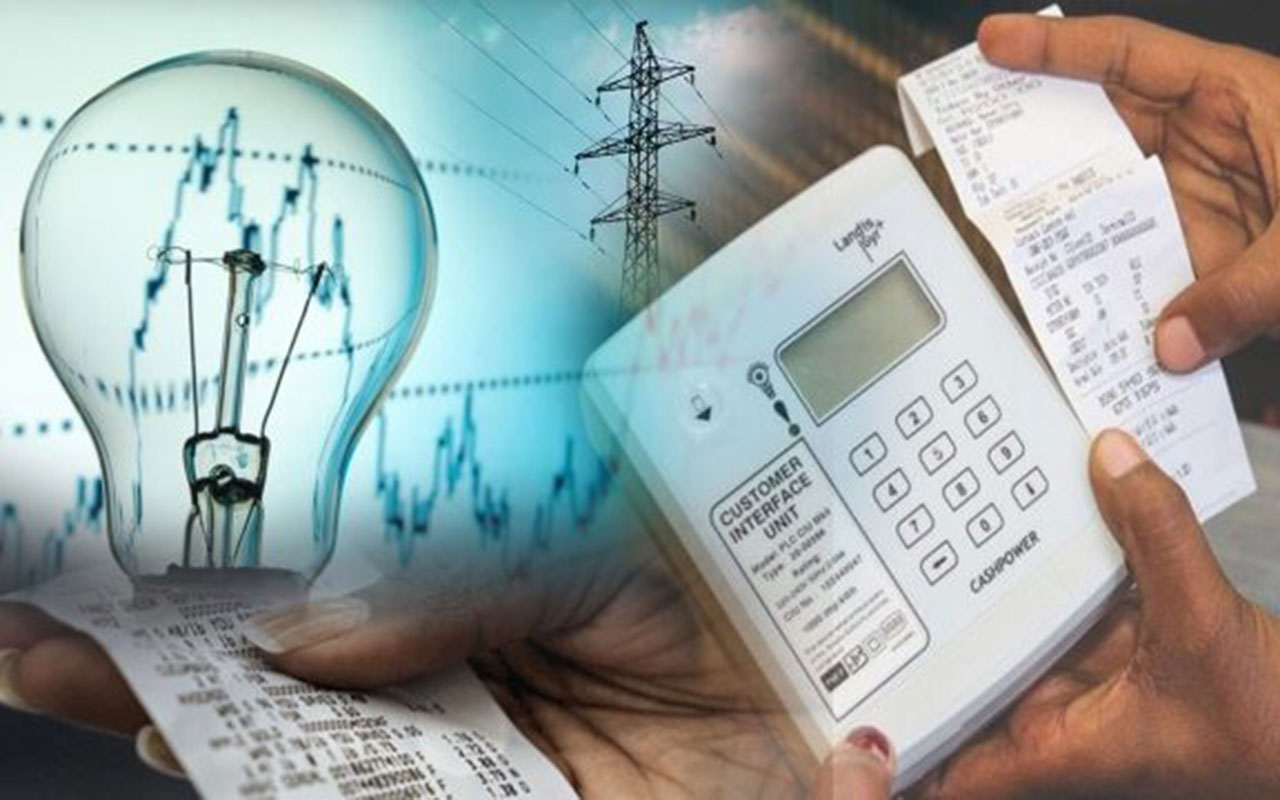
ABUJA – Electricity consumers in the Federal Capital Territory (FCT) have raised concerns over what they describe as an unexplained increase in electricity tariffs, alleging that units on their prepaid meters have dropped without prior consultation.
Residents in Kubwa and Lugbe told newsmen on Sunday that they noticed a significant reduction in the number of units received for the same amount of money when recharging their meters.
Mrs Juliet Ogheneovo of Kubwa said she used to get 89.9 units for N5,000, but now only receives 73.4 units.
“I was surprised when I purchased credit for my meter and discovered the units had reduced,” she said.
Similarly, Mr Malik Abubakar, also from Kubwa, said he now gets 51.7 units for N5,000, down from 89.9 units.
“It is frustrating to pay a higher tariff when the power supply is not even regular,” he added.
In Lugbe, Mrs Caroline Uneru reported that N6,000 now buys her 88.2 units, compared with 99.6 units previously.
Mr Stephen Adelaja said he used to get 28.7 units for N2,000 but now only receives 22.5 units.
“Power supply is not stable, and AEDC is inconsistent with prepaid tariffs,” he complained.
The Nigerian Electricity Regulatory Commission (NERC), which regulates electricity tariffs, told newsmen that there has been no recent review of tariffs.
An official explained that tariff revisions involve extensive stakeholder consultations and media engagement before implementation.
Under the current structure, Band A customers with 20–24 hours of electricity pay N206–N209 per kWh, Band B (minimum 16 hours) pay N46.93–N63/kWh, Band C (minimum 12 hours) pay N63/kWh, and Band D (8–12 hours) pay N41/kWh.
Band E (4–8 hours) is often subsidised.
AEDC has promised to investigate the consumers’ claims.
However, as of the time of filing this report, the distribution company had yet to respond to messages and evidence of the alleged increase, which were sent over a week ago.