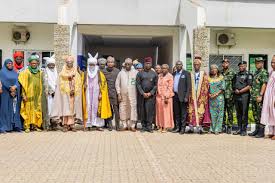
KADUNA: Stakeholders in peacebuilding have called for stronger collaboration between state institutions and community actors to address conflict drivers and promote sustainable peace in Kaduna State.
The call was made during an Executive Peace Roundtable held in Kaduna at the weekend under the Delimi PROSPER Project.
The dialogue, organised to generate practical solutions for peace and development, was implemented by Search for Resilience and Development with support from the UK Foreign, Commonwealth and Development Office’s SPRiNG programme.
Participants included policymakers, youth representatives, traditional rulers, security actors, civil society organisations, development partners and disability inclusion advocates.
They examined sustainable peacebuilding approaches and strategies to strengthen cooperation between communities and government institutions.
Project Officer of the Delimi PROSPER Project in Kaduna, Salim Yunusa, said the initiative was designed to deepen engagement between citizens and government through structured dialogue.
“Collaboration between communities and public institutions remains the most reliable pathway to sustainable progress, unity and development across Kaduna State,” Yunusa said.
He added that the project had organised several engagements with government officials, youth groups and other stakeholders to strengthen dialogue and public participation in peacebuilding initiatives.
Executive Director of the Delimi PROSPER Project, Richard Ali, said many conflicts in Nigeria are often framed along ethnic or religious lines but are rooted in deeper structural challenges.
According to him, pressures over resources, governance gaps, environmental changes and the narratives communities build around these pressures often fuel conflicts.
Ali explained that the project focuses on non-kinetic interventions, emphasising youth knowledge, storytelling and policy engagement rather than relying solely on security responses.
Kaduna State Commissioner for Information, Ahmed Maiyaki, said the government was ready to collaborate with civil society and development partners to curb misinformation and hate speech.
He emphasised that youth-produced documentaries, podcasts and digital storytelling must be carefully guided to avoid narratives capable of triggering tension within communities.
In a communiqué issued after the meeting, participants emphasised preventive and non-kinetic approaches to complement existing security responses to conflict challenges.
They also highlighted the growing influence of youth voices and digital narratives in shaping public perception and strengthening community early-warning systems.