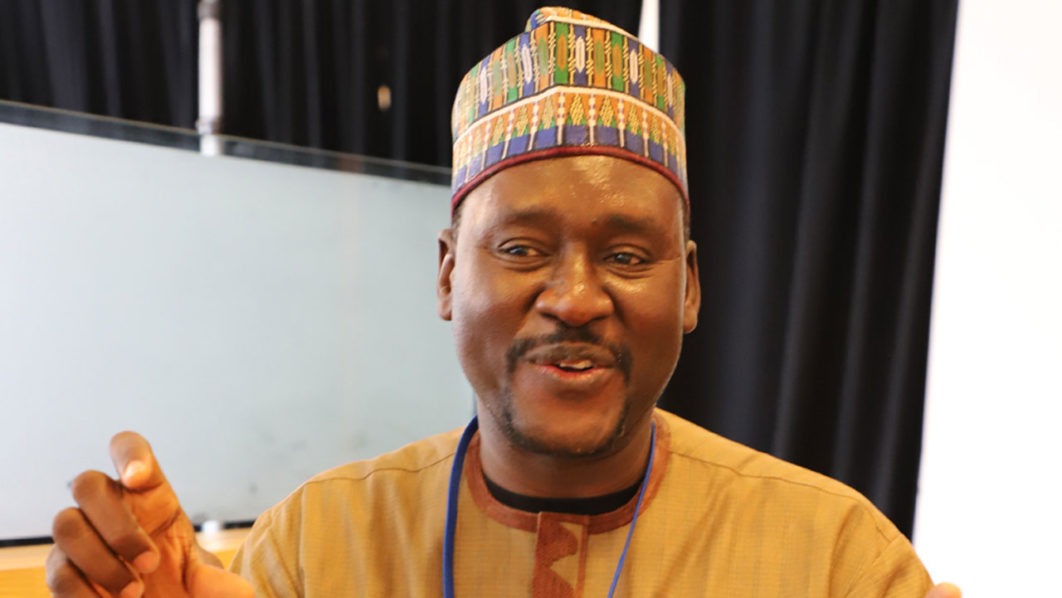
ABUJA: The Executive Director of the Civil Society Legislative Advocacy Centre (CISLAC) and Head of Transparency International Nigeria, Auwal Rafsanjani, has cautioned Nigerians against portraying the country negatively on the international stage.
Speaking during the News Agency of Nigeria Personality Interview Series in Abuja, Rafsanjani urged citizens to distinguish between criticising government leadership and actions that undermine national interest.
“There is a difference between disagreeing with leaders and attacking your country. When you destroy your country’s image, you are invariably injuring yourself,” he said.
He warned that calls for international sanctions against Nigeria, often driven by dissatisfaction with governance, usually hurt ordinary citizens more than political leaders.
“When economic sanctions are imposed, they affect ordinary people, not necessarily the leaders who often have alternatives outside the country,” he added.
Rafsanjani maintained that credible and transparent elections remained the most effective means of removing unpopular leaders, rather than seeking external punitive measures.
He called for stronger collaboration among civil society organisations, the media and democratic institutions to promote voter education, responsible public discourse and peaceful electoral participation.
According to him, since Nigeria’s return to democracy in 1999, CSOs have played critical roles in civic education, sensitisation against electoral violence and fraud, and capacity-building for women and youths, despite operating with limited resources.
He noted that CSOs had also worked with security agencies, particularly the police, on election security management, while engaging political parties and other stakeholders to deepen electoral awareness.
Rafsanjani, however, expressed concern that political parties often fail in their responsibility to educate supporters on democratic processes, leaving civil society groups to fill the gap.