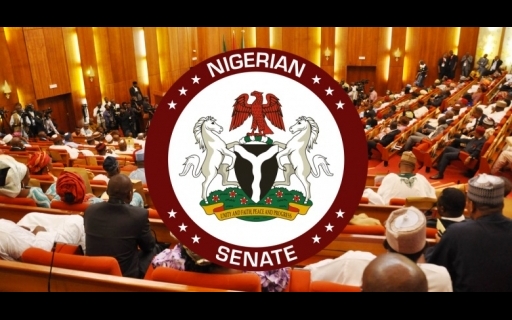
The Nigerian Senate on Tuesday intensified efforts to reinforce the country’s financial regulatory system, as Opeyemi Bamidele represented Senate President Godswill Akpabio at a public hearing on a proposed amendment to the Banks and Other Financial Institutions Act (BOFIA) and an investigative motion targeting Ponzi schemes.
The hearing considered a Bill for an Act to Amend BOFIA 2020 (SB959) alongside a motion to probe the growing threat of fraudulent investment platforms, with particular focus on the recent Crypto Bullion Exchange (CBEX) incident.
Addressing stakeholders, Senator Bamidele explained that the proposed amendment seeks to strengthen the monitoring and regulation of Financial Technology (FinTech) institutions operating in Nigeria. He noted that the rapid expansion of digital financial services has made it imperative for regulators to adopt stronger supervisory mechanisms to protect investors and preserve financial system stability.
According to him, the Senate aims to enhance the powers of the Central Bank of Nigeria and other relevant agencies to ensure strict compliance with existing laws, close regulatory gaps, and prevent systemic risks within the financial sector.
On the investigative motion, lawmakers expressed alarm over the rising number of Nigerians losing money to Ponzi schemes. They stressed that the financial system is anchored on public trust, warning that unchecked digital fraud and investment scams could severely undermine confidence in the nation’s economy.
The Senate resolved to conduct a comprehensive investigation into the operations of CBEX and similar entities to curb fraud, financial losses, and potential money laundering activities. It also underscored the need for stronger enforcement measures and closer collaboration among regulatory and law enforcement agencies.
Chairman of the Senate Committee on ICT and Cybersecurity, Shuaib Afolabi Salisu, acknowledged the vital role of FinTech companies in promoting financial inclusion and economic development. However, he urged operators to tighten their internal compliance frameworks and maintain transparent engagement with regulators to sustain public trust.
Stakeholders at the session included representatives from the Bank of Industry, Stanbic IBTC Bank, Federal Inland Revenue Service, Economic and Financial Crimes Commission, and the Federal Ministry of Industry, Trade and Investment, among others.
The Senate further directed the Central Bank of Nigeria, Moniepoint, the Economic and Financial Crimes Commission, and other relevant bodies to submit detailed memoranda to the Secretariat within two weeks to aid legislative deliberations.
Lawmakers maintained that strengthening oversight, enforcing accountability, and deepening regulatory coordination would enhance transparency, safeguard investors, and bolster confidence in Nigeria’s rapidly evolving digital financial ecosystem.