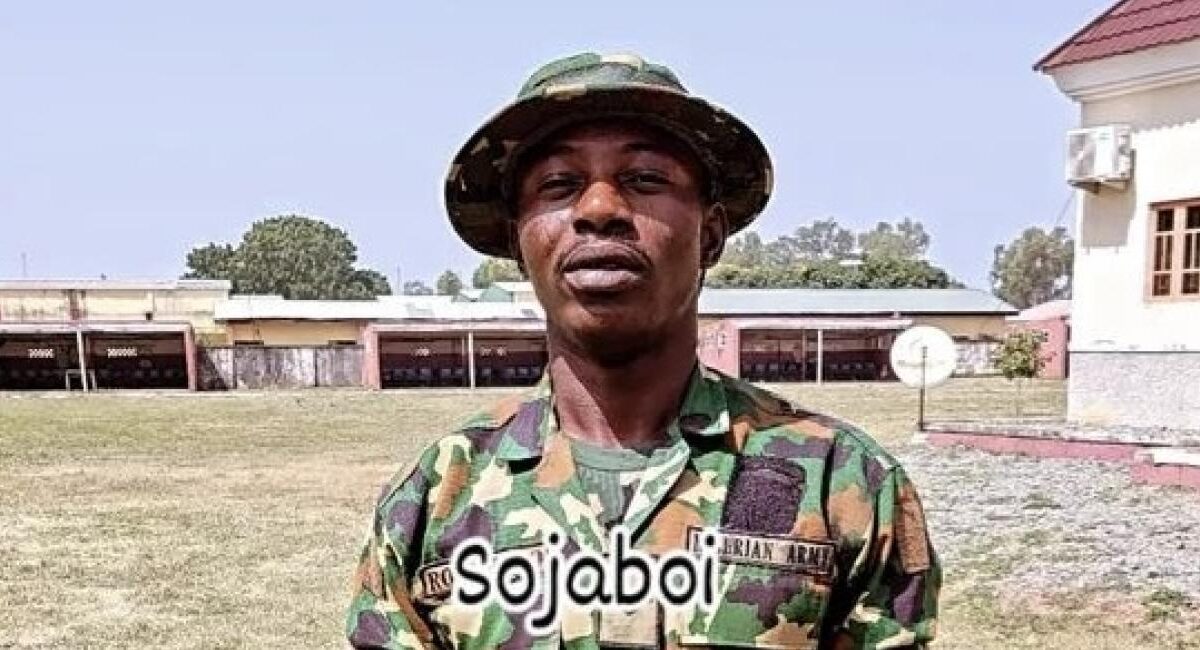
The Nigerian Army has dismissed as false and misleading the allegations made by a dismissed former soldier, Ex-Lance Corporal Rotimi Olamilekan, also known as “Soja Boi,” regarding the welfare, pay, and provision of uniforms and protective gear to personnel.
In a statement issued on Tuesday, April 7, 2026, and made available via its official X handle, the Acting Director of Army Public Relations, Colonel Appolonia Anele, said Olamilekan’s claims, which have been circulating on social media and some mainstream media platforms, were sensationalised and aimed at misleading the public.
The Army said the former lance corporal was not dismissed for “speaking the truth” or for expressing views on political leadership, as suggested in his interview, but for repeated acts of indiscipline and violations of the Armed Forces Social Media Policy.
According to the statement, the Nigerian Army, like other professional military institutions, operates a strict code of conduct backed by the Armed Forces Act, stressing that unauthorised media appearances, partisan content creation, commercialisation of military identity, and misuse of military uniform are serious breaches of military regulations.
The Army maintained that Olamilekan’s dismissal followed due process in line with extant military laws.
On the issue of soldiers’ remuneration, the Army said it runs a structured and transparent salary system in which earnings are based on rank and years of service, as provided for in the Manual of Financial Administration for Armed Forces of Nigeria.
It explained that beyond their monthly salaries, personnel are entitled to uniform and other allowances paid directly into their accounts.
The Army further stated that troops deployed on operations or assigned duties outside their units also receive Ration Cash Allowance, Habit Allowance, and free feeding arrangements.
It added that personnel serving in operational theatres, including Operation HADIN KAI in the North East, are paid operational allowances and other mission-specific entitlements to support their welfare and boost operational effectiveness.
Describing as inaccurate the claim that soldiers receive no benefits beyond their basic salaries, the Army said such assertions do not reflect the realities of military service.
It also rejected claims that soldiers are compelled to buy their own uniforms and protective gear, including bulletproof vests and helmets.
The statement said the provision of uniforms, kits, arms, ammunition, and operational gear remains the institutional responsibility of the Nigerian Army through its established logistics and ordnance systems.
While acknowledging that some personnel may choose to supplement their kits for personal comfort or preference, the Army stressed that such decisions are voluntary and do not point to any systemic failure in equipment provision.
The Army insisted that no soldier is deployed to any operational theatre without the necessary protective equipment, describing suggestions that such gear is only issued during ceremonial visits as deliberate falsehoods.
It warned that such allegations are reckless and capable of undermining public confidence, troop morale, and ongoing national security efforts.
The Nigerian Army therefore urged the public to disregard what it called baseless allegations intended to generate unwarranted sympathy and misinform citizens.
It also called for continued public support for the Armed Forces and other security agencies, whose personnel, it said, continue to make sacrifices in defence of the country.
The Army further advised the media to verify security-related information from credible official sources before publication.