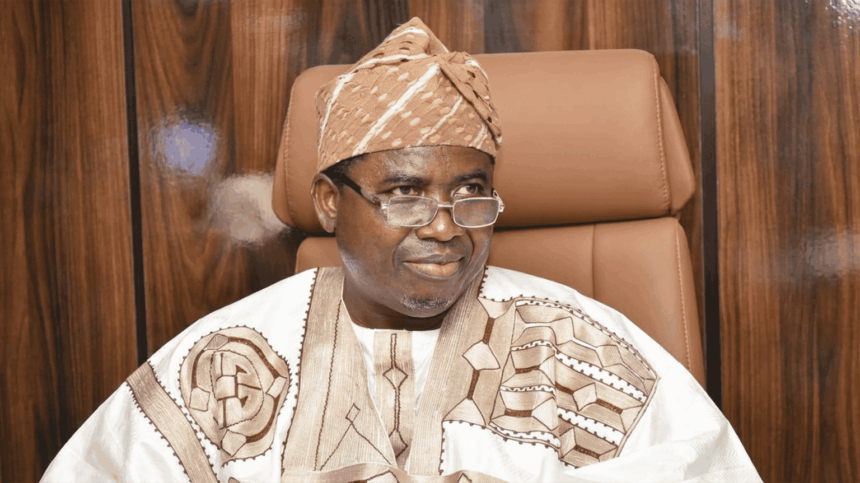
The Independent National Electoral Commission (INEC) has dismissed recent calls for the removal of its Chairman, reaffirming that such demands are unconstitutional and undermine the independence of Nigeria’s electoral body.
In a press statement issued on April 2, 2026, the Commission said it was responding to allegations of partisan bias and criticism over its decision to comply with a recent Court of Appeal judgment.
INEC stressed that the appointment, tenure, and removal of its Chairman and National Commissioners are strictly governed by Section 157 of the 1999 Constitution (as amended), and not subject to the influence of political parties or interest groups.
According to the Commission, any attempt to remove the Chairman outside constitutional provisions amounts to a direct assault on its autonomy. It maintained that its actions were guided solely by the rule of law and the need to uphold judicial decisions.
INEC explained that its compliance with the Court of Appeal ruling was necessary to avoid a repeat of past situations in Zamfara and Plateau states, where elected officials lost their positions due to the disobedience of court orders.
The Commission also cited a preservative order restraining it from taking steps that could render ongoing legal proceedings at the Federal High Court ineffective, including monitoring activities of the David Mark-led faction of the African Democratic Congress (ADC).
The Commission noted that it had earlier recognised the leadership of the faction in September 2025, shortly after the matter was instituted in court.
However, it emphasised that the directive to maintain the status quo ante bellum required strict adherence to the position of parties before the dispute began. It added that Section 287(2) of the Constitution mandates all authorities to enforce judgments of the Court of Appeal.
INEC further rejected claims that its actions threaten Nigeria’s multi-party system. It highlighted the recent registration of new political parties, including the Democratic Leadership Alliance (DLA), Nigeria Democratic Congress (NDC), and National Democratic Party (NDP), bringing the total number of recognised parties to 22.
This, it said, demonstrates its commitment to expanding democratic space rather than restricting it.
On voter revalidation, the Commission clarified that the exercise is a long-standing administrative plan aimed at improving the integrity of the National Register of Voters.
It explained that the register, which contains data from 2011 to 2024, requires updating to address issues such as multiple registrations, voter transfers, and records of deceased persons.
INEC stressed that the revalidation exercise is not a fresh voter registration and is not targeted at any region, political party, or demographic group. Instead, it described the process as a nationwide audit to be conducted in phases across all polling units, with digital options to enhance accessibility.
The Commission assured stakeholders that the exercise would be transparent and inclusive, with adequate engagement of all relevant parties.
INEC also reaffirmed its focus on preparations for the upcoming off-cycle governorship elections in Ekiti State scheduled for June 2026 and Osun State in August 2026, stating that it would not be distracted by what it described as unfounded allegations.
Reiterating its commitment to credible elections, the Commission said all its decisions are based on legal frameworks and thorough evaluations aimed at ensuring transparency, fairness, and adherence to the rule of law.
It concluded that calls for the resignation of its Chairman are misplaced and reiterated its resolve to deliver free, fair, credible, and inclusive elections for Nigerians.