Some residents of Gwagwalada Area Council of the Federal Capital Territory (FCT) have called for improved sports facilities, regular competitions, and greater investment in grassroots sports to boost youth development.
The residents made the call in separate interviews with the News Agency of Nigeria (NAN) on Monday in Gwagwalada.
They said that although many young people were interested in sporting activities, poor facilities, inadequate equipment, and limited opportunities continued to hinder their participation and development.
Mr Samuel Peter, a grassroots football coach, said many talented youths possessed the passion and ability to excel but lacked the facilities needed to realise their potential.
“Many talented young players have the passion and ability to succeed, but poor facilities and inadequate equipment limit their development.
“Regular community tournaments and sponsorship from private organisations will keep young people engaged and create opportunities for talented athletes,” he said.
Peter noted that sports extended beyond recreation, instilling discipline, teamwork, and leadership while keeping young people away from crime and other social vices.
“Sports teach discipline, teamwork, and leadership. They also help keep young people away from crime and other negative influences,” he added.
Similarly, Mr Obaletin Jude, a grassroots footballer, said poor playing conditions and inadequate equipment had made it difficult for many young players to develop their skills.
“I play football because I genuinely love the sport, but we train on rough pitches and sometimes we do not even have enough footballs. Transporting players to competitions is another major challenge,” Jude said.
He expressed optimism that improved facilities, regular competitions, and sponsorship would motivate more youths to pursue sports professionally.
“Better football pitches, regular tournaments, and support from sponsors will encourage many young people to take sports seriously and even pursue it as a career,” he said.
Also speaking, Mr Alake Destiny, another grassroots footballer, described sporting activities in his community as irregular due to poor infrastructure.
Destiny said competitions were held only occasionally, while poor playing pitches and a lack of equipment discouraged many young players from remaining active.
“The biggest challenges we face are poor playing pitches and inadequate equipment. We need proper football fields, lighting for evening training, and quality training equipment,” he said.
He added that improving sporting facilities would reduce injuries and encourage more youths to participate in grassroots sports.
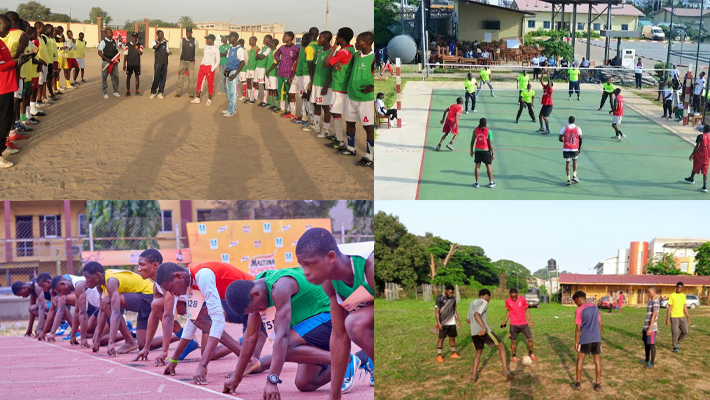
Mr Adejoh Israel, a resident, said football, volleyball, basketball, table tennis, and badminton remained popular among young people in Gwagwalada.
Israel said snooker had become one of the fastest-growing recreational activities because of the availability of several centres.
He, however, identified poor maintenance as one of the greatest challenges facing sports development in the area.
“Many sports facilities were built years ago but have not been maintained. Damaged equipment increases the risk of injury, and there are not enough facilities to accommodate everyone who wants to play,” he said.
According to him, football is commonly played on sandy and rocky pitches that expose players to injuries, while many basketball courts are incomplete, and badminton is mostly played outdoors because of the absence of standard indoor facilities.
Mr Martins Temidayo, another resident, said inadequate sporting infrastructure discouraged many young people from participating in recreational activities.
Temidayo noted that standard swimming facilities were scarce in Gwagwalada, making it difficult for residents interested in the sport to train regularly.
“Government should provide better sports facilities, maintain existing ones regularly, and organise tournaments that give young people opportunities to develop and compete professionally,” he said.
He added that sports had improved his physical health, expanded his social circle, and strengthened the sense of community among participants.
Mr Chijioke Daniel, manager of a sports and recreation centre, said young people were always willing to participate whenever quality facilities were available.
“Young people are always willing to participate in sports whenever good facilities are available. Football and snooker are among the most popular activities,” Daniel said.
He said maintaining sports facilities required significant financial resources, making partnerships among government, private organisations, and the community necessary to improve access for young people.
We observed that many football pitches in Gwagwalada were uneven and lacked proper grass cover, increasing the risk of injuries among players. Basketball courts and volleyball pitches also showed signs of poor maintenance.
Sporting activities continued to promote interaction across generations.
At a football pitch beside El-Rufai Park, opposite Kontagora Estate, elderly men gather every Saturday for recreational football, while Sundays are reserved mainly for youth matches.
Some privately owned recreation centres also provide indoor sporting activities such as table tennis, snooker, board games, and computer games, although users are required to pay to access the facilities.
Residents believe that increased investment in sports infrastructure and regular competitions would encourage youth participation, promote healthy living, and contribute to community development.