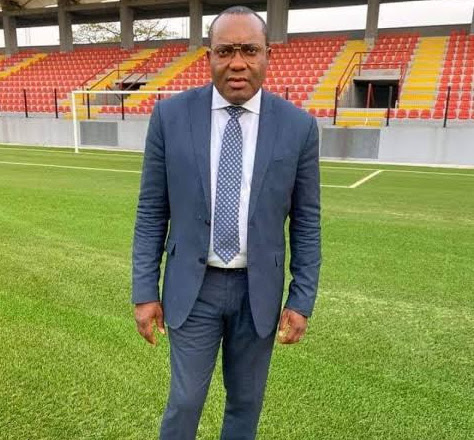
The North-Central Coordinator of the Gusau 4+4 Solidarity Forum, Ochoga Ameh, has advised the Chief Executive Officer of Monimichelle Construction Company, Ebi Egbe, to refrain from commenting on issues concerning Nigerian football, accusing him of being part of the problems affecting sports development in the country.
Ameh made the remarks while reacting to recent statements attributed to Egbe on developments in Nigerian football.
According to him, Egbe, popularly known as Monimichelle, lacks the moral justification to criticise factors responsible for the challenges confronting football development, alleging that several projects handled by his company have remained uncompleted.
“Monimichelle is part of our problem in sports development in the country. It is a known fact that one of the major causes of the present downward trend facing the country is the lack of infrastructure,” Ameh said.
He alleged that several stadium projects being handled by Monimichelle Construction Company across the country were yet to be completed ostensibly because of Monimichelle’s peculiar style of executing projects, arguing that their continued delay was depriving young footballers of opportunities to develop their talents.
Ameh specifically cited the FIFA Goal Project facility at Ugborodo in Delta State, which he said was being handled by Monimichelle Construction Company.
He questioned the choice of location and alleged that the facility had remained uncompleted, arguing that the project could have provided greater benefits to young footballers in the Niger Delta if completed and properly utilised.
“If Egbe has the interest of the country at heart as he is making us to believe, he would have advised against the construction of that facility there. But because of the money involved, he took up the job and abandoned it till date,” Ameh alleged.
He further claimed that the modern stadium facility being handled by the company in Makurdi, Benue State, was still not being fully utilised, leaving young people in the state waiting for facilities to support their sporting ambitions.
Ameh also mentioned the remodelling of the Yakubu Gowon Stadium in Port Harcourt and a 900-capacity stadium project in Zamfara State, alleging that the projects had suffered delays.
He maintained that the alleged delays in completing sports infrastructure projects had contributed to the challenges confronting grassroots football development and talent discovery in Nigeria.
Continuing, Ameh said Egbe’s record in handling projects, as alleged by him, did not give the construction executive sufficient grounds to be overly critical of those currently responsible for football administration in the country.
He argued that properly completed and functional sports facilities across the country would provide young Nigerians with more opportunities to develop their talents and potentially produce players capable of representing the country at international competitions.
Ameh therefore urged stakeholders in Nigerian football to focus on completing abandoned or delayed infrastructure projects while ensuring that existing facilities are made accessible to young athletes.
Ameh however advised the likes of Egbe to start addressing the country’s football problems from the task presently given to them.
“I don’t see why a man that cannot complete a mere 900-capacity community stadium in over three years would be criticizing anybody,” Ameh stated, even as he stressed that Egbe’s stock in trade is seek for financial variation running into millions of naira anywhere he is at work.