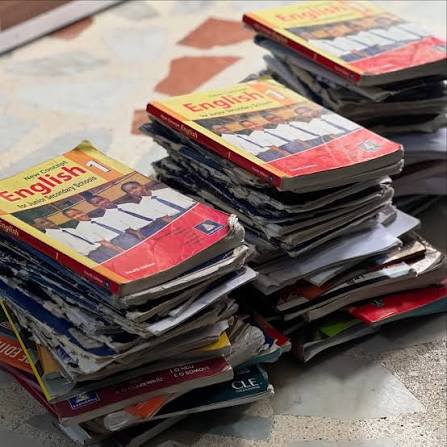
BENIN CITY — As schools prepare for the commencement of the 2026/2027 academic session, parents and guardians in Edo State have urged school administrators, particularly proprietors of private schools, to comply fully with the state government’s policy permitting younger siblings to reuse approved textbooks.
The parents appealed to school authorities to ensure that their booklists and admission or resumption requirements do not undermine the policy by indiscriminately prescribing new editions or insisting that every child must purchase a separate copy of the same approved textbook.
They argued that where an older sibling’s textbook remains an approved edition and is still in good condition, the younger child should be allowed to inherit and use it without penalty.
One of the parents, a widow and mother of four, Mrs. Juliana Ekhaguere, said strict compliance with the policy would help reduce the financial burden on families already grappling with rising living costs and increasing educational expenses.
According to her, parents are often compelled to purchase new textbooks every academic session, even when older children have books that could conveniently be passed down to their younger siblings.
The concern, she noted, is particularly significant with textbooks that incorporate workbooks, exercise sections and spaces for class or home assignments, which are often rendered unusable after one academic session.
She appealed to school proprietors to distinguish between core textbooks and consumable workbooks, stressing that parents should not be compelled to buy another copy of a reusable textbook merely because a younger child is entering the same class.
The parents maintained that compliance with the government’s directive should go beyond official pronouncements and be reflected in the actual operations of schools, especially in the preparation and enforcement of annual booklists.
They also called on publishers to support the policy by producing durable textbooks capable of serving more than one student over successive academic sessions.
“No parent should be forced to buy a new textbook simply because a younger sibling is entering the same class or using the same approved curriculum,” the parents maintained.
Similarly, education stakeholders, including the Chairman of the Board of Trustees of the National Parent Teacher Association of Nigeria (NAPTAN), Adeolu Ogunbanjo, have advocated the separation of workbooks from core textbooks to make the latter reusable.
Ogunbanjo said he fully supported the campaign for reusable textbooks, recalling that textbooks were traditionally passed from older to younger siblings.
“I am fully in support of the campaign to make textbooks reusable. The Nigerian Educational Research and Development Council (NERDC) should ensure that textbooks have longer lifespans,” he said.
He stressed that separating consumable workbooks from core textbooks would make it possible for families to reuse textbooks without compromising students’ learning activities.
The concerned parents and education stakeholders therefore called on the Edo State Ministry of Education and relevant quality-assurance authorities to intensify monitoring of private schools and sanction institutions that attempt to circumvent the policy by compelling parents to purchase new textbooks where reuse is permitted.
They said effective enforcement of the policy would not only reduce the cost of education for families but also promote responsible use of educational resources and ensure that government measures designed to ease the burden on parents achieve their intended purpose.