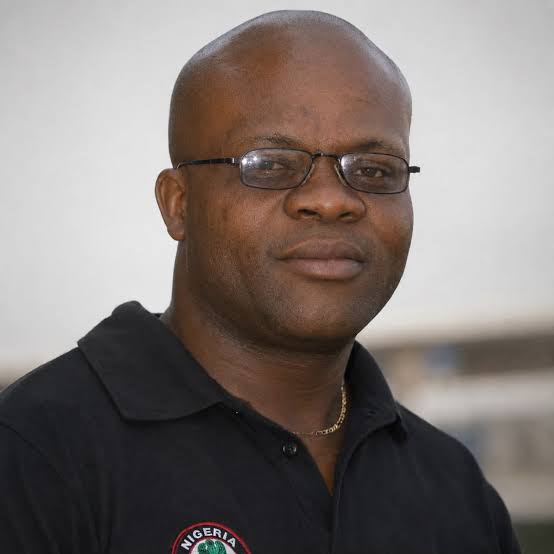
Ambassador Fanny Amun has stepped down as Chairman of the Nigeria Football Federation (NFF) Fact-Finding Committee after submitting the committee’s report, declaring that the time has come for fresh thinking and a new direction in Nigerian football.
Amun made his position known during a press conference at the National Stadium in Lagos on Tuesday, August 25, 2026, where he explained the circumstances surrounding his decision to resign immediately after completing the assignment given to him by the NFF.
The respected former NFF General Secretary said his resignation was principally aimed at protecting the integrity and independence of the committee’s work. According to him, he deliberately completed and submitted the report ahead of the two-week deadline given by the federation because he did not want external interests to influence the committee’s conclusions.
Amun stressed that he had always approached assignments with a strong sense of responsibility and believed that once a task had been completed, there was no reason to remain unnecessarily in the position.
His resignation comes barely eight days after the NFF inaugurated the committee on August 17, following Nigeria’s disappointing performances in recent international competitions, particularly the Super Falcons’ failure to qualify for the 2027 FIFA Women’s World Cup. The committee was specifically mandated to investigate both the direct and remote causes of the national teams’ setbacks and recommend solutions.
The committee brought together some of the country’s experienced football figures, including former Nigeria U-20 coach Ladan Bosso, former Super Falcons captain Desire Oparanozie, former Super Eagles captain Mutiu Adepoju and former FIFA referee Dr Alex Mana, with Nasiru Jibril serving as secretary.
Speaking on the wider state of Nigerian football, Amun’s message appeared to go beyond his personal resignation. His position points toward the need for a serious reassessment of the structures, policies and administrative processes governing the national teams.
For many stakeholders, the committee’s report could become an important document in determining the next chapter of Nigerian football. Issues surrounding technical preparation, administration, player development, coaching, logistics and accountability are expected to attract attention as the NFF considers the committee’s recommendations.
Amun’s decision has therefore placed the spotlight firmly on the NFF. Having completed its assignment and submitted its findings, the major question now is whether the federation will embrace the recommendations and translate them into meaningful reforms.
The former national team coach leaves the assignment with a clear message: Nigerian football cannot afford to remain static. If the game must regain its pride and competitiveness, there must be the courage to embrace change, confront difficult truths and put the long-term interest of Nigerian football above individual interests.