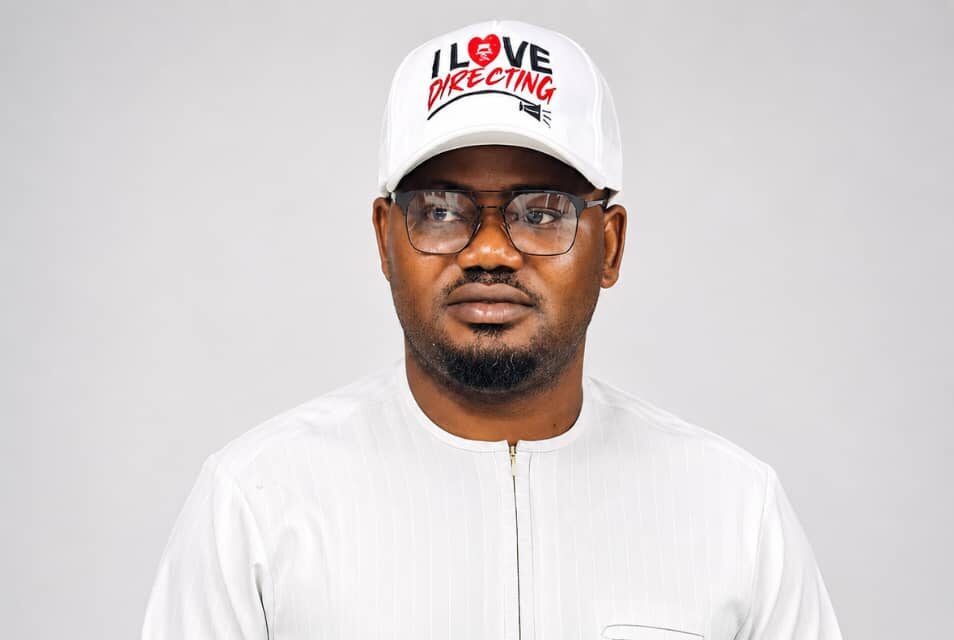
Ino Moses Jonah is a Nigerian filmmaker, director, producer and storyteller whose work has cut across theatre, television, cinema and creative training.
His journey began on stage, where storytelling first drew him in. He later studied Mass Communication at Kogi State University and trained in Film and Television Production at NTA Television College, Jos. Over the years he has worked on productions including NANA, Gbege and Mechanic Diary, and has directed and produced cinema films such as ALMOST and AKATE.
In this conversation with Grace Ijeoma Umeh, our Features Editor, he speaks about his path into filmmaking, the state of Nollywood, technology and creativity, youth development, Edo’s creative potential, and his drive to put African stories on the global stage.
———————————————————
Who is Ino Moses Jonah?
Ino Moses Jonah:
I am a filmmaker and storyteller. I believe strongly in the power of stories to shape how we see ourselves and our society.
I started from stage drama and moved into television and film. For me, filmmaking is not just about making movies. It is also about creating space for other people to grow and tell their own stories.
What drew you to filmmaking?
Storytelling has always fascinated me. Film allows you to reach people you may never meet in person.
A film can take someone into another person’s reality. It can raise questions, preserve culture, teach and still entertain. That range is what keeps me committed to the work.
Your films often touch on social issues. Why?
Because I think stories should do more than entertain.
With ALMOST, I was concerned with the realities around irregular migration and the choices young people face. With AKATE, I explored themes of migration, betrayal, cultism, family and redemption, while also centering Edo culture in the narrative.
Film can hold up a mirror to society. That is important to me.
What has been your most significant project so far?
AKATE stands out. It was an attempt to tell an Edo story on a scale that could travel beyond the state.
My interest is in showing that stories from any part of Nigeria can compete, travel, and start conversations at home and abroad.
You’ve spoken about Edo becoming a film destination. What is your view?
Edo has all the ingredients: culture, history, locations and talent. What is needed is a stronger ecosystem.
That means investment, training, basic production infrastructure, more cinemas, and better collaboration between government and private players.
The creative sector can create a lot of jobs if we build the right structures. Edo can play a major role in that.
What is your view on Artificial Intelligence in filmmaking?
AI is a tool, not a replacement for the storyteller.
Filmmakers should learn to use it. It can help with research, idea development, script work, planning and other parts of production.
I’ve also been involved in training young creatives on practical uses of AI in film. The goal is simple: use technology to tell better, bolder stories, while keeping the human element at the center.
What major challenge do you see in Nollywood?
Patience, professionalism and structure.
Many young people want to achieve in two years what took others ten or twenty years. Ambition is good, but it must meet preparation.
My advice is always: go to set, learn, serve, observe. Experience, discipline and relationships matter a lot at the beginning. Money will follow competence.
What advice do you have for young filmmakers?
Get on set.
Don’t just watch films as an audience. Watch as a filmmaker. Study the camera, lighting, sound, editing, performance and storytelling.
And don’t be afraid to start small. Every set is a classroom.
What is your greatest ambition?
To make a film that becomes part of the African conversation.
I want to tell African stories that can travel to the biggest screens in the world and still carry our values, our morals, and our realities. Stories that parents, schools and communities can also learn from.
I believe I’m getting closer. My job now is to keep preparing so that when the opportunity comes, I’m ready.
What does “Edo to the World” mean to you?
It’s more than a slogan. It’s responsibility.
If your work comes from Edo, you carry Edo with you. That means professionalism, learning, excellence, and respect for the culture and people that raised you.
How would you like to be remembered?
As someone who used creativity to create opportunities for others.
I don’t want the story to be only about the films I made. I want it to include the people I worked with, the young people I encouraged, and the stories we told together.
My goal is simple: tell stories that matter, build people, and leave the industry better than I met it.
“Filmmaking is life. And in making a film, you must give the script the lens to life.” — Ino Moses Jonah