Another Independence Day has arrived, and Nigeria turns 66.
For a country as complex, diverse and resilient as Nigeria, 66 years is more than just a number.
It is more of a story bordering on extraordinary possibilities, difficult seasons, missed opportunities, remarkable achievements and, above all, a people who have continued to believe that the Nigerian project is worth preserving and improving.
Independence Day should therefore be more than a ceremony of flags, speeches and familiar patriotic songs.
It should also be a moment of honest reflection: Where are we today? How far have we come? And what kind of country do we want to leave for those coming after us?
The honest answer is that Nigeria has made progress.
Nonetheless, it is equally honest to say that millions of Nigerians are still waiting to feel the benefits of that progress in their everyday lives.
That contradiction defines much of our national experience.
In 2026, Nigeria is undertaking significant reforms aimed at reshaping the country’s economy and institutions.
The new tax framework became operational from January 1, 2026, following the transition from the previous tax regime.
There is also movement towards a more decentralised approach to policing.
The National Assembly has passed the Constitution (Sixth Alteration) Bill, 2026, which provides for the establishment of state police services alongside the Nigeria Police Force.
The Senate passed it on 24 June 2026, and the House of Representatives passed the Executive-sponsored version on 23 July with 311 votes.
It was transmitted to all 36 State Houses of Assembly on 16 September 2026 under Section 9 of the Constitution.
These developments matter because nations do not transform merely by wishing for better outcomes.
They transform when institutions are reformed, systems are strengthened and policies are sustained long enough to produce measurable results.
The impact of every reform must be felt at every level of society.
Policies must ultimately be judged by what they mean for the ordinary Nigerian.
A new tax system is important, but the trader wants to know whether her business can survive and grow.
The young graduate wants more than economic statistics; he wants an opportunity to build a career at home.
The farmer wants security, access to land, affordable inputs and a reliable market.
The family wants electricity, affordable food, decent healthcare and safe roads.
The small business owner wants access to credit without being suffocated by costs.
This is where the real test of Nigeria’s progress lies.
It is not enough for the economy to improve on paper or projector.
Growth must increasingly become something Nigerians can see, touch and experience.
There are also reasons to be encouraged.
Nigeria’s industrial capacity is changing.
The Dangote Petroleum Refinery has become operational at a scale that has altered the country’s refining landscape, with the facility reporting a current crude distillation capacity of 700,000 barrels per day.
That development represents something larger than one refinery. It is a reminder that Nigeria possesses the capital, talent, entrepreneurship and market necessary to undertake projects of enormous scale.
For decades, Nigerians have asked why a country blessed with crude oil should depend so heavily on imported refined petroleum products. The emergence of large-scale domestic refining offers an opportunity to begin answering that question differently.
But infrastructure alone will not transform Nigeria.
We must build institutions around our infrastructure. We must create an environment where businesses can produce competitively, where investors can trust the rules, where innovation is rewarded and where government policies survive beyond political cycles.
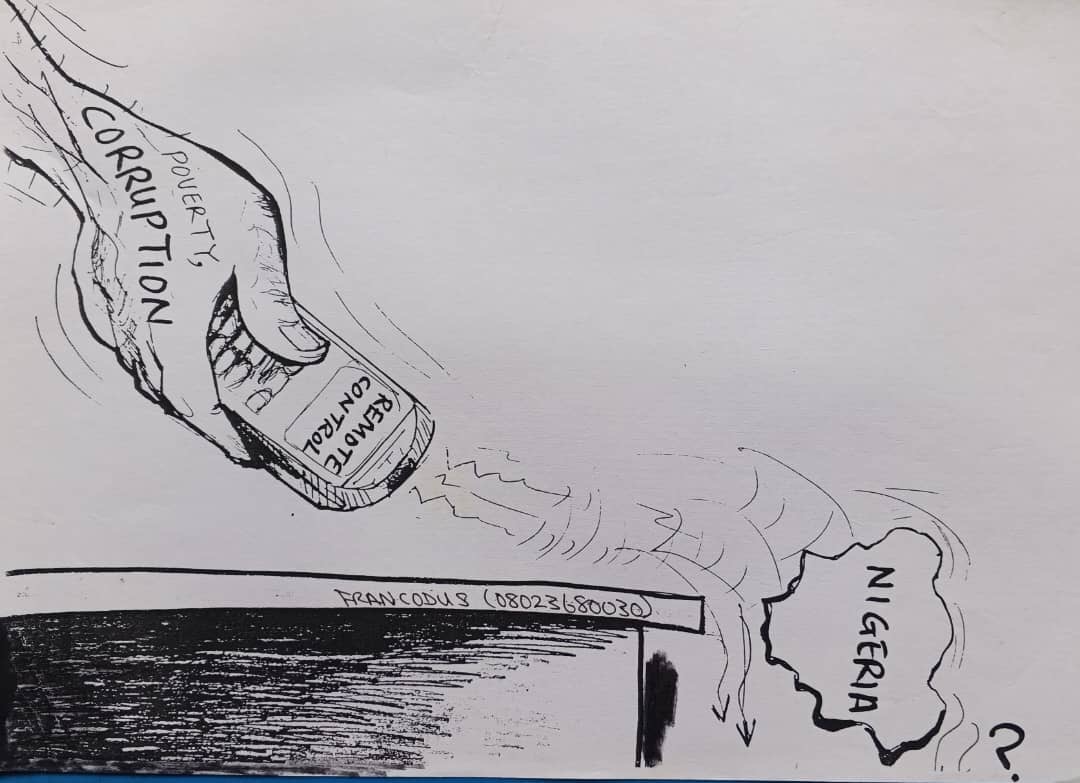
At 66, Nigeria must also confront an uncomfortable truth: our biggest challenge is not that we lack potential. It is that we have too often struggled to convert potential into consistent outcomes.
We have brilliant young people. We have natural resources.
We have entrepreneurs building companies from difficult circumstances.
We have farmers feeding communities, professionals competing globally, creatives exporting Nigerian culture and technology entrepreneurs solving problems from Lagos, Abuja, Enugu, Kaduna, Port Harcourt and countless other cities.
The question is how to create a national system that allows these individual successes to become collective progress.
That requires responsibility from everyone.
Government must govern better. Public institutions must become more accountable and efficient.
The private sector must continue to invest and create jobs. Political leaders must understand that development is more important than political rhetoric. And citizens must recognise that nation-building cannot be outsourced entirely to government.
Nigeria’s future cannot depend solely on who occupies Aso Rock.
It must depend on the strength of our institutions, the quality of our education, the productivity of our people, the integrity of our public service and the ability of Nigerians to demand better while also contributing to the country they want.
We should also resist the temptation to measure Nigeria only by its failures.
Yes, insecurity remains a serious concern. Yes, the cost of living has placed enormous pressure on households.
Yes, unemployment, infrastructure deficits, corruption and weak institutions remain challenges.
And yes, there are Nigerians who have become frustrated enough to question whether the country is moving forward at all.
Their frustrations should not be dismissed.
Patriotism does not require pretending that everything is fine.
A mature love for Nigeria allows us to celebrate progress while demanding more. It allows us to acknowledge achievements without declaring victory prematurely.
It allows us to criticise government without abandoning the country.
That is perhaps the Nigeria we should aspire to at 66: a country confident enough to celebrate its achievements and courageous enough to confront its failures.
The journey ahead will not be easy.
Reforms can be painful. Institutions take time to strengthen.
Economic recovery does not automatically translate into household prosperity overnight.
Security challenges cannot be solved by slogans. And no administration, regardless of its intentions, can rebuild a nation in a single term.
But difficulty is not the same as impossibility.
Nigeria has survived periods that once appeared capable of breaking the country apart.
We have remained one nation through political upheavals, economic crises, military rule, democratic transitions and deep social divisions.
Our continued existence should not be mistaken for the completion of the Nigerian project.
Rather, it should remind us that the project is still alive.
At 66, Nigeria does not need exaggerated optimism.
We need credible hope.
Hope grounded in institutions. Hope backed by reasonable investments. Hope strengthened by accountability. Hope that recognises the suffering of the present while refusing to surrender the possibilities of the future.
The Nigeria we desire will not emerge simply because we celebrate Independence Day every October 1.
It will emerge when the quality of life of the ordinary citizen becomes the central measure of national progress.
So, as the green-white-green flies once again, let us celebrate Nigeria; not because the journey is complete, but because the journey is worth continuing.
Nigeria is 66.
We have come a long way. Nonetheless, we still have a long way to go.
And perhaps the most important thing we can say on this Independence Day is that the distance ahead should not make us forget how far we have already travelled.
The Nigerian story isn’t complete and it is not a reason for despair. It is an invitation to build.
___________________________
Chinedum Anayo is a Political Commentator and can be reached via [email protected]