Living in the world today, you would agree with me that “Poverty” has become a matter of major concern to the world at large. The matter can never be over emphasized as many people fall below the minimum standard of living every day.
The term poverty refers to the state or condition in which people or communities lack the financial resources and essentials for a minimum standard of living. As such, their basic human needs cannot be met.
Poverty-stricken people and families may go without proper housing, clean water, healthy food, and medical attention. It’s important to remember that poverty is a socio-economic condition that is as a result of multiple factors not just income. These factors include race, sexual identity, sexual orientation, and little to no access to education/information, among others.
The word “poverty” suggests a standard of living below the minimum needed for the maintenance of life and health. It is a condition characterized by a scarcity rather than a lack of economic necessities.
Poverty is both an individual concern as well as a broader social problem. On the individual or household level, not being able to make ends meet can lead to a range of physical and mental issues. At the societal level, high poverty rates can be a damper on economic growth and be associated with problems like crime, unemployment, urban decay, education, and poor health.
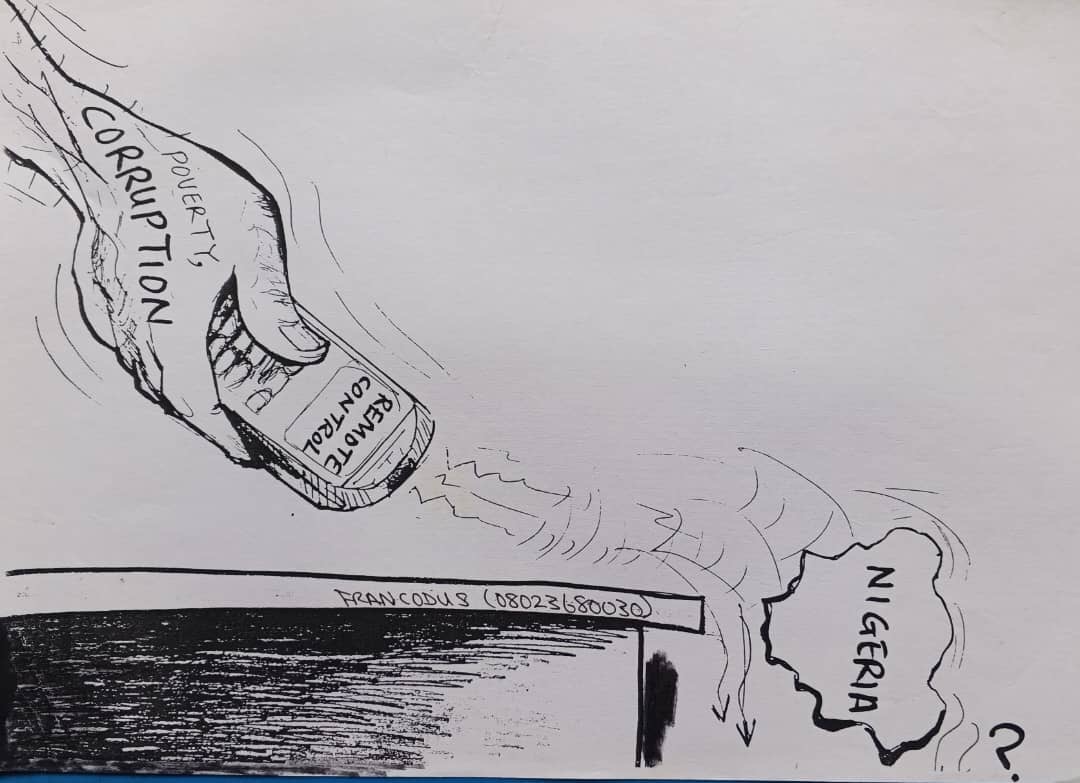
Governments often put social welfare programmes in place to help lift individuals, families, and communities out of poverty. Researches have shown that earlier policies and programmes directed at alleviating poverty by different regimes in Nigeria have not made much impact for several reasons. For instance, Gowon’s Accelerated Food Production Programme (AFPP), Obasanjo’s Operation Feed the Nation (OFN), Shagari’s River Basin Development Authority (RBDA) and Green Revolution (GR), Babangida’s Mass Mobilization for Social and Economic Recovery (MAMSER), National Directorate for Employment (NDE), Directorate for Food, Road and Rural Infrastructural (DFRRI), Better Life for Rural Women Programme (BLP), National Agricultural Land Development Authority (NALDA), People’s Bank of Nigeria (PBN), Nigerian Agricultural and Cooperative Bank (NACB), Abacha’s Family Economic Advancement Programme (FEAP), Obasanjo’s Poverty Alleviation Programme (PAP), etc. All failed not because of poor conception but on account of operationalization, haphazard, non-focused, blurred, corrupt and selfish implementation process. Most often than not, these programmes are hijacked by corrupt, selfish and self-centred individuals or groups within the domain of power. The resultant end is always epileptic, dismal implementation or performance of the programme.
A good example is the Family Economic Advancement Programme (FEAP), a lot of enthusiasm, huge amount of money and human resource were committed to the programme but its impact in alleviating poverty is a disappointment because it was never felt. The benefits never get to the beneficiaries; they have always been hijacked by powerful clique who thereafter share it among themselves, friends, relations and followers.
Poverty has decreased in developed countries since the Industrial Revolution. Increased production reduced the cost of goods, making them more affordable, while advancements in agriculture increased crop yields, as well as food production.
There are several effects and deficiencies associated with poverty in Nigeria. One of the main effects of poverty is poor health, as it is reflected in Nigeria’s high infant mortality and low life expectancy. Poor people in Nigeria face several health issues as they lack basic health amenities and competent medical practitioners. Their health become low priority as they have little or no choice, they live with whatever they are provided with whether healthy or not.
In Nigeria, widespread and severe poverty is a reality. It is a reality that depicts lack of food, clothing, education, health and other basic amenities. Some have argued that the story of Nigeria is one of the paradoxes since the beginning of the 1980s. Nigeria, according to Obadan (2002), is endowed with human, agriculture, petroleum and large untapped solid mineral resources and earned over US$300 billion from oil during the last three decades of the twentieth century. But the country had retrogressed to become one of the 25 poorest countries at the threshold of twenty-first century whereas she was among the richest 50 in the early 1970s.Nigeria is a blessed. We just have to do better as a people. The government should implement better policies and make sure they are properly implemented to the latter. There’s still hope for us.
Ifeanyi Johnson is a student of the Department of English and Literary Studies, Delta State University, Abraka