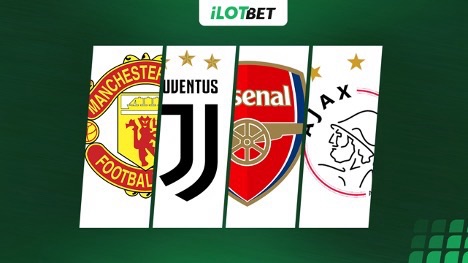
Football clubs don’t just build their legacies on goals, trophies, or legends, names matter too. A club’s name can be a symbol of pride, heritage, or a whole new beginning. Some of the biggest names in world football today didn’t start out with the names we now know them by. From marketing strategies to political pressure and ownership shake-ups, clubs have had to rebrand, and some of these transformations are more dramatic than a last-minute winner.
Here are 10 famous football clubs that changed their names, and the fascinating stories behind them.
1. Manchester United (Originally: Newton Heath LYR)
Founded in 1878 as Newton Heath LYR, the club was originally the works team for the Lancashire and Yorkshire Railway depot at Newton Heath. The team played in green and gold and mostly competed in lower leagues. By the early 1900s, they were drowning in debt and on the verge of extinction. A local brewer, John Henry Davies, came to their rescue by investing in the club. In 1902, as part of a fresh start and a rebranding effort aimed at appealing to a broader city audience, the club was renamed Manchester United. They also adopted the red and white colors we know today.
2. Arsenal (Originally: Dial Square)
Arsenal’s origin story begins in 1886, when a group of workers at the Royal Arsenal munitions factory in Woolwich formed a football team named Dial Square. Just weeks later, they renamed themselves Royal Arsenal to reflect their connection to the factory. As the club turned professional, they became Woolwich Arsenal in 1891. In 1913, the club moved north to Highbury after relegation and financial problems, dropping the “Woolwich” to become simply Arsenal. This shorter, punchier name helped establish their brand as a major London football club.
3. Juventus (Originally: Sport-Club Juventus)
Juventus was founded in 1897 by a group of young students from Turin. Their first name, Sport-Club Juventus, showed the club’s all-around athletic ambitions. Two years later, they narrowed their focus solely to football and became Football Club Juventus. The Latin word “Juventus” means “youth,” which was fitting given the founders’ ages. Though now synonymous with professionalism and dominance in Italian football, their black-and-white striped kits were actually inspired by English club Notts County, whose jerseys they adopted after their original pink kits faded in the wash.
4. Ajax (Originally: Union)
Ajax was born in Amsterdam in 1900 and was initially registered as Union. The founders soon opted for a more heroic name and chose Ajax, after the mythological Greek warrior known for his strength and courage. This name symbolized their ambition to be bold and competitive. Amsterdamsche Football Club Ajax officially adopted red and white as their colors and developed a distinct identity that included a vertical red stripe down their shirts, now iconic across Europe. Their success, particularly in the 1970s with “Total Football,” cemented their place in football history.
5. Paris Saint-Germain (Originally: Stade Saint-Germain)
Stade Saint-Germain was a modest club based in the Parisian suburb of Saint-Germain-en-Laye. In 1970, there was a push to create a big club that could properly represent Paris. As a result, Stade Saint-Germain merged with a group of investors under the name Paris FC, forming Paris Saint-Germain Football Club. The club embraced both heritage and ambition: Saint-Germain honored the history, while Paris reflected their national capital identity. Since then, especially after the Qatari takeover in 2011, PSG has transformed into a global football powerhouse.
6. Chelsea (Originally: The Rising Sun)
When Chelsea was formed in 1905, the founders initially considered calling it The Rising Sun, after a pub near the site of their new stadium, Stamford Bridge. However, they feared the name was too vague and potentially inappropriate. Names like Kensington FC and Stamford Bridge FC were also on the table. Eventually, they settled on Chelsea Football Club, named after the nearby affluent district, which gave the team a more sophisticated and metropolitan appeal. This savvy branding decision helped Chelsea carve out a distinct identity from the start.
7. Bayer Leverkusen (Originally: Turn- und Spielverein Bayer 04 Leverkusen)
Bayer Leverkusen was formed in 1904 by employees of the pharmaceutical giant Bayer. The original name, Turn- und Spielverein Bayer 04 Leverkusen, reflected its origins as a broader sports club that included gymnastics. As football grew in popularity, the club split into two in 1928: one for football and another for athletics. The football division kept close ties to Bayer and became known simply as Bayer 04 Leverkusen. Despite being branded as a “company team,” they have built a loyal following and a reputation for developing top-tier talent.
8. Sporting CP (Originally: Sporting Club de Belas)
The club that would become Sporting CP began in 1902 as Sporting Club de Belas, but this initial version didn’t last. In 1906, a more organized and ambitious version of the club was founded as Sporting Clube de Portugal. The goal was to create a multi-sport club with national appeal. Though foreign media and fans often call them Sporting Lisbon, the club insists on the full name to represent their identity as a Portuguese, not just Lisbon-based, institution. Sporting has since become one of Liga Portugal “Big Three,” known for producing stars like Cristiano Ronaldo.
9. Inter Milan (Originally: Football Club Internazionale Milano)
Italian Seria A side, Inter Milan, was formerly called Football Club Internazionale Milano, and it reflected their founding ethos: to be a club open to foreign players. This was in contrast to rivals AC Milan, which was more nationalistic at the time. During the fascist regime in Italy, foreign-sounding names were frowned upon, and Inter was forced to merge with another club and rebrand as Ambrosiana-Inter. After World War II ended, the club proudly reclaimed its original name in 1945. Today, Inter continues to live up to its name with an international roster and global fan base.
10. West Ham United (Originally: Thames Ironworks FC)
Formed in 1895 by Arnold Hills, owner of the Thames Ironworks and Shipbuilding Company, the team started as Thames Ironworks FC. The club played in claret and blue and provided recreation for factory workers. In 1900, following disputes over professionalism and financial transparency, the club was wound up and immediately relaunched as West Ham United. The new name reflected the local borough and marked their transition to a professional football club. Their nickname, “The Hammers,” is a nod to their industrial roots.
Want to turn your football knowledge into real wins?
Bet on the clubs you know, and the ones you now know more about, with iLOTBET. From top leagues to surprise upsets, we’ve got all the action covered.