… Approve 40% pay rise for lecturers
ABUJA: The Federal Government has unveiled a renegotiated agreement with the Academic Staff Union of Universities (ASUU), describing it as a major turning point in restoring stability, trust and quality in Nigeria’s tertiary education system.
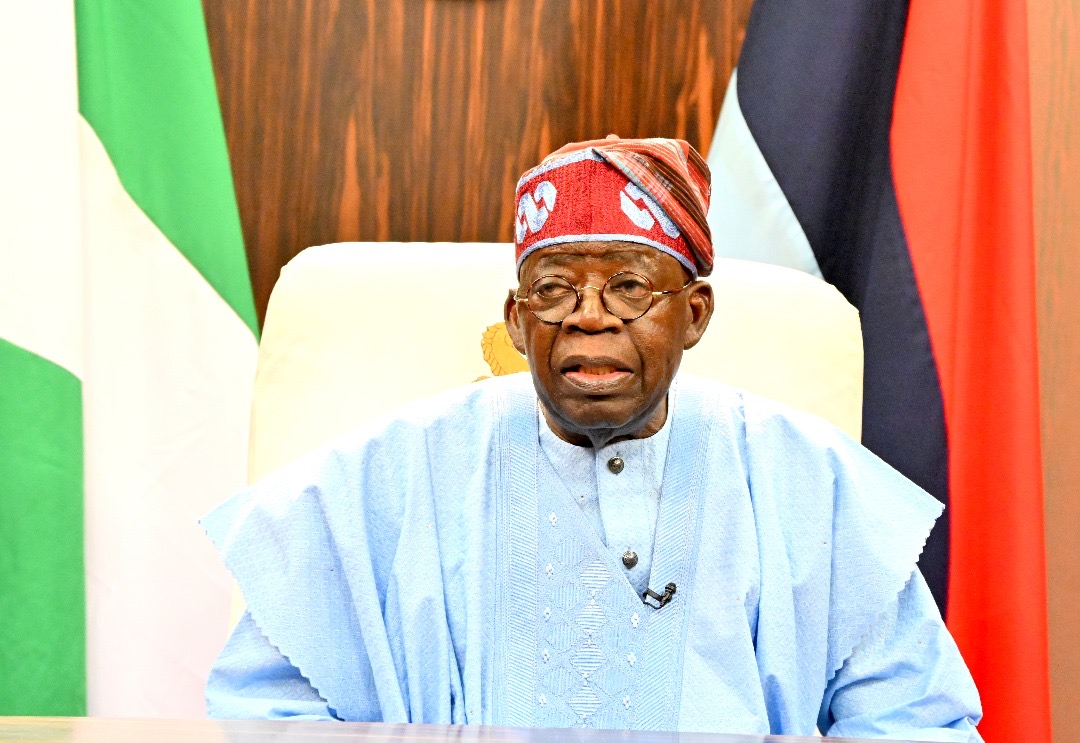
Presenting the agreement in Abuja on Wednesday, the Minister of Education, Dr Tunji Alausa, said it reflected President Bola Tinubu’s commitment to accessible, quality education and uninterrupted academic calendars, noting that the President personally took ownership of resolving long-standing disputes that had plagued the university system for decades.
“For years, unresolved remuneration concerns, welfare gaps and recurring industrial disputes disrupted academic calendars, weakened staff morale and threatened the future of our young people,” Alausa said. “Under President Bola Tinubu, we chose dialogue over discord, reform over delay, and resolution over rhetoric.”
A key provision of the agreement is a 40 percent upward review of the remuneration of academic staff in federal tertiary institutions, approved by the National Salaries, Income and Wages Commission and effective from January 1, 2026.
The minister said the review was aimed at improving morale, enhancing service delivery, boosting global competitiveness and curbing brain drain.
He explained that the increase is embedded in a consolidated academic tools allowance, peculiar to university lecturers and now part of their salary structure.
The allowance covers journal publications, conference participation, internet access, learned society membership and book allowances, which he described as essential for effective teaching, research and global academic relevance.
Alausa added that nine previously earned academic allowances had been streamlined, clearly structured and tied strictly to duties performed, to promote productivity, accountability and fairness.
He also announced the introduction of a new professorial credit allowance, the first of its kind approved by the Federal Government. Under the scheme, full-time professors will receive an additional ₦1.8 million annually, about ₦140,000 monthly, while academic readers will earn ₦840,000 per annum, or ₦70,000 monthly. The allowance, he said, would support research coordination, academic documentation and administrative efficiency, allowing senior academics to focus more on teaching, mentorship and innovation.
The minister disclosed that implementation of the agreement had already begun, with a circular from the National Salaries, Income and Wages Commission dated December 30, 2025, directing full implementation of the wages component from January 1, 2026.
Speaking at the event, ASUU President, Prof. Chris Pinuwa, recalled that the 2009 agreement, due for renegotiation in 2012, suffered prolonged delays.
He said the 2025 agreement emerged from a renegotiation process initiated in 2017, after several failed attempts under previous administrations.
According to him, committees chaired by Wale Babalakin, Munzali Jibrin and Nimi Briggs between 2017 and 2022 failed to produce a collective bargaining agreement.
He noted that progress was made only after the current administration inaugurated a new renegotiation committee chaired by Alhaji Yayale Ahmed in October 2024, leading to an agreement about 14 months later.
Pinuwa said the agreement addressed conditions of service, funding, university autonomy, academic freedom and other systemic reforms aimed at reversing decay, curbing brain drain and repositioning universities for national development.
He commended President Tinubu, Alausa, Ahmed and members of the renegotiation team for their commitment to concluding the process.
However, while welcoming the successful agreement, the ASUU president warned that unresolved issues remained, particularly persistent government interference in university autonomy.
“University autonomy is universally recognised as a cornerstone of a functional higher education system,” he said.
“In Nigeria, although autonomy is recognised in principle and partially entrenched in law, its practical implementation remains weak.”
He raised concerns over alleged mismanagement of funds and governance weaknesses in some universities across the country.
Pinuwa warned that the situation was undermining accountability, stability and academic standards in the system.
He noted that weak governance structures had continued to affect effective utilisation of resources in some institutions.
According to him, although university autonomy was recognised in principle and partially entrenched in the law, its practical implementation remained weak, leading to persistent external interference in university administration.
He disclosed that arbitrary dissolution of governing councils and interference in the appointment of vice-chancellors have become recurring challenges which undermine meritocracy and erode institutional stability.
Pinuwa noted that such interventions had often resulted in conflicts, litigation and staff polarisation within universities, thereby disrupting academic activities and effective management.
He also expressed concerns over what he described as the creeping culture of prolonged acting Vice-Chancellorship in universities, calling for greater scrutiny of governing councils and principal officers to safeguard institutional integrity.
On research funding, the ASUU president said adequate funding was critical to the relevance and global competitiveness of Nigerian universities.
He added that research and development funding formed a key component of the 2025 re-negotiated agreement with the federal government.
“Nigerian universities have faced paucity of research funding for a very long time, and I’m glad that research and development funding is a component of the 2025 ASUU-FG re-negotiated agreement.
“It was agreed that the National Research Council (NRC) Bill shall be forwarded to the National Assembly for consideration.
“The proposed bill shall provide for at least one per cent equivalent of GDP as a source of funding for research, innovation and development.
“It is my belief that, as stakeholders, members of the National Assembly will expedite action in the passage of the bill,” he said.
The ASUU president also criticised promotion practices in some newly-established federal universities of education, alleging that due process and established standards for professorial appointments were being compromised.
According to him, the conversion of colleges of education to universities should not erode established academic standards.
Consequently, Pinuwa called on vice-chancellors of the affected institutions to urgently review such promotions to protect the integrity of the university system.