For many young people around the world, war once felt like something confined to history books. It was a subject encountered in Cold War chapters or seen in documentaries about the Middle East. But the unfolding confrontation involving the United States, Iran and Israel has brought the reality of war into the everyday conversations of a generation that grew up in the digital age.
Today’s youth are not waiting weeks to read about events in newspapers. They are seeing videos of missile interceptions minutes after they occur. They follow live updates from journalists, analysts and ordinary citizens across social media platforms. For them, this conflict is not distant or abstract; it is immediate, emotional and deeply unsettling.
To understand how the current crisis developed, it is necessary to examine the long history of tension between these countries. For decades, Israel has regarded Iran as its most dangerous regional adversary. Israeli leaders have repeatedly warned that Iran’s nuclear programme could eventually lead to the development of nuclear weapons — a prospect they say would threaten Israel’s very existence.
Iran, however, maintains that its nuclear programme is intended solely for civilian purposes such as energy generation and scientific research. Despite these assurances, mistrust between the two nations has remained profound. Israel has long accused Iran of supporting armed groups hostile to it across the Middle East, while Iran has condemned Israel’s military actions in the region and its close alliance with the United States.
For many years, this rivalry unfolded largely in the shadows through intelligence operations, cyberattacks and proxy confrontations. Analysts frequently described it as a “shadow war.” In recent years, however, that shadow conflict has become increasingly visible.
One of the turning points came in 2024 when Israel carried out a strike on an Iranian diplomatic compound in Damascus, Syria. The attack killed several Iranian military officials and provoked outrage in Tehran. Iran responded with a massive barrage of drones and missiles directed at Israel — the first time the two countries had exchanged such large-scale direct attacks.
For many young observers across the world, that moment felt like a line had been crossed. What had previously been a tense but indirect rivalry suddenly appeared to be evolving into a far more dangerous confrontation.
The situation escalated further in 2025. In June of that year, Israel launched coordinated airstrikes targeting key Iranian nuclear facilities and military installations. The attacks were intended to weaken Iran’s nuclear infrastructure and halt further development of its programme.
Iran retaliated swiftly. Missiles and drones were launched towards Israeli territory, and air defence systems across the region were activated as the skies filled with projectiles.
The United States soon became directly involved, supporting Israeli operations and launching strikes on several Iranian nuclear facilities, including sites believed to be connected to uranium enrichment.
For nearly two weeks, the region braced for the possibility of a full-scale war.
That intense period of confrontation became informally known as the “Twelve-Day War.” When a ceasefire was eventually announced, it brought a moment of relief. Yet the calm did little to resolve the underlying tensions that had brought the region to the brink.
Many analysts warned at the time that the ceasefire resembled a pause rather than a lasting solution.
Those warnings soon proved prophetic.
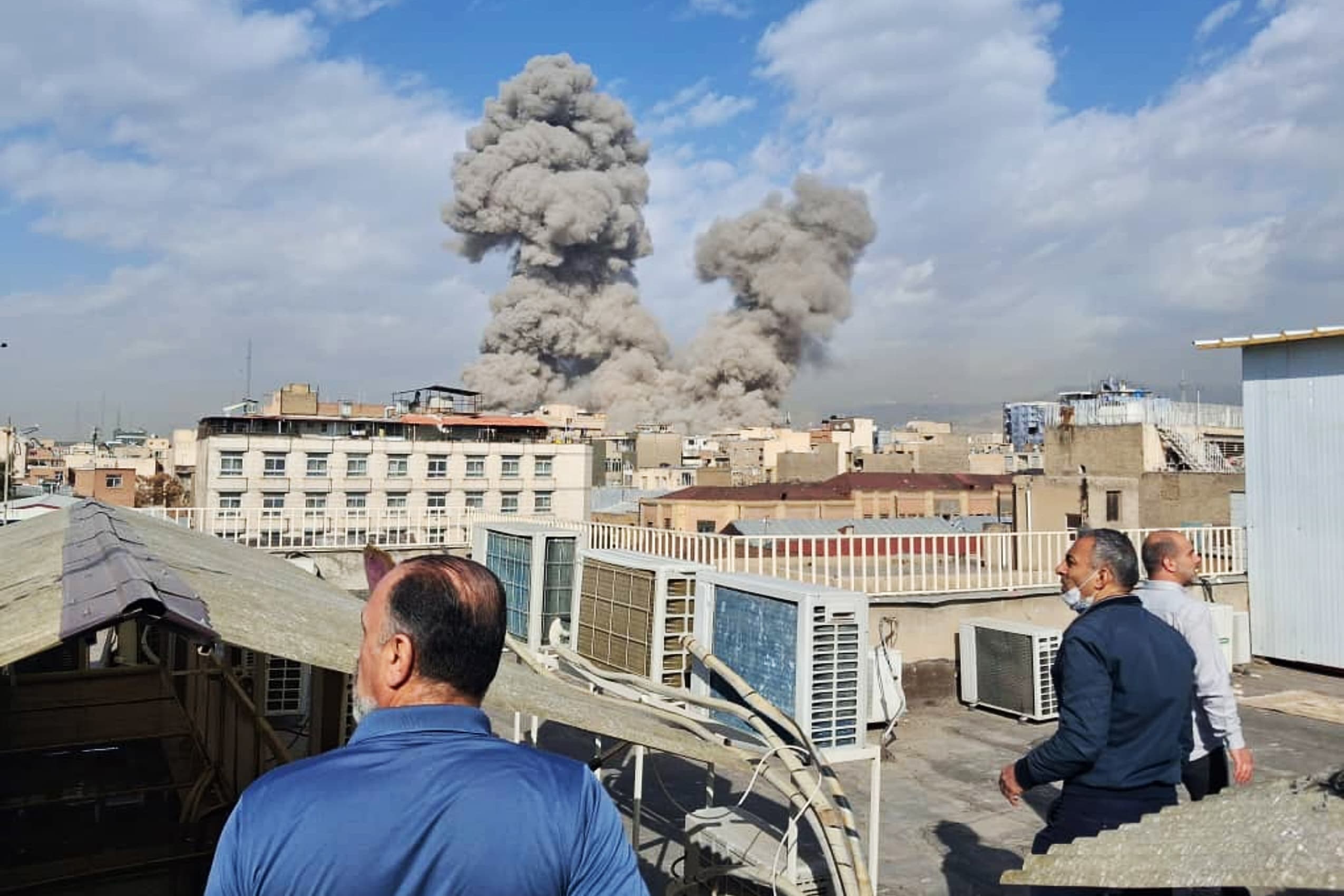
By early 2026, tensions had risen again. In late February, the United States and Israel launched a fresh wave of strikes on Iranian nuclear and military infrastructure. Explosions were reported in several locations across Iran, including areas near the capital.
For people watching from outside the region, the images were deeply unsettling — night skies illuminated by explosions, emergency sirens echoing through cities, and civilians rushing for safety.
Iran responded with force. Waves of drones and missiles were launched not only towards Israel but also towards locations across the Middle East hosting American military facilities.
Some of the projectiles were directed at bases in Gulf countries such as Saudi Arabia, Kuwait and the United Arab Emirates. The attacks illustrated how quickly a regional confrontation could expand beyond its original battleground.
Within days, what began as a series of strikes had evolved into a wider regional crisis.
For young people following the war, one of the most striking features has been the speed at which the story develops. Every few hours brings new developments — another missile exchange, another diplomatic statement, another prediction from analysts about what might happen next.
Beyond the military developments, however, there is growing concern about the human cost of the conflict.
Wars are often discussed in terms of strategy and power, but for the people living in the affected regions, they are a daily reality. Families worry about air strikes. Businesses close early as tensions rise. Parents try to reassure frightened children when sirens sound in the night.
These human moments are often lost in the language of geopolitics, yet they remain the real stories behind every conflict.
Young people around the world are increasingly aware of this reality. Many students and young professionals are discussing the war in classrooms, on podcasts and across social media platforms. Some analyse the political decisions that led to the confrontation, while others focus on its humanitarian consequences.
In this sense, the youth perspective adds something valuable to the global conversation — empathy combined with curiosity.
There is also a growing awareness among younger generations that global conflicts are no longer as distant as they once seemed.
The Middle East remains one of the world’s most critical energy regions. Instability there can affect global oil supplies and international shipping routes. Already, concerns have been raised about the safety of the Strait of Hormuz, a vital corridor through which a significant portion of the world’s oil passes.
If tensions escalate further, the economic consequences could extend far beyond the region. Higher fuel prices, rising transportation costs and broader economic uncertainty could affect countries thousands of kilometres away.
For young people entering adulthood in an already complex global economy, these ripple effects carry real significance.
Another factor shaping the youth perspective is the nature of information in the digital era. In previous generations, news about wars arrived mainly through official channels — government briefings, newspaper reports and scheduled television broadcasts.
Today, the flow of information is constant.
Young people watch videos recorded by civilians during missile attacks. They follow journalists reporting from the ground. They read commentary from analysts, diplomats and activists across digital platforms.
This continuous stream of information can be overwhelming, but it also creates a sense of connection. People living far from the conflict often feel emotionally invested in what is happening.
At the same time, the digital age has made it easier for young voices to be heard. Across the world, youth activists and commentators are calling for diplomacy, humanitarian assistance and restraint from all sides.
Their message is straightforward but powerful: war should never be the only option.
The leaders involved in the confrontation, however, view the situation through very different lenses. Israeli officials argue that military action is necessary to prevent Iran from acquiring nuclear weapons. Iranian leaders insist they are defending their sovereignty against foreign aggression.
The United States has framed its involvement as an effort to neutralise security threats linked to Iran’s military capabilities.
Each side believes it is acting in the interest of national security. Yet history has repeatedly shown that wars often produce consequences far beyond their original objectives.
As the conflict continues, analysts warn that further escalation could draw additional regional actors into the confrontation. Armed groups aligned with Iran, as well as other regional powers, could become involved if tensions deteriorate further.
That possibility worries many observers.
Amid the uncertainty, however, one fact is clear: the younger generation is paying close attention.
Young people are asking questions about diplomacy, accountability and the role of international institutions. They are debating whether global systems designed to prevent war are still functioning effectively.
Most importantly, they are reminding the world that behind every missile launch and military operation are ordinary people whose lives may be changed forever.
The story of the US–Iran–Israel conflict is still unfolding, and its ultimate outcome remains uncertain.
But for today’s youth, the crisis is already shaping how they understand global politics, power and responsibility.
It is teaching them that decisions made in distant capitals can reverberate across the planet.
And perhaps most importantly, it is reminding them that the future of global peace will depend not only on governments and military alliances but also on the awareness, engagement and humanity of the next generation now watching history unfold.