Leadership, particularly in public institutions, is rarely a stroll through a garden of roses. More often than not, it resembles the weary climb of a steep hill where every step forward invites scrutiny, suspicion, and sometimes outright hostility.
In societies where public trust in institutions has been eroded by years of mismanagement and broken promises, even the most well-intentioned reforms can be misinterpreted or deliberately distorted. Thus, anyone who occupies a position of authority in such an environment must possess not only competence but also resilience, patience, and the courage to withstand the stones that inevitably accompany leadership.
Being in a position of authority, therefore, can be tasking and energy-sapping. The occupant of such an office often becomes like an African Cherry tree, constantly pelted with stones by every Tom, Dick, and Harry. Some throw stones out of ignorance; others do so out of mischief; and a few are simply uncomfortable with change. Yet the fruit-bearing tree must continue to stand firm, offering nourishment even to those who throw the stones.
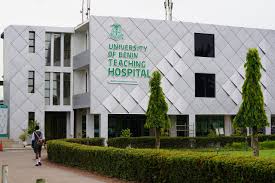
This metaphor aptly captures the experience of the Chief Medical Director (CMD) of the University of Benin Teaching Hospital (UBTH), Prof. Idia Nibokun Ize-Iyamu, whose tenure has recently been subjected to unwarranted criticism by a handful of individuals who appear either oblivious to the realities of institutional reform or deliberately inclined to misrepresent them.
Their allegations, which sought to portray her reform-driven initiatives as profiteering and anti-people, represent a classic example of how genuine efforts at progress can be misconstrued by those who either do not understand the complexities of leadership or who choose to ignore them.
In my previous article on the matter, I sought to place the controversy within its proper context. I argued that meaningful reform in public institutions, especially in Nigeria’s healthcare sector, often requires difficult decisions that may not immediately please everyone. Institutional decay, after all, does not occur overnight, and its reversal cannot be achieved without structural adjustments, policy recalibration, and administrative courage. These processes sometimes disrupt entrenched interests and comfortable routines, thereby provoking resistance from those who prefer the old order.
A teaching hospital such as UBTH occupies a strategic place in Nigeria’s healthcare architecture. Beyond providing medical care to thousands of patients, it also functions as a training ground for doctors, nurses, pharmacists, and other healthcare professionals who will eventually serve across the country and beyond. Consequently, the quality of leadership in such an institution directly affects not only patient outcomes but also the broader future of medical education and healthcare delivery.
To lead such an institution effectively requires more than administrative routine; it demands vision, resourcefulness, and the ability to mobilise support from multiple stakeholders, including government, development partners, and the wider community. In other words, a Chief Executive Officer in a public healthcare institution must be both a manager and an advocate.
One of the key responsibilities of a CMD is to influence and lobby government agencies to attract projects, infrastructure, and essential medical equipment needed for the growth and modernisation of the hospital. In the absence of such proactive engagement, many public institutions would simply stagnate, trapped in the inertia of bureaucratic processes.
Sequel to her focused and purpose-driven agenda, Prof. Ize-Iyamu’s frantic effort is already beginning to yield tangible fruits. The latest manifestation is the recent supply of healthcare equipment to the University of Benin Teaching Hospital (UBTH), facilitated by the Federal Ministry of Health (FMoH) through the National Primary Health Care Development Agency. Remarkably, this marks the first time in the hospital’s 53-year history that it has received such a significant consignment of medical equipment through this channel. Yes, first time in 53 years UBTH received such a consignment!
It is precisely within this framework that the recent development at UBTH must be appreciated. The hospital recently received a significant consignment of materials and working tools from the Federal Government—items intended to enhance service delivery and strengthen the hospital’s operational capacity. Such support does not materialise in a vacuum. It is usually the result of sustained advocacy, strategic engagement, and the credibility of leadership.
Those familiar with the workings of public institutions understand that attracting federal support requires persistence, networking, and the ability to convincingly articulate the needs of the institution. The arrival of this consignment therefore reflects not merely administrative routine but the outcome of deliberate effort.
Indeed, it bears the unmistakable imprint of what many Nigerians colloquially describe as “connection” not in the pejorative sense of favouritism or backdoor dealings, but in the positive sense of effective representation and influence. When a leader successfully leverages professional networks and institutional goodwill to bring development to an organisation, such effort should be celebrated rather than vilified.
In the case of UBTH, the credit for this achievement must reasonably go to the amiable and indefatigable Chief Medical Director, Prof. Idia Nibokun Ize-Iyamu, whose proactive engagement with the relevant authorities appears to have facilitated the intervention.
Yet the long-term benefits of reform invariably outweigh the temporary discomfort it may cause. Hospitals function best when there is clarity of procedure, effective management of resources, and a commitment to professional standards. Without these elements, even the most well-equipped facility can become ineffective.
Prof. Ize-Iyamu’s efforts appear to be directed precisely at strengthening these institutional foundations. By pursuing improvements in infrastructure, attracting federal interventions, and promoting administrative order, she is laying the groundwork for a more efficient and responsive healthcare institution.
It is also important to recognise that leadership in the health sector carries a profound ethical dimension. Every decision taken within a teaching hospital ultimately affects human lives. Equipment procured, facilities upgraded, and policies implemented can determine whether patients receive timely and effective treatment.
The arrival of the recent consignment of materials and tools at UBTH should therefore be viewed through this humanitarian lens. Each item delivered represents a potential improvement in patient care, a strengthening of medical training, and an enhancement of the hospital’s ability to fulfil its mandate.
Constructive criticism is, of course, an essential component of democratic engagement. Leaders must remain accountable to the people they serve. However, criticism must be rooted in facts rather than speculation, and it should aim to improve institutions rather than to undermine them.
In my earlier article, I cautioned against the tendency to hastily interpret reform measures as evidence of ulterior motives. Nigeria’s healthcare system desperately needs courageous leadership capable of initiating change. If every attempt at reform is met with suspicion and hostility, competent professionals may become reluctant to assume leadership roles in public institutions.
That would be a tragic outcome for a country already grappling with the challenges of medical brain drain, inadequate funding, and growing healthcare demands.
From all available indications, Prof. Ize-Iyamu’s leadership at UBTH reflects a determination to reposition the hospital for greater efficiency and relevance. The successful attraction of federal support in the form of essential materials and working tools demonstrates a proactive approach to leadership—one that recognises the importance of engaging with government structures to secure development for the institution. Such achievements should inspire confidence rather than cynicism.
Leadership, after all, is not merely about occupying an office; it is about producing tangible results that improve the lives of people. When a hospital acquires new equipment, enhances its facilities, or strengthens its operational capacity, the entire community stands to benefit.
The University of Benin Teaching Hospital occupies a proud place in Nigeria’s medical landscape. For decades, it has served as a centre of excellence in clinical care, medical education, and research. Preserving and enhancing this legacy requires leadership that is both visionary and pragmatic.
Prof. Ize-Iyamu’s tenure appears to reflect precisely these qualities. Her efforts to attract resources, implement reforms, and strengthen the institution should be seen as part of a broader commitment to safeguarding the hospital’s future.
Naturally, not everyone will agree with every decision taken by any leader. That is the nature of public service. But disagreement should not descend into unwarranted character attacks or attempts to discredit genuine efforts at progress.
If anything, the recent developments at UBTH provide an opportunity for the public to recognise the often unseen labour that goes into institutional leadership. Behind every successful intervention or infrastructural upgrade lies countless hours of negotiation, advocacy, and administrative coordination.
These are efforts that rarely attract headlines but are essential to the survival and growth of public institutions.
Ultimately, the measure of leadership lies not in the noise of controversy but in the enduring impact of one’s actions. If the reforms initiated under Professor Ize-Iyamu lead to improved healthcare delivery, better training for medical professionals, and enhanced institutional capacity, history will judge her tenure kindly.
In the meantime, fairness demands that she be allowed the space to carry out her responsibilities without the burden of unwarranted suspicion.
The African Cherry tree may indeed attract stones, but it continues to bear fruit regardless. In much the same way, leaders who are genuinely committed to progress must remain steadfast even in the face of criticism.
For the sake of UBTH, its staff, its students, and the countless patients who rely on its services, one can only hope that the reform journey continues, supported by constructive engagement rather than distracted by needless controversy.
If the recent federal intervention is any indication, the efforts of Prof. Idia Nibokun Ize-Iyamu are already yielding visible results. And for any institution striving for excellence in a challenging environment, that is surely a development worthy of recognition and encouragement.
________________________________________
Odaro, a columnist, lectures in the Department of Mass Communication, Auchi Polytechnic, Auchi.