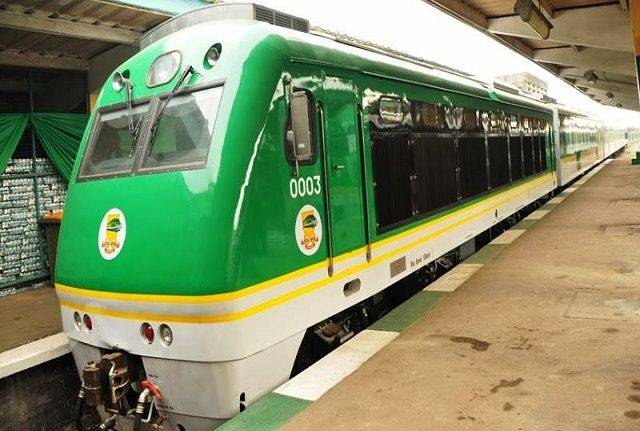
In the colonial and post-colonial periods, railway infrastructure was a primary driver of urbanisation and economic development in Nigeria—railway cities and commercial hubs sprang up across the corridors.
At its peak, the railway system connected farms to markets, linked cities across vast distances, and moved millions of passengers and goods annually.
Nigeria’s century-old railway history reflects broader patterns of infrastructure development, governance, and economic transformation.
According to policy analysts, a deeper examination of Nigeria’s railway sector indicates that policy decisions largely caused the decline of rail transport.
Experts argue that from the late 1970s onward, successive governments prioritised road construction over railway development.
While highways expanded across the country, rail infrastructure received minimal investment.
Industry watchers say the railway system that once connected Lagos to Kano and Port Harcourt—Enugu—Maiduguri gradually collapsed under the weight of aging infrastructure and inadequate funding.
According to stakeholders, modernisation of projects such as the Lagos–Kano Standard Gauge Railway aim to reverse decades of neglect.
They argue that without strong governance reforms, improved security, and sustainable funding models, Nigeria’s railway revival could face the same challenges that undermined the system in the past.
A Civil Engineer, Mr Cletus Daramola, told the News Agency of Nigeria (NAN) that railway construction in Nigeria began in 1898 under British colonial administration.
He said that the first railway line was built from Lagos into the interior, reaching Ibadan by 1901.
Daramola, who was also a retired civil servant, said that the main objective of the railway construction was to transport agricultural produce and raw materials from the hinterland to the coast for export to Europe.
He said the railway network expanded rapidly during the early 20th century.
“The western line eventually connected Lagos to Kano through Ibadan, Ilorin, Minna, and Kaduna; another major line was constructed in eastern Nigeria to move coal from Enugu to the port in Port Harcourt.
“These railways were not only economic tools for colonial trade but also catalysts for urban development.
“Many towns and cities grew around railway stations, making the rail network central to Nigeria’s early economic integration,’’ he said.
He explained that the government established the Nigerian Railway Corporation in 1955 to manage the expanding network – to operate, maintain, and expand railway services across the country.
Daramola said Nigeria possessed one of the most extensive railway systems in West Africa at independence in 1960.
According to him, rail transport carries agricultural commodities such as cocoa, groundnuts, and cotton while providing affordable passenger transportation across regions.
He added that railways played a key role in supporting commerce and national integration during the early post-independence years.
Nonetheless, Mr Femi Aluko, a Lecturer in the Department of Community Health, Obafemi Awolowo University, Ile Ife, Osun, said that Nigeria’s railway sector began to experience serious decline by the late 1970s.
He said that poor maintenance, aging locomotives, lack of modernisation, and inefficient management structures weakened the system.
“At the same time, government investment increasingly shifted toward road infrastructure.
“As highways expanded and road haulage became more dominant, rail transport gradually lost passengers and freight traffic.
“By the early 2000s, many railway lines had become inactive; passenger traffic declined drastically, and freight operations—which once generated substantial revenue—nearly disappeared.
“The once-vibrant railway network had fallen into disrepair, highlighting the consequences of decades of neglect,’’ he said.
Meanwhile, the Minister of Transportation, Mr Said Alkali, said the Federal Government had initiated major rehabilitation and modernisation programs in the early 21st century in response to the sector’s decline.
Alkali made the declaration in his remarks at the second International Railway Conference held in Abuja in September 2025.
According to him, one of the most significant initiatives is the Lagos–Kano Standard Gauge Railway, a modern rail corridor designed to replace the colonial-era narrow-gauge line connecting Lagos to Kano.
“Another important project is the Warri–Itakpe Railway, originally intended to transport iron ore from Itakpe to the Ajaokuta Steel Complex and the port in Warri.
“After more than three decades of delays, the line eventually commenced passenger operations in 2020.
“In addition, the government has proposed the Lagos–Calabar Railway, an ambitious coastal rail project expected to connect major cities along Nigeria’s southern corridor and stimulate regional trade’’ he said.
He explained that railway services had begun attracting more passengers, especially in regions where road travel had become risky or congested.
According to him, the Abuja–Kaduna railway has emerged as one of Nigeria’s most important passenger rail services.
“It provides a faster and relatively safer alternative to the Abuja-Kaduna highway, which has experienced security challenges in recent years. The popularity of this route demonstrates the growing demand for reliable and efficient rail transportation.
“Nigeria’s railway network covers roughly 3,500 kilometers of narrow-gauge track built during the colonial period.
“Standard-gauge modernisation projects are gradually expanding across key corridors.
“Passenger traffic once exceeded 10 million annually in the 1960s before declining significantly in subsequent decades. Recent modern rail services have begun increasing passenger numbers again in major routes.’’
Alkali, however, explained that in spite of renewed investment, funding constraints remaind a major challenge, as railway construction required significant financial resources.
According to the minister, security threats and vandalism have also affected rail infrastructure in recent years.
Alkali said 387km Kano-Maradi with extension to Dutse had been advanced from five per cent to 60 per cent.
He added that the accelerated execution of the 203km Kaduna-Kano ongoing rail modernisation project moved from 15 per cent at the inception of the present administration to 53 per cent.
“While Kaduna-Kano project will be ready for completion and commissioning by December 2026, the Kano-Maradi project will be ready for completion and commissioning by March 2027.
“Rehabilitation of Lagos-Kano old narrow gauge for freight of goods from the seaport, connected to Dala Inland Dry Port, will be successfully completed and put to use.”
The minister said the conference sought to assemble railway experts, industry players and other stakeholders to share knowledge and experience across jurisdictions on emerging trends.
“This is to facilitate funding opportunities and prospects of railway services as a catalyst for national development.
“The discussion will maximise the potentials of the railway sub-sector as a viable option for boosting commerce through geographical mobility and general economic growth through connectivity and collaborations.
“I am glad to inform you that the Renewed Hope Agenda of President Bola Tinubu administration has accorded special priority to transportation in recognition of transportation as a gateway to the nation’s economy,” he said.
The minister said the recent introduction of dual-fuel locomotive technology unveiled on Abuja-Kaduna rail corridor would enhance operational cost effectiveness.
According to him, the federal government‘s financial support for the establishment of light rail by states began with Kaduna, Kano and Ogun to enhance public transportation and economic productivity in the affected states and the country in general.
Contributing, Mr Samuel Uko, the Chief Executive Officer of De-Sadel Consortium, commended the Federal Government for approving a high speed rail project in the country.
He revealed that Nigeria would be the world`s second-largest high speed rail network at the completion of the project.
Uko added that the project would create 2 million direct and indirect jobs for the Nigerian public.
Mr George Akume, Secretary to the Government of the Federation (SGF), said the ongoing project would attract foreign investment, thereby boosting the nation’s infrastructural development and revenue generation profile.
He affirmed that the policy would be strengthened toward laying the foundation for future development of land transportation in Nigeria.
All in all, industry experts emphasise the need for stronger institutional reforms, improved maintenance practices, and greater private sector participation.
They say that if ongoing modernisation projects are successfully completed and the railway network is expanded, the sector could once again become a central driver of Nigeria’s economic growth and national integration.
(NANFeatures)