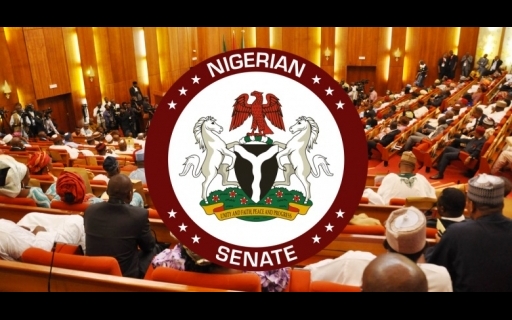
The Nigerian Senate has directed the Independent National Electoral Commission (INEC) to immediately restore Ukum II, Konshisha II (Shangev-Tiev), and Gboko East I state constituencies in Benue State ahead of the 2027 general elections, following a Court of Appeal ruling.
The Court had on December 5, 2025, ordered INEC to conduct elections in Ukum II and Konshisha II constituencies, noting that the commission had failed to implement the judgement.
Gboko East I was also slated for restoration to ensure full representation.
The resolution, moved by Senator Emmanuel Memga Udende, Chairman of the Senate Committee on Anti-Corruption and Financial Crimes, emphasized that the constitutional right of the affected communities to fair representation is non-negotiable.
Senator Udende noted that these constituencies functioned during Nigeria’s Second and Third Republics but were unjustly removed in the Fourth Republic, causing democratic exclusion, population imbalance, and under-representation.
“Afia and Ishanger-Tiev communities have distinct demographic, cultural, and economic identities,” he said.
The Senate underlined that Sections 91, 112, 113, and 144 of the 1999 Constitution empower INEC to define and adjust constituency boundaries, while the Electoral Act 2022 (as amended) reinforces these mandates.
Senate Resolutions:
INEC must restore the three constituencies and update electoral boundaries, voter registers, and administrative structures before the 2027 polls.
The Standing Committee on INEC and Electoral Matters is tasked with monitoring implementation and reporting compliance.
The National Assembly and federal government were urged to provide technical and financial support to facilitate the restoration.
The House of Representatives’ concurrence is also required to ensure smooth execution.
The Senate stressed that prompt compliance is critical to maintain constitutional order, public confidence in democratic institutions, and credible elections in Benue State.
Failure to act, the Lawmakers warned, could undermine political stability and disenfranchise the people of the affected constituencies.