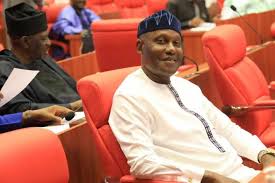
The defection of former Senator Clifford Ordia to the ruling All Progressives Congress (APC) has stirred fresh political debate in Edo State, with supporters describing it as a strong endorsement of Governor Monday Okpebholo’s leadership style, while critics warn it reflects deeper cracks within the opposition.
Ordia’s move into the APC fold has been widely interpreted as another political boost for the state’s ruling party and an affirmation of the influence of Governor Okpebholo’s administration in reshaping the state’s political landscape.
The former senator, who formally aligned with the APC alongside his supporters, has in recent engagements praised the governor’s intervention in the rebuilding of the Police Officers’ Wives Association (POWA) Market in Ekpoma, Esan West Local Government Area, which was destroyed by fire. He commended what he described as Okpebholo’s commitment to keeping promises and responding to the needs of affected communities.
The development has, however, generated mixed reactions across political circles. While APC supporters have described Ordia’s defection as evidence of growing confidence in the ruling party, opposition voices have urged caution, insisting that political realignments should be closely watched for their wider implications.
Within Edo’s political space, the defection is being viewed as part of a broader shift in alignments that could reshape the balance of power ahead of future elections, with analysts suggesting it may further weaken opposition structures already grappling with internal disputes.
Attention has also turned to the state of the Peoples Democratic Party (PDP), where internal leadership disagreements, factional tensions, and ongoing legal battles have continued to fuel speculation about the party’s cohesion and long-term stability. Some political observers argue that sustained defections could deepen the party’s crisis, while others maintain that renewal remains possible if internal reconciliation efforts succeed.
There are growing concerns among analysts that continued fragmentation within the PDP could lead to further loss of relevance, or trigger additional defections to the APC, thereby consolidating ruling party dominance in the state. Others, however, argue that such turbulence could eventually force restructuring and repositioning within the opposition.
The broader implications of a weakened opposition, according to political commentators, include reduced checks on the ruling party and potential shifts in democratic competition, even as Nigeria’s multiparty system continues to evolve.
Meanwhile, Governor Monday Okpebholo’s leadership style has continued to attract both praise and scrutiny. His administration is being described by supporters as decisive and people-focused, with emphasis on infrastructure renewal, security, healthcare, education, and agriculture under the Project SHINE agenda.
Government-backed interventions cited include the deployment of special tactical security teams to curb cult-related violence and kidnappings, infrastructure development projects such as roads, flyovers and rural electrification, as well as improvements in the health sector through hospital rehabilitation and personnel recruitment. The education sector has also witnessed increased funding, school rehabilitation, and additional teacher deployment.
As political realignments continue to unfold, Ordia’s defection is expected to remain a key reference point in discussions around Edo’s evolving power structure and the future strength of opposition politics in the state.