The meeting between President Bola Ahmed Tinubu and Catholic Bishops at the Presidential Villa in Abuja has continued to generate reactions across the country, with political analysts and commentators offering divergent views on the encounter as Nigeria gradually moves towards the 2027 general election.
The meeting has also become a subject of discussion among politicians, civil society organisations, religious leaders, traditional rulers and other stakeholders, with many examining its possible implications for the 2027 presidential election.
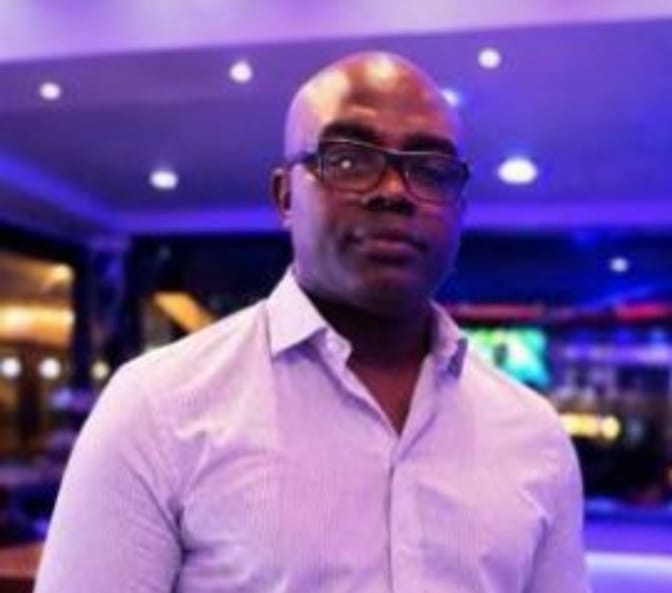
Adding his voice to the debate, political commentator, activist, financial expert and specialist nurse, Prince Oluwatobi Idaomi, who holds a Master’s degree in Law (LLM) and a master degree in General Nursing from the University of West London, said the public comments made by Cardinal John Onaiyekan after the meeting with the President had exposed what he described as the cleric’s partisan position.
Idaomi, however, maintained that the disagreement between the Presidency and the Catholic leadership would not affect President Tinubu’s chances of securing a second term in office.
How do you see the controversy between the Catholic Bishop and the President?
I have listened to different people speak about this issue, and I believe many of them are missing the point. There was no problem with the meeting itself. The issue arose when Cardinal Onaiyekan went on Arise TV to publicly discuss and criticise the President.
There is nothing wrong with advising the President. However, when you go before a television station and openly castigate the President, you begin to give the impression of partisanship.
He suggested that the body language of the President indicated that he wanted to win the 2027 election by all means. But that was not the reason the Catholic Bishops visited President Tinubu.
Cardinal Onaiyekan’s decision to publicly discuss the meeting in that manner raises questions about his neutrality. We should also not forget that Cardinal Onaiyekan openly supported Peter Obi during the 2023 presidential election. At the time, he reportedly said he would not recognise President Tinubu until the Supreme Court delivered its final judgment.
These are issues Nigerians should consider when assessing his position on the current controversy.
Will this controversy cost President Tinubu his second term?
There is no way this disagreement between the Presidency and the Bishops will cost Asiwaju Bola Ahmed Tinubu his second-term bid.
Nigerians are already aware of the arguments being made by some of these individuals and groups. The administration, in my view, has recorded achievements that Nigerians will consider when the time comes to vote.
For example, the Academic Staff Union of Universities, ASUU, has not embarked on a nationwide strike for almost four years. The labour unions have also not experienced the kind of prolonged industrial action witnessed in previous administrations.
There is relative peace in the Niger Delta, while major infrastructure projects are ongoing across the country. The removal of fuel subsidy, which had become a major burden on the nation’s finances, has also allowed more resources to be available to the states for development.
These are issues Nigerians will examine when making their decision in 2027.
Is the Presidency handling the issue appropriately?
I believe the Presidency is handling the matter appropriately. The administration is simply trying to put the issues in their proper perspective so that Nigerians will understand that President Tinubu is not against Catholics or Christians.
The President is the President of all Nigerians, regardless of religion, ethnicity or political affiliation. His administration should therefore continue to demonstrate that its policies are aimed at the development and growth of the entire country.
Do you think the action of the Bishops was in good faith?
In my opinion, the Bishops got it wrong by allowing the issue to become a subject of public confrontation on television. Going to Arise TV to discuss the matter gave the impression of partisanship.
We have not forgotten Cardinal Onaiyekan’s position during the 2023 presidential election and his support for Peter Obi.
However, I would not want to generalise or suggest that every Catholic Bishop shares the same position. As far as this particular controversy is concerned, I believe Cardinal Onaiyekan should be allowed to own his position.
What is your message to Nigerians as we approach the 2027 general election?
My message to Nigerians is that we should approach the 2027 general election with peace, maturity and a strong sense of responsibility.
Elections should not be reduced to religion, ethnicity, personality or political sentiments. Nigerians should examine the policies, programmes, achievements, character and capacity of every candidate before making their choice.
I also urge Nigerians to be cautious about information circulating on social media and other platforms. Political disagreements are normal in a democracy, but they should never become a reason for hatred, violence or division.
Nigerians should obtain their Permanent Voter Cards, participate actively in the electoral process and vote according to their conscience. We must hold every political leader accountable, whether in the ruling party or the opposition, and demand transparency, good governance and respect for the rule of law.
As we move towards 2027, politicians, religious leaders and other influential figures have a responsibility to promote peace and national unity. Nigeria belongs to all of us, and no election is worth the life of any Nigerian.
The power ultimately belongs to the people. Nigerians should therefore come out peacefully, exercise their civic responsibility and allow their votes to count. Whoever emerges through a credible and lawful process should be given the opportunity to govern, while the opposition should continue to provide constructive criticism and hold the government accountable.