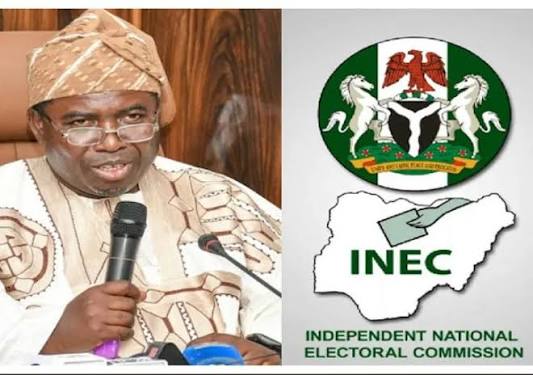
The Independent National Electoral Commission (INEC) says it is preparing to deploy approximately 1.4 million ad-hoc personnel across more than 176,000 polling units nationwide for the 2027 general elections.
INEC Chairman, Prof. Joash Amupitan, SAN, disclosed this on Tuesday in Abuja while receiving a Pre-Election Assessment Mission (PEAM) delegation of the International Republican Institute (IRI), led by former United States Assistant Secretary of State for African Affairs and former U.S. Ambassador to South Africa, Ambassador Dr. Jendayi Frazier.
Amupitan said the IRI mission, which is in Nigeria from August 11 to 21, came at a critical point in the country’s electoral calendar, particularly following the August 15 Osun State governorship election and the commencement of statutory campaigns and rallies for the 2027 elections on Wednesday, August 19.
He described the mission as “timely and strategic,” saying its independent assessment would provide valuable insight into INEC’s operational environment as the Commission moves into full-scale preparations for the national elections.
According to him, INEC has used recent off-cycle governorship elections in Ekiti and Osun, alongside legislative by-elections, as operational stress tests for its technology, logistics and security coordination systems.
He said the performance of the Bimodal Voter Accreditation System (BVAS), used for biometric voter verification, and the electronic transmission and public display of polling-unit results through the INEC Result Viewing (IReV) portal had demonstrated strong operational reliability.
Amupitan said recent off-cycle elections recorded result-upload rates of more than 98 per cent, adding that technology had significantly strengthened the electoral process and reduced vulnerabilities associated with the traditional voting system.
“As we turn our full institutional focus toward the 2027 General Election, the Commission is scaling its administrative capacity to manage an unprecedented logistical operation,” he said.
The INEC chairman identified Continuous Voter Registration (CVR), voter-register auditing, logistics optimisation and improved accessibility as key components of the Commission’s preparations.
He said INEC was deploying its Automated Biometric Identification System (ABIS) to detect and eliminate duplicate voter records and maintain a cleaner and more reliable voters’ register.
On logistics, Amupitan said the Commission was expanding its early-deployment framework and strengthening partnerships with transport unions to facilitate the timely opening of polling units nationwide.
He also assured that INEC was strengthening its inclusivity framework to improve access to polling units and provide specialised support for persons with disabilities, pregnant women, nursing mothers and elderly voters.
The chairman, however, acknowledged that significant threats remained to Nigeria’s electoral process.
He listed insecurity, electoral violence, vote-buying, hate speech, disinformation and Foreign Information Manipulation and Interference (FIMI) among the challenges capable of undermining public confidence in elections.
He said INEC was working with security agencies through the Inter-Agency Consultative Committee on Election Security (ICCES), as well as anti-corruption agencies including the Economic and Financial Crimes Commission (EFCC) and Independent Corrupt Practices and Other Related Offences Commission (ICPC), to enforce electoral laws and address violations.
Amupitan also disclosed that INEC would participate alongside presidential candidates later on Tuesday in the National Peace Committee’s signing of the First National Peace Accord on Issue-Based Campaigns, aimed at promoting responsible political campaigns and reducing inflammatory rhetoric.
The INEC chairman assured the IRI delegation that the Commission welcomed international election observation missions as partners in strengthening Nigeria’s democracy.
He said pre-election assessment missions provided independent perspectives, risk assessments and recommendations capable of helping the Commission identify operational gaps, refine its strategies and strengthen public confidence.
“INEC views international election observation missions not as critics, but as invaluable institutional partners,” Amupitan said, pledging the Commission’s “unreserved transparency, open door policy, and full cooperation” with the IRI mission.
He reiterated INEC’s constitutional responsibility to remain neutral in the contest among political parties and candidates.
“As an electoral management body, INEC holds no preference for any political party or candidate. Our sole mandate is to serve as an uncompromising, impartial umpire dedicated to delivering a free, fair, credible, transparent, and inclusive election that reflects the sovereign will of the Nigerian people,” he said.
The IRI delegation is expected to undertake engagements and assessments across Nigeria ahead of the 2027 general elections and a planned International Election Observation Mission (IEOM).
Amupitan expressed confidence that the engagement would contribute to strengthening Nigeria’s electoral institutions and democratic process.