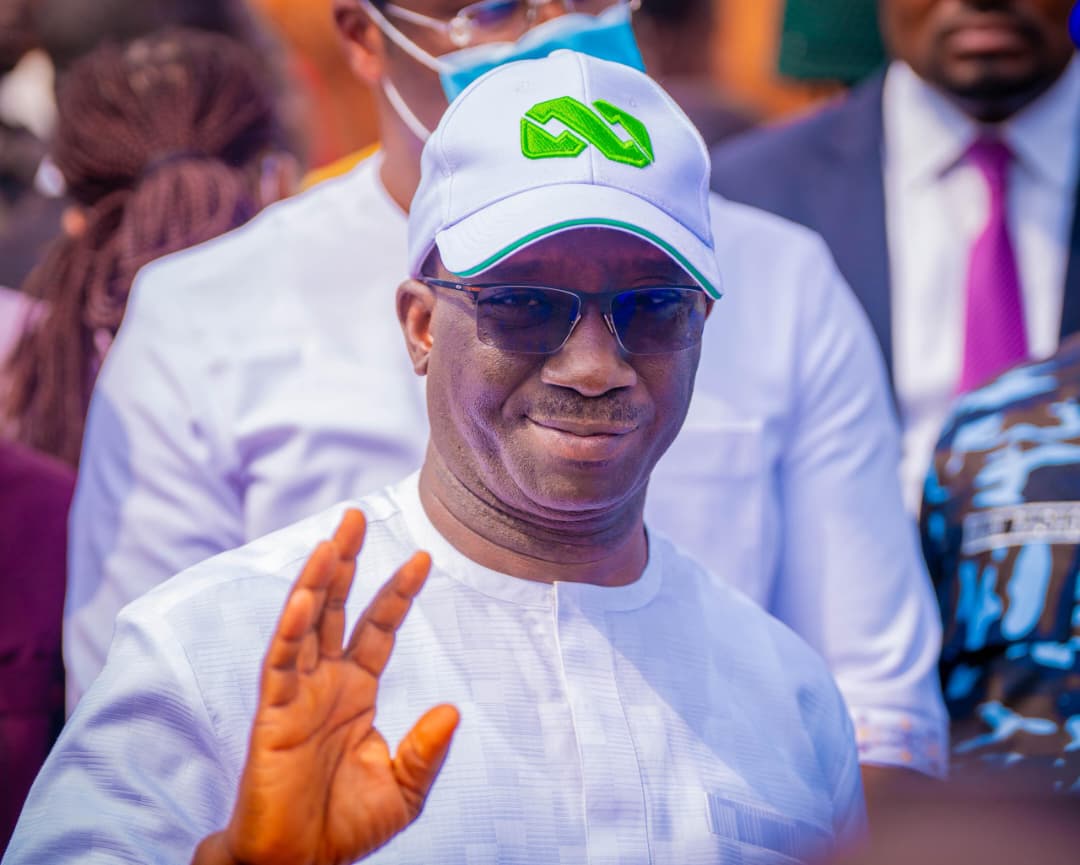
BENIN CITY — As Edo State Governor, Senator Monday Okpebholo, marks his 56th birthday, his administration’s emphasis on the welfare of citizens and interventions in the education sector have emerged among the notable areas of focus since he assumed office on November 12, 2024.
In his inaugural address, Governor Okpebholo pledged that the welfare of Edo people would remain a top priority of his administration, promising programmes aimed at strengthening the economy and improving the lives of citizens.
“The welfare of our citizens is a top priority for us,” the governor declared, adding that his administration would implement programmes outlined in its five-point agenda to promote economic growth and improve the quality of life of the people.
Nearly two years into the administration, the governor’s supporters point to interventions in security, infrastructure, healthcare, water supply, agriculture and education as evidence of efforts to translate the promise into action.
Security, in particular, has received considerable attention, with the administration strengthening the state’s security architecture through the provision of vehicles, motorcycles and other logistics to the police and other security agencies, while also providing training and support for personnel of the Edo State Security Corps and Forest Guards. These interventions have contributed significantly to the restoration of peace and security across the state, with incidents of cultism and kidnapping now greatly reduced and no longer posing the widespread threat previously experienced by residents.
The administration has also embarked on road construction and rehabilitation across the state, with projects linking urban and rural communities and aimed at facilitating economic and commercial activities.
The welfare of workers has equally featured prominently in the administration’s policies. In his inaugural address, Okpebholo assured civil servants that their welfare would remain a priority, with reforms aimed at promoting innovation, transparency and productivity in the public service.
Since then, the administration has continued to emphasise the payment of salaries and implementation of promotions, while workers have also benefited from training and retraining programmes designed to improve their capacity and productivity.
Education, another major pillar of the administration, has received substantial attention through interventions in infrastructure, teacher welfare, manpower development, access and quality.
Government reports indicate that more than 100 schools were constructed within the administration’s first year, while several others were rehabilitated and upgraded across the three senatorial districts. The projects have included classroom reconstruction and the provision of water facilities to create more conducive learning environments.
A Benin City-based parent, Mrs Glory Ayemoba, said the physical transformation was particularly noticeable in schools that had suffered years of deterioration.
Teachers have also benefited from the administration’s interventions. In February 2025, Governor Okpebholo approved promotion letters for 8,476 primary and junior secondary school teachers, covering promotions from 2022 to January 2024.
The government also recruited or absorbed more than 6,000 teachers into the public service during its first year, according to government reports.
A secondary school teacher, Mr Lucas Egbadon, said the attention given to teachers had helped to boost morale and strengthen the workforce.
Another teacher, Mrs Priscilia Osaretin, noted that Edo’s performance at the 2026 National Teachers Summit in Abuja further underscored the administration’s focus on the teaching profession. Physics teacher Okhide Eugene of Imaguero College, Benin City, received a N25 million award for outstanding performance.
At the tertiary level, the administration substantially increased funding to state-owned institutions. The monthly subvention to Ambrose Alli University, Ekpoma, was raised from N41 million to N500 million, while Edo State University, Iyamho, received an increase to N250 million.
In April 2026, the governor also approved a N2 billion grant for infrastructural development at Edo State University and announced additional buses for the institution.
Similarly, the monthly subvention to Edo State College of Education, Igueben, was increased from N19 million to N100 million, with increased funding also extended to Edo State Polytechnic, Usen.
The administration subsequently introduced the Senator Monday Okpebholo Education Talent Hunt Competition, through which 54 outstanding students are to receive fully funded scholarships to state-owned tertiary institutions.
For the Vice Chancellor of Ambrose Alli University, Ekpoma, the initiatives represent an effort to broaden the scope of education policy beyond infrastructure and teacher recruitment to include the identification and reward of academic talent.
The administration has also introduced the Edo Rescue Initiative, aimed at reconnecting out-of-school children with formal education, alongside the provision of back-to-school materials and monitoring mechanisms.
A resident of Ewu in Esan Central Local Government Area, Mrs Irene Abhulimen, described the initiative as an important step towards expanding access to education for children who had been left out of the formal school system.
For public affairs analyst, Mr Goodluck Momodu of Fugar, Etsako Central Local Government Area, the developments demonstrate what he described as deliberate investment in education. He also cited the governor’s recognition as New Telegraph’s Governor of the Year in Education as further acknowledgment of the administration’s interventions in the sector.
As Governor Okpebholo celebrates his 56th birthday, the combination of worker-focused policies, security measures, infrastructure development and education interventions provides a basis for assessing the direction of his administration.
For many Edo citizens and stakeholders, the progress recorded so far represents an ongoing effort to make the welfare of the people, as promised at the beginning of the administration, a central feature of governance in the state.