The Federal Government has ruled out any immediate increase in electricity tariff, saying its priority is to stabilise the power sector, restore market discipline and strengthen governance across the electricity value chain.
Minister of Power, Mr Joseph Tegbe, gave the assurance in Abuja on Monday while briefing Power Correspondents on his first 100 days in office.
Tegbe, who assumed office on June 8, said the administration of President Bola Tinubu was more concerned with fixing structural challenges in the sector and improving electricity supply than imposing additional financial burdens on consumers.
According to him, the first 100 days of his tenure were devoted largely to diagnosing the problems confronting the sector and initiating measures to stabilise the electricity value chain.
“Upon assuming office, the diagnosis we undertook at the onset revealed constraints at every segment of the electricity value chain. Gas supply to power stations was limited by damaged pipelines and commercial terms that discouraged investment,” he said.
The minister explained that the generation segment remained heavily dependent on thermal plants, many of which were affected by ageing equipment, deferred maintenance, stalled projects and inadequate capacity to deliver available power to consumers.
He disclosed that the sector diagnosis also revealed that only 27 per cent of generation companies’ bills were being paid, a situation he said undermined their capacity to maintain their plants and meet obligations to gas suppliers.
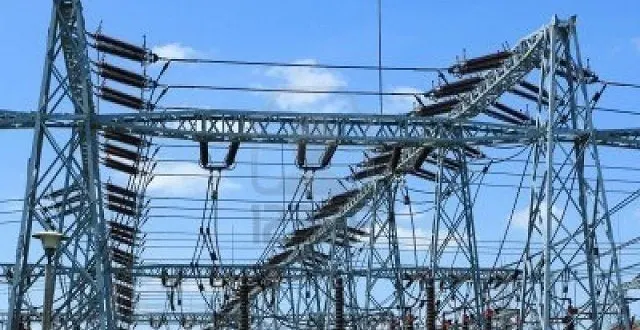
On transmission, Tegbe said the national grid was constrained by vandalised towers and lines, overstretched equipment and frequent tripping, while the distribution segment continued to contend with aggregate technical, commercial and collection losses of between 30 and 40 per cent.
He listed inadequate metering, estimated billing, damaged distribution assets and weak payment discipline among the major challenges affecting the distribution companies.
Despite the challenges, the minister said the sector had recorded some “modest gains” between June 8 and September 16.
These, he said, included the restoration of the 375 megawatts Alaoji open-cycle power plant after being offline for three years.
He also cited the upgrade of substations at Apapa, Ijora, Alausa and Lekki in Lagos, which he said had unlocked 672MW, as well as the installation of a new 300MVA transformer at Katampe, Abuja, unlocking an additional 240MW.
Tegbe said power generation and transmission had risen above 5,000MW in recent weeks, compared with between 3,700MW and 4,700MW before June, with a peak of 5,330MW recorded in August and September.
He further disclosed that more than 300 containers of Transmission Company of Nigeria (TCN) equipment had been released from the ports, while two solar and mini-grid installations across 30 states had delivered 43.6MW and facilitated 41,735 new connections.
According to him, about 350,000 meters were installed within the first 100 days, bringing the cumulative number of meters installed to 1,004,260 as of August, while an additional 90,000 meters were installed in military formations.
On the financial challenges confronting the sector, Tegbe said an estimated N1.23 trillion had been raised towards settling the N3.3 trillion legacy debt owed to generation companies.
Looking ahead, the minister said the next six months would focus on deepening grid stabilisation along the Lagos, Enugu-Port Harcourt and Abuja-Kaduna-Kano corridors.
He said the Federal Government would also pursue the development of a transmission super grid, strengthen links between electricity supply and productive clusters through bilateral agreements, and prepare infrastructure for future demand, including power from the Mambilla hydro project.
Tegbe appealed to Nigerians to support the ongoing reforms and join efforts to protect electricity infrastructure from vandalism and theft.
“Our commitments remain clear: a disciplined approach, grid stability through strategic reform, visible improvements in electricity supply, and honest communication,” he said.