…Engages Poland, US AFRICOM, Italy, Guinea-Bissau, Eswatini, UAE on Security Cooperation, Training, Defence-Industrial Partnerships
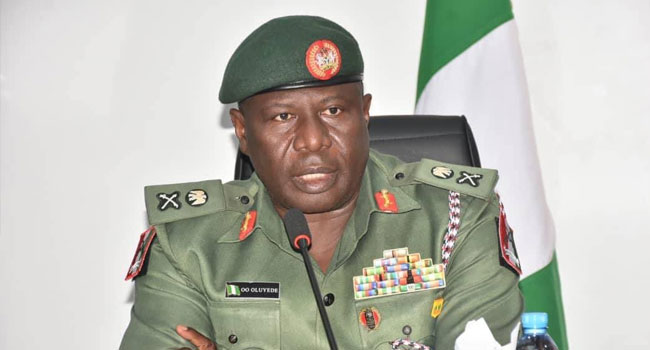
Abuja – Nigeria’s Chief of Defence Staff, General Olufemi Oluyede, has stepped up the country’s international defence diplomacy, holding high-level engagements with six foreign military and defence delegations at the ongoing African International Defence Exhibition (AFRIDEX) 2026 in Lagos, as the Armed Forces pursue wider cooperation in technology, equipment acquisition, military training and operational capabilities.
The engagements, held on the sidelines of the exhibition, brought together representatives from Poland, the United States, Italy, Guinea-Bissau, the Kingdom of Eswatini and the United Arab Emirates, highlighting Nigeria’s efforts to strengthen bilateral military relationships and improve cooperation in confronting emerging security threats.
The discussions covered defence technology, capacity development, professional military education, technology transfer and operational cooperation.
However, the Defence Headquarters did not disclose the financial value of any prospective arrangements or announce specific contracts concluded during the meetings.
At a time when security threats increasingly cross national borders, the engagements place defence partnerships and the exchange of expertise at the centre of Nigeria’s efforts to strengthen its military capabilities.
Among the delegations received by General Oluyede was a Polish team led by the country’s Ambassador to Nigeria, Mr Michał Cygan, accompanied by executives from the defence industry.
Their discussions focused on possible collaboration in defence technology, equipment acquisition and capacity development.
The participation of defence industry executives gave the engagement an industrial dimension, extending the conversation beyond diplomatic relations to the potential supply of military equipment and the development of technical capabilities.
For Nigeria, such cooperation could create avenues to explore available technologies, strengthen personnel expertise and broaden options for meeting defence requirements.
The statement, however, did not identify specific equipment under consideration, disclose proposed contract values or confirm that procurement agreements had been signed.
General Oluyede also met General Dagvin Anderson, Commander of United States Africa Command (US AFRICOM), with discussions centred on sustaining the existing strategic partnership between Nigeria and the United States.
The meeting provided an opportunity to exchange perspectives on shared security interests and continued military cooperation.
The engagement reflects the importance Nigeria attaches to maintaining defence relationships with international partners as it addresses evolving security challenges.
The Defence Headquarters did not disclose specific new operational commitments, funding arrangements or military deployments arising from the meeting.
Nigeria’s discussions with Italy focused on expanding cooperation in military training, maritime security and specialised capabilities, including police training.
General Oluyede received General Luciano Portolano, Chief of Defence Staff of the Italian Armed Forces, as part of the series of bilateral engagements at AFRIDEX.
The areas identified for cooperation point to a broad approach to defence collaboration, encompassing personnel development and specialised operational expertise alongside maritime security.
For a country seeking to strengthen its ability to respond to security threats across different operational environments, military training and specialised capabilities remain important components of defence cooperation.
The statement did not specify new training programmes, implementation timelines or the number of personnel expected to benefit from any future arrangements.
The CDS also met Lieutenant General Ibrahima Sory Bangoura, Chief of General Staff of the Armed Forces of Guinea-Bissau.
According to the Defence Headquarters, the discussions reinforced Nigeria’s commitment to regional stability, respect for national sovereignty and defence capacity development.
The engagement underscores the regional dimension of Nigeria’s defence diplomacy, with military-to-military relations providing a channel for exchanging perspectives and strengthening cooperation among African countries.
The meeting formed part of the wider effort to promote collective responses to security challenges and support professional military development across the region.
No specific joint operation, military assistance package or new bilateral agreement was announced in the release.
General Oluyede’s engagements also included General Hulumende Fakudze, Commander of the Umbutfo Eswatini Defence Force, and Brigadier General Mohammed Sultan Yousef Al Nuaimi of the United Arab Emirates.
The discussions with both delegations reflected Nigeria’s interest in deepening strategic defence relationships, encouraging defence-industrial cooperation and strengthening partnerships to address transnational and emerging threats.
The UAE engagement added another defence partner to the series of meetings, while the discussion with Eswatini extended Nigeria’s military outreach to the southern African region.
Together with the meetings involving Poland, the United States, Italy and Guinea-Bissau, the engagements demonstrated the geographical breadth of the defence relationships Nigeria is seeking to sustain and develop.
The Defence Headquarters did not provide details of specific projects, equipment packages or industrial investments agreed with either delegation.
General Oluyede emphasised the importance of sustained military-to-military dialogue and mutually beneficial partnerships, describing them as critical to improving operational effectiveness and promoting regional and global peace and stability.
His position places defence diplomacy alongside military readiness as a tool for advancing Nigeria’s security interests.
The engagements also reflect the potential importance of partnerships in areas such as personnel training, technical expertise, equipment acquisition and the transfer of defence technology.
However, the practical impact of the meetings will depend on whether discussions translate into defined programmes, implementable agreements and measurable improvements in military capabilities.
The AFRIDEX engagements have opened channels for further discussions with six international delegations, but the release did not announce signed defence contracts, disclose the value of prospective deals or establish implementation deadlines.
The Chief of Defence Staff’s meetings therefore mark a renewed push for international defence cooperation, with the next test being how the opportunities identified at the exhibition are converted into concrete outcomes for Nigeria’s Armed Forces.
The statement was issued on October 27, 2026, by Major General Samaila Uba, Director of Defence Information.