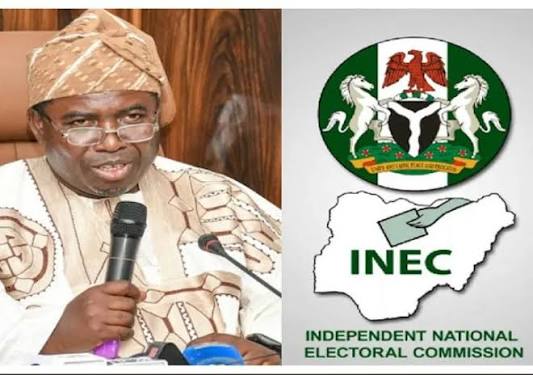
The Independent National Electoral Commission (INEC) and the Office of the National Security Adviser (ONSA) have intensified efforts to strengthen election security ahead of the 2027 general elections, warning political actors against violence, intimidation and attacks on electoral officials.
INEC Chairman, Prof. Joash Amupitan, gave the warning on Thursday in Abuja during the INEC–ONSA Strategic Election Security Conference, attended by the National Security Adviser, Mallam Nuhu Ribadu, Minister of Defence, Gen. Christopher Musa (retd.), heads of security agencies and other stakeholders.
Amupitan said the conference was convened to assess emerging security threats, improve inter-agency collaboration and develop a comprehensive operational framework for the peaceful conduct of the 2027 elections.
He noted that with the presidential and National Assembly elections scheduled for January 16, 2027, and governorship and State Houses of Assembly elections slated for February 6, security agencies must strengthen their preparations to ensure credible and peaceful polls.
According to him, conducting elections in a country with more than 100 million registered voters and 177,299 polling units requires effective coordination between INEC and security agencies.
He described electoral administration and national security as inseparable, explaining that while INEC is responsible for managing the electoral process, security agencies must provide an environment where citizens can freely exercise their democratic rights.
The INEC chairman described security as the first and last mile of election logistics, urging the Inter-Agency Consultative Committee on Election Security (ICCES) to move beyond reactive policing by strengthening intelligence gathering, threat assessment and coordinated responses.
He recalled that ICCES was established following the violence that characterised the 2011 general elections to provide a framework for joint security planning, intelligence sharing, logistics and emergency response during elections.
Amupitan said the committee had recorded progress through nationwide vulnerability assessments, identification of electoral flashpoints, joint operational plans and coordinated deployment of security personnel.
However, he called for stronger implementation of its decisions at the state, local government and ward levels.
Expressing concern over the increasing incidents of political violence since the commencement of open campaigns in August 2026, Amupitan cited attacks on campaign convoys, political gatherings, party offices and supporters in Lagos, Edo, Ekiti, Enugu, Ebonyi, Delta, Cross River, Oyo and Benue states.
He condemned the incidents, stressing that political parties and candidates had constitutional rights to campaign peacefully across the country without intimidation or harassment.
“No political ambition is worth the blood of a single Nigerian,” he declared.
He warned political actors against turning public spaces into centres of violence or declaring certain areas no-go zones for political opponents.
The INEC chairman also condemned alleged harassment, intimidation and physical attacks on the commission’s leadership, staff and ad hoc personnel by supporters and agents of political parties.
He maintained that electoral officials were non-partisan public servants carrying out constitutional responsibilities, warning that attacks against them amounted to attempts to intimidate an independent institution and undermine democratic governance.
In his remarks, Ribadu reaffirmed the Federal Government’s commitment to ensuring peaceful, free, fair and credible elections in 2027.
He assured Nigerians that security agencies would protect voters, electoral officials, politicians and other stakeholders before, during and after the elections.
The NSA said President Bola Tinubu’s administration remained committed to democratic principles and would ensure that security agencies performed their duties impartially and in accordance with the law.
According to him, the responsibility of government and security agencies is to protect all Nigerians, regardless of political affiliation, while ensuring that political parties, candidates, election observers, the media and citizens can exercise their lawful rights without intimidation or undue interference.
Ribadu observed that Nigeria’s electoral process had continued to witness improvements, noting that increasing voter registration and other indicators suggested growing public confidence in the system.
He, however, stressed the need to sustain the progress through transparency, accountability and respect for INEC’s constitutional independence.
He particularly urged security agencies to respect the commission’s institutional independence and constitutional responsibilities.
“Security agencies will discharge their responsibilities impartially and in accordance with the law,” Ribadu said.