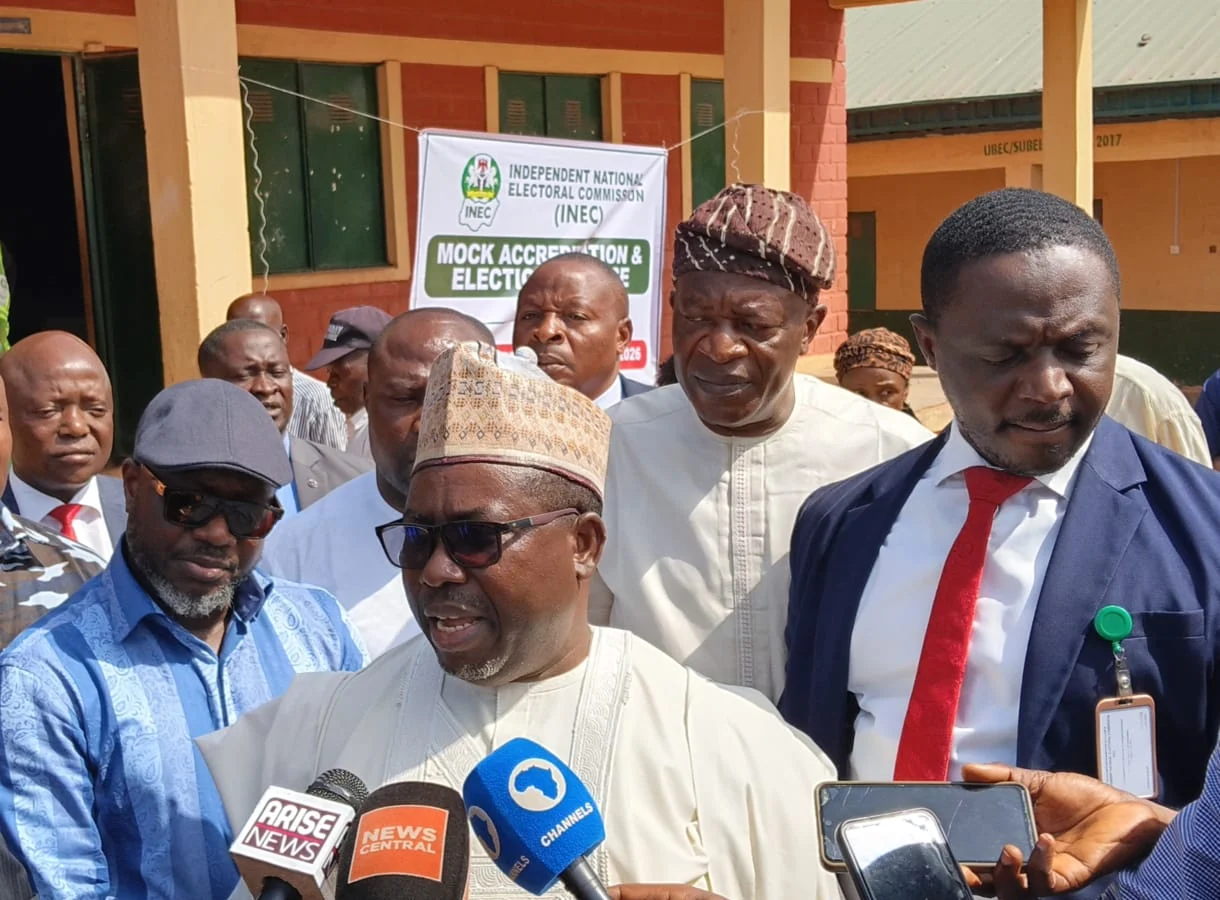
The nationwide mock accreditation and electronic results upload exercise conducted by the Independent National Electoral Commission (INEC) on Saturday has exposed gaps in voter awareness and participation, even as the commission tested upgraded electoral technology ahead of the 2027 general elections.
Although the exercise was designed to assess the readiness of the Bimodal Voter Accreditation System (BVAS) and the INEC Result Viewing Portal (IReV), reports from several states showed uneven participation, with low turnout recorded in parts of the country.
INEC conducted the exercise in 17,676 selected polling units across the 36 states and the Federal Capital Territory. The locations represented two polling units in each of the country’s 8,838 registration areas.
The exercise, which ran from 8:30 a.m. to 2:30 p.m., was intended to test the accreditation process, the functionality of BVAS devices and the electronic transmission of results before the January 16, 2027 presidential and National Assembly elections.
In Bayelsa State, low turnout was reported across parts of Yenagoa, despite indications that the accreditation process was largely smooth.
At the Kpansia-Epie Community Town Hall, at least nine voters had completed accreditation by 11:15 a.m., while officials reported no major difficulty with the BVAS operations.
However, observations from other locations in the state raised concerns about voter awareness. Some voters at Opolo and Okutukutu reportedly complained that they could not locate their names on the register, with some attributing the difficulty to inadequate sensitisation and uncertainty over their designated polling units.
The situation was also mixed in Plateau State. While INEC officials and ad hoc personnel were reportedly waiting for voters at Polling Unit 014, Garden of Peace, and the Tafawa Balewa polling unit in Jos North, activity was recorded at selected polling units in Jos South.
In Kano State, participation at Paniso Ward was described as relatively encouraging compared with reports from some other locations, although turnout was still considered lower than expected. The accreditation process reportedly proceeded smoothly, with BVAS thumbprint verification functioning as expected and no discrepancies observed at the time of reporting.
Kogi State also recorded low participation. An electoral observer, Nathaniel Abaniwo, attributed the turnout partly to the fact that the exercise coincided with a market day. A voter, Abubakar Lukman, described the process as peaceful, while the state Resident Electoral Commissioner, Shehu Wahab, said additional safeguards had been introduced to strengthen results management and minimise electronic transmission errors.
The mixed reports raise questions about whether the exercise achieved its wider purpose of preparing not only INEC’s technology but also voters and other stakeholders for the next general elections.
INEC Chairman, Prof. Joash Amupitan, had said the exercise would provide an opportunity to test upgraded BVAS devices and stricter validation measures on IReV. He explained that the commission had introduced safeguards designed to prevent the upload of results containing arithmetic inconsistencies or figures indicating over-voting.
The commission has also reduced the maximum number of voters assigned to a BVAS machine from 1,250 to 850 and procured additional devices to improve operational efficiency. Amupitan said the changes were part of efforts to address technical and logistical challenges experienced during previous elections.
The concerns surrounding public awareness, however, extend beyond the observations recorded on Saturday.
The Nigeria Civil Society Situation Room, in a preliminary statement issued ahead of the exercise, expressed concern about what it described as limited public communication and stakeholder engagement.
The coalition noted that although INEC announced the exercise on November 12, the list of selected polling units was published on November 23, leaving little time for citizens, political parties, civil society organisations and observers to prepare.
It also reported complaints about difficulties accessing the online list of participating polling units and warned that inadequate information could create room for misinformation.
The Situation Room stressed that the success of the exercise should not be measured only by whether the machines functioned or results were uploaded. It said INEC must also demonstrate transparency, provide clear public information and ensure that operational weaknesses identified during the test are addressed.
The observations are particularly significant given the public confidence challenges that followed the 2023 general elections, when controversies surrounding electronic transmission of results and the performance of electoral technology attracted widespread criticism.
For the 2027 elections, INEC faces the task of convincing Nigerians that the technology will work reliably, that election officials are adequately prepared and that the results management process will be transparent.
The January 16 presidential and National Assembly elections are now less than two months away. The governorship and State Houses of Assembly elections are scheduled for February 6, 2027.
With the electoral timetable drawing closer, the commission has limited time to identify weaknesses, strengthen its systems and communicate clearly with voters.
The mock accreditation exercise was therefore more than a technical rehearsal. It was an opportunity to test public confidence, institutional preparedness and the commission’s ability to learn from previous shortcomings.
INEC must now publish a comprehensive assessment of the exercise, including the performance of BVAS and IReV, the challenges recorded in different states and the corrective measures to be taken before January.
The central question is no longer simply whether the machines can accredit voters or transmit results. It is whether INEC can translate the lessons from Saturday’s exercise into a credible, transparent and dependable electoral process that Nigerians will trust in 2027.