Nature and Types of Malpractices in Banks
Broadly speaking, malpractices are categorized into those committed by bank staff, those committed by bank customers, and those committed through the collusion of bank staff and customers. Common types of malpractices committed by bank staff include the following:
11.2.1 Self-dealing
This refers to a situation where insiders (bank staff/directors) put their own self-interest above those of the bank. These may manifest in any of the following ways:
(i) Where an insider uses his or her authority to grant loans to oneself: or a related business, at preferential terms or using lower credit standards, with the interest of making profit in that business;
(ii) Where directors and principal shareholders become dependent on fees and income from providing outside dealings with the bank to such an extent that their interest comes ahead of the bank’s;
(iii) Putting friends and relatives on the bank’s payroll;
(iv) directing the bank’s business to friends and relatives;
(v) Unwarranted fringe benefits to insiders, payment for personal trips overseas; and interest waivers on his/her loans and related loans.
(vi) kickbacks from customers in return for granting loans or low interest rate on loans;
(vii) Conversion of bank’s money into personal use. This may take the form of using bank’s money to register a company and the profit there from going to the private accounts of directors or officers concerned;
(viii) Granting of unjustifiable interest waivers on non-performing facilities in cases where insiders are interested.
11.2.2 Granting of Unauthorised Overdrafts and Loans
Cases abound in some banks where facilities are granted other than those who have the authority either to grant such facilities or to grant so much. This form of malpractice ranges from accommodating cheques running into millions, when it is known that there are insufficient funds, to unauthorised credits granted by branches without the knowledge of the Head Office or approved by individual(s) not capable of authorising such facilities by virtue of their nature and or magnitude. In such circumstances, it has been discovered that there were collaboration between directors and or top management to hide the accounts, restructure the overdrafts to loans, waive more than 50 per cent of the accumulated interest on such facilities, etc. The situation is usually as bad as not passing charges due to such accounts on the pretext that such debt-customers could not be located at given addresses even in instances where the officers or employees of the bank personally know the customer and in some cases, live close to each other. Such accounts are, as the case may be, recommended for write-off.
11.2.3 Fraudulent Transfers and Withdrawals
This occurs when an account is opened with fictitious names, usually with the collaboration of a bank staff Money is then transferred to and drawn from such accounts. Withdrawals may also be made from Dormant accounts.
11.2.4 Alteration, Diversion and Suppression of Cash Vouchers and or Cheques
This form of malpractice takes many forms ranging from delay in sending cheques for clearing when it is known that there is insufficient funds in the accounts while credit is given to outright defalcation of cheques. Whichever form it takes, the aim is to fraudulently grant unauthorized credit to the customer or owner of the cheque. In these instances, the cash vouchers or cheques are usually kept away and delayed beyond the clearing days until, presuming that the cheque has cleared, credit is given.
11.2.5 Malpractices in Foreign Exchange Operations
These have been noticed to be a fertile ground for sharp practices. Such practices have been observed to take the following forms:
(i) banks may sell forex at a premium which is usually more than the percentage mark-up stipulated by the CBN;
(ii) illegal transfer of forex by banks which is personally utilised by the members of the board and or the management team;
(iii) management who are purportedly selling forex to customers do give a lot of unsecured, indirect credit to such customers who are supposed to have naira cover for their bids;
(iv) bank’s funds from FEM are usually used by some bank’s directors for private purposes that are not allowed officially;
(v) use of forex meant for eligible in ineligible transactions;
(vi) sale of repatriated forex in the black market;
(vii) non-repatriation of interest
(viii) diversion of export proceeds; etc.
11.2.6 Other Forms of Sharp Practices
(i) posting of fictitious credit;
(ii) under-quoting of the volume of deposit to evade insurance premium;
(iii) carrying on another business apart from the business of banking, e.g trading; and
(iv) granting loans without collateral security or with defective security or with inadequate security or failure to perfect the security.
The types of malpractice committed by bank customers include the following:
11.2.7 Advanced Fee Fraud (“419”)
Advanced Fee Fraud is a situation where an agent, approaching a bank, an individual or a company with very favourable terms, offer access to large funds at below market interest rate often for long term period. The purported source of such funds is not specifically identified as the only way to have access to it is through the agent who must receive a fee or commission “in advance.” As soon as the agent collects the fee, he disappears into thin air and the loan never comes through. Any bank desperate •for funds, especially the distressed banks and banks needing huge funds to bid for foreign exchange, can easily fall victim of this type of fraud. When the deal fails and the fees paid in advance are lost, these victims are not likely to report the losses to the police or to other authorities. Advance fee fraud can be very dangerous, especially those that are international in nature. Bank can suffer significant losses and find recovery and legal redress to be quite difficult.
11.2.8 Cheque Kiting
As defined by the US Comptroller of the Currency’s Policy Guidelines for National Bank Directors, kiting is “a method whereby a depositor utilises the time require for cheque to clear to obtain an unauthorised loan without any interest charge.” Cheque kiting involves the authorised use by depositors of uncollected funds in their accounts. Uncollected funds are cheque lodgments accepted by a bank for which it cannot fully guarantee collectibility until the institution on which each cheque is drawn has determined that funds are available to cover the item. The goal of the cheque kiter may be to use these uncollected funds, interest-free, for a short time to overcome a temporary cash shortage or to withdraw the finds permanently for personal use. Competition among banks in the era of deregulation encourages them to make funds available before actual collection in order to attract customers, especially business accounts.
11.2.9 Account Opening Malpractice
This involves the deposit and subsequent cashing of fraudulent cheques. it usually starts when a person not known to the bank asks to open a transaction account such as current and savings account with false identification but unknown to the bank. The person opens the account with a small initial deposit of: cash or cheque. Generally, within a few days, the person will deposit a number of bad cheques and obtain cash in return either by cashing the fraudulent items outright Or by withdrawing cash as soon as funds are available. The bad cheques may be large overdraft drawn on other banks; drawn on ‘bank accounts that are closed or never existed; stolen, counterfeit, forged or otherwise fraudulent, or non empty envelope deposited in ATM
11.2.10 Letters of Credit Malpractice
Letters Of credit generally arise out of international trade and commerce. They stimulate trade across national boarders by providing a vehicle for ensuring prompt payment by financially sound institutions. However, in some areas of the world, fraud has historically been a problem – Nigeria, Iran and the Middle East are examples. Most letters of credit fraud are perpetrated by beneficiaries to the credits using forged or fraudulent documents. In these cases, forged or fraudulent documents are presented to the confirming or issuing bank and payment is demanded against the credit. Whether or not the bank pays the beneficiary will depend upon whether the presented documents appear on their face to comply with the terms of the credit. In most cases, if a credit transaction turns out to be fraudulent, it is the applicant who suffers the loss. In addition to fraudulent transactions, the letter of credit itself may be fraudulent. For example, an account officer or an employee of the documentary unit could create a phoney letter of credit application or enter a non-existent credit into the system using the name and credit capacity of an existing bank customer. However, to effect payment against a fraudulent letter of credit, the named beneficiary would probably have to be an accomplice in the fraudulent scheme.
11.2.11 Counterfeit Securities
Counterfeiting of commercial financial instruments is one of the oldest forms of crime in thc banking industry. Modern photographic and printing equipment have greatly aided criminals in reproducing good quality forged instruments. The documents may be total counterfeits or may be genuine documents that are copies, forged or altered as to amount, payout date, payee or terms of payment. A common method is to present the counterfeit notes such as treasury notes, cashier’s cheques, bankers acceptances, or certificates of deposit in counterfeit or altered form and presented to a bank for redemption. The presenter would draw out the proceeds and disappear before the financing instruments are found to be counterfeit.
11.2.12 Cheque Malpractice
The use of cheques as a means of paying financial obligations is an essential feature of modern economy. Cheques fraud is now very common and involves millions of naira annually. Common types of cheques are personal, business, government, travellers’, certified, draft and counter cheques, with each having its own characteristics and vulnerabilities for fraudulent use. The most common cheque frauds involve cheques that are stolen, forged, counterfeited or altered.
11.2.13 Computer Malpractice
Computer fraud can remain undetected for a long time. Computer frauds can take the form of corruption of the programme of application packages and even breaking into the system via a remote sensor. Diskettes can also be tampered with to gain access to unauthorised areas or even give credit to an account for which the funds were not originally intended.
11.3 Causes and Extent of Malpractices in the Banking Industry
The causes of malpractices in banks are grouped into two major classes, namely, institutional factors and environmental/societal factors. The institutional factors are those traceable to the internal environment of the bank. The environmental or societal factors refer to those which result from the influence of the environment or society on the banking industry.
11.3.1 Institutional Causes of Malpractice
The common institutional causes of malpractice as identified by different authors are summerised as follows:
(a)Poor Internal Control
Inadequate internal control and ineffective and/or inefficient application of internal control measures create loopholes for inclined staff, customers and non-customers to commit malpractice. Ineffective audit, poor supervision and failure to duly control cash security documents, keys and other bank assets aid malpractice.
(b) Inadequate Staff Training and Re-training
Lack of adequate training and re-training on both the technical and theoretical aspects of the job leads to poor performance which breeds malpractice. Failure by both management and staff to undergo on-the-job training and even relevant outside courses also lead to unsatisfactory performance which eventually creates room for malpractice.
(c) Banking Experience of Staff
All things being equal, malpractice in banks occur with higher frequency among staff with little experience and knowledge in banking practice. The more the experience and knowledge of a staff, the less the likelihood that malpractice would pass such staff undetected unless with his active connivance. Where professionally qualified bankers are involved in malpractice, they are more likely to swindle large sums of money than the less qualified staff
(d) Staff Negligence
In certain cases, staff negligence could give room for malpractice in banks.
Negligence itself is a product of several factors, including poor supervision, lack of technical knowledge, apathy, pressure, etc.
(e) Poor Security Arrangement for Documents
Fraudsters always have their way without detection in banks where security arrangements for valuable documents are weak, poor and vulnerable.
(f )Use of Sophisticated Accounting Machines
Where sophisticated accounting machines are in use and are manned by inadequately trained staff, errors could arise and thus lead to the production of unreliable records. In the hands of dishonest staff, sophisticated accounting machines could be employed to deliberately omit entries, substitute improper calculation and posting, manipulate documents, substitute fictitious documents and alter genuine ones. All of these are different ways of committing malpractices.
(g) Negligence of Customers
Traditionally it is the negligence on the part of customers that provide ample opportunities for bank staff to commit malpractice. Negligence of customers takes various forms, including errors that might have been genuine but which are open to abuse, distortions and defalcations by unscrupulous staff within and outside the bank in the employment of customers.
(h) Frustration
Management practices, when negative to the aspiration and development needs of staff, could result in the generality of staff being frustrated. Frustration in turn breeds malpractice in banks.
11.3.2 Environmental/Societal Causes
The environmental/societal factors have been identified as follows:
(a) Personality Profile of Fraudsters
Most over-ambitious bank staff are prone to committing malpractice. Such staff are bent on making money by hook or by crook. Also, such staff dismiss morality as an unnecessary prerequisite for virtuous life. To them, the end justifies the means; they are usually unscrupulous and opportunist.
(b) Societal Values
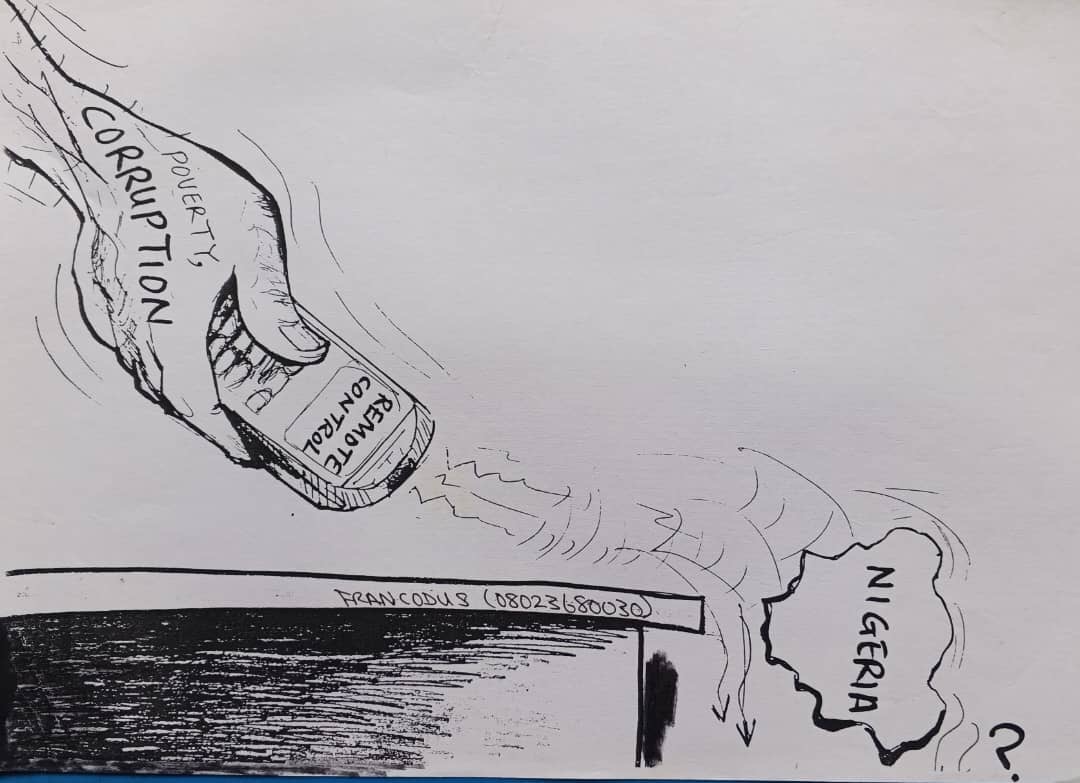
The value system in any society is the set of rules that prescribes what is right or wrong within that society. Where the possession of wealth determines the reputation ascribed to a person, that society is bound to witness unnecessary competition for the acquisition of wealth. This, no doubt, will lead to some people using dubious means to get rich overnight. It can be argued that the main cause of frauds in banks in Nigeria is traceable to the general dishonesty in the society where morality is thrown to the dogs Misplacement of societal values, the unquestioning attitude of the society towards the sources of wealth, the rising societal expectations from bank staff and the subsequent desire by such staff to live up to such expectations, are also contributory factors to malpractice in banks in Nigeria.
(c) Fear of Negative Publicity
Many banks fail to report cases of malpractice to the appropriate authorities as they believe that doing so will give unnecessary negative publicity to the banks. This attitude encourages individuals with ordinate ambition to defraud the banks.
11.3.3 Extent of Malpractices in Banks
The magnitude of the loss arising from bank malpractices is on the increase worldwide. It is appropriate to have a feel of the extent of losses to enable us appreciate the havoc this cankerworm has been wrecking on our economy.
We will use the returns on frauds and forgeries by banks to the NDIC to measure the extent of bank malpractice in the Nigerian banking industry, it should however be noted that what is shown in Table 11.1 is just a tip of the iceberg. The actual amount involved in bank fraud should be multiples of the reported figure as many banks had failed to render the required returns on fraud.
From Table 11.1, it can be seen that the sum of N82 billion was involved in bank frauds within six years (1991-1996). Of this total, N7.2 billion was involved in commercial banks while the remaining $0.9 billion was involved in merchant banks With regards to the actual’ expected losses, a total sum of NI .9 billion was lost to fraudsters, out of which commercial banks accounted for Nl.8 billion, while merchant banks accounted for N0.8 billion Judging from the above statistics, it is clear that the bulk of bank frauds is being committed in our commercial banks, presumably because of their large branch network as well as the low quality of staff when compared with the merchant banks.
As shown in ‘Table 11.2, a total of 737 bank staff were involved in frauds in just the banks that rendered returns on frauds and forgeries to NDIC in 1994. This was higher than the 1991 figure of 514 staff Although the number of staff decreased in 1996 to 552 as shown in Table 11.2, the figure is still on the high side. Also, the table shows that the category of bank staff prone to committing frauds are supervisors and managers, followed by clerks and cashiers. It is pertinent to note that staff caught in malpractices usually have their appointments terminated, or are dismissed or promptly retired.

Godwin Emefiele, CBN Governor