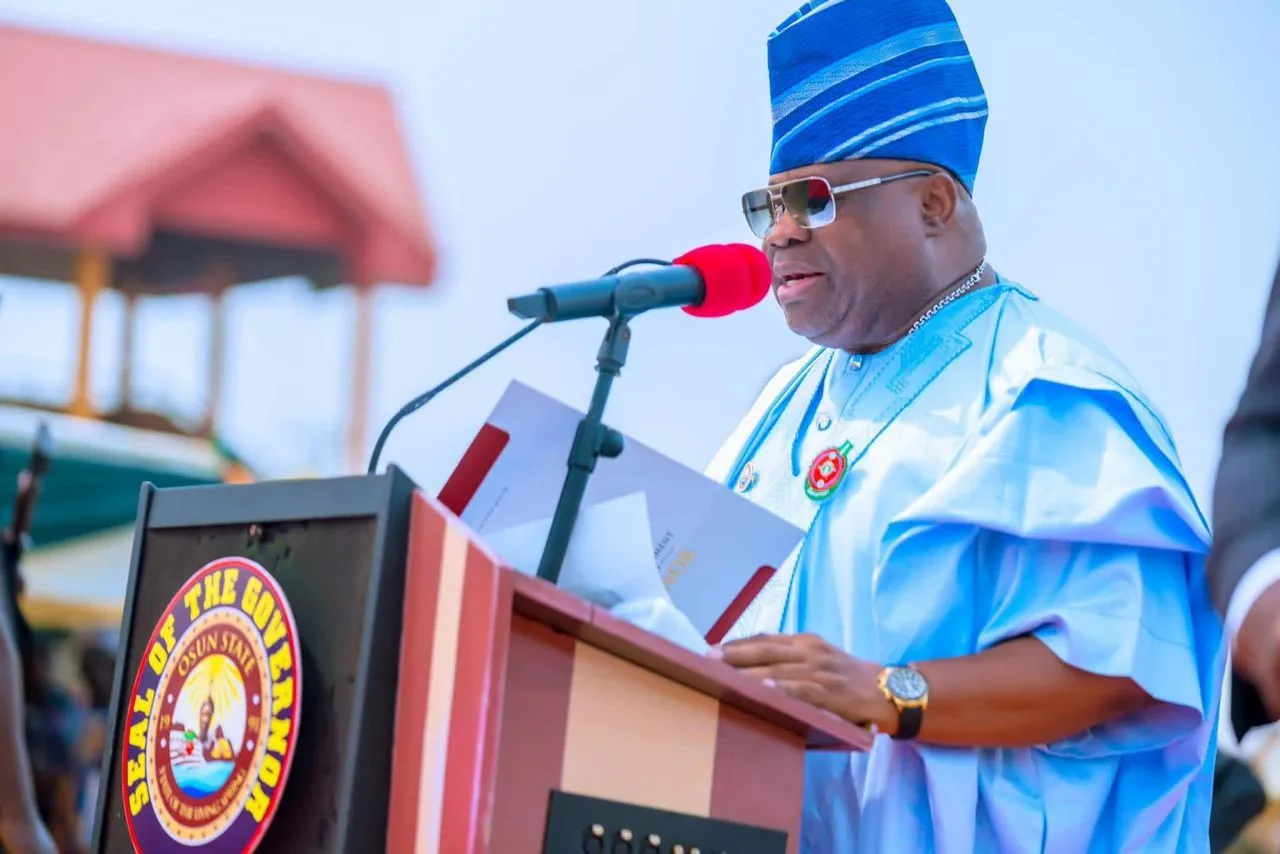
… pledges to tackle insecurity if elected
It is now getting clearer that Nigerians who are hooked on subsidy on petroleum products would have to find other addictions next year no matter who emerges victorious in the February 25, 2023 presidential election.
At least, the top contenders in next year’s presidential race have indicated a willingness to scrap fuel subsidy which has been variously described as wasteful.
Bola Ahmed Tinubu, presidential candidate of the reigning All Progressives Congress (APC), on Thursday pledged that if elected, he would end fuel subsidy once and for all even if Nigerians protest endlessly.
Peter Obi of the Labour Party and Atiku Abubakar of the People’s Democratic Party (PDP) had earlier said they would stop subsidy payment if elected into office, while Rabiu Musa Kwankwaso of the New Nigeria People’s Party (NNPP) said he would review the subsidy scheme since the 1970s.
Fuel subsidy has been a thorny issue in Nigeria over time, with many, from economists to international financial institutions to petroleum marketers, calling on successive governments to scrap it.
Fuel subsidy is reported to have gulped N2.565 trillion between January and August 2022, and the Federal Government, in the Medium-Term Expenditure Framework (MTEF), proposed to spend N3.3 trillion on subsidy in the first six months of 2023.
In October, the International Monetary Fund (IMF) urged the Federal Government to redirect the money spent on petrol subsidy to support vulnerable households in order to reduce the impact of food shortages and inflation triggered by flooding and climate change.
The closest Nigeria has come to removing subsidy was in January 2012 under former President Goodluck Jonathan, but that move sparked the “Occupy Nigeria” protests across the country.
When recently Finance Minister Zainab Ahmed announced plans by the Federal Government to do away with petroleum subsidy by June 2023, it was greeted with misgivings by some politicians who said it was a trap for whoever wins the presidential race next year.
Now Tinubu, a key contender in next year’s presidential election, has pledged that he would end the subsidy regime no matter how long Nigerians protest against that decision.
Tinubu said this on Thursday while speaking at a luncheon with business owners in Victoria Island, Lagos, tagged “Business Forward”.
A subsequent statement from his media office quoted Tinubu as saying, “How can we be subsidising fuel consumption of Cameroon, of Niger, of Benin Republic. No matter how long you protest, we are going to remove subsidy.”
The former Lagos State governor promised “to take bold decisions that would turn the economy around and one of such will be a firm decision on fuel subsidy”.
Tinubu also vowed to tackle the difficult security situation in the country if elected into office, noting that it is the primary duty of government to protect the lives, property, and prosperity of its citizens.
He said as governor of Lagos, fixing the difficult security situation he inherited was the first item on his list.
“Only after we secured the state and changed its reputation for the better could we embark on the economic reforms that have ultimately produced the vibrant and active megacity of today,” Tinubu said.
“I am committed to securing Nigerians from violence and the fear of such violence. Terror, kidnapping and banditry have no place in the society I envision. Upon entering office, we will move to implement several measures,” he said.
He added that his administration would increase the number of Nigeria’s military and non-military security forces with the establishment of specialist anti-terrorist battalions and integrated special forces units.