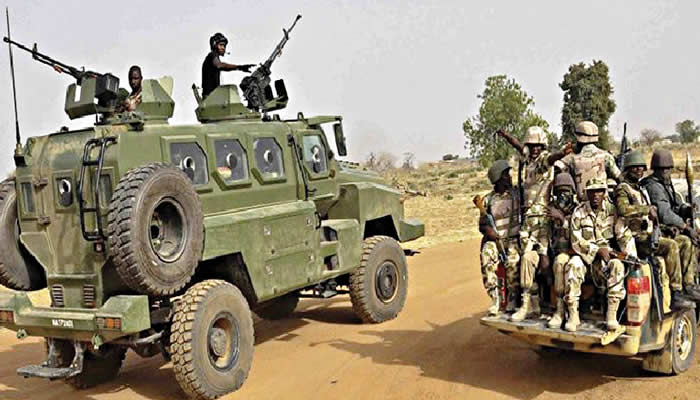
Nigeria’d Defence Minister, Mohammed Abubakar has dismissed claims by the House of Representatives suggesting that terrorists operating in the country possess more advanced weaponry than the Nigerian Armed Forces.
During a ministerial briefing in Abuja on Wednesday, Abubakar rejected the assertion, stating that the military is better equipped in both weaponry and technology.
“This ministry is critical because it concerns the safety of all citizens. The claim made by the House of Representatives that terrorists are better armed is absolutely not true. We have far more sophisticated weapons and drones,” he said.
He noted that the nature of terrorism in Nigeria does not resemble traditional warfare but rather guerrilla tactics, which require specialised responses.
“This is not a conventional war. It’s guerrilla-style. They rely on informants within the communities and strike when least expected. While our surveillance can’t be everywhere at once, that does not mean they are better equipped. In fact, our equipment is superior, and we’ve made progress because of it,” he added.
Abubakar was responding to concerns raised by lawmakers on Tuesday regarding renewed attacks by insurgents, especially in the North-East.
They pointed to a recent ambush on a military base in Giwa, Borno State, as potential evidence of superior firepower on the part of the attackers.
Legislators also voiced fears about the growing threat from Boko Haram and ISWAP in Borno and Yobe States. Some expressed concern over the possible use of armed drones by terrorists.
In response, the minister downplayed those concerns, saying there was no indication of terrorists possessing military-grade drones.
“What we’ve seen are basic commercial drones modified by attaching explosives—essentially improvised devices. These are not advanced or capable of strategic targeting,” he explained.
He added that the government was intensifying intelligence efforts and had made several arrests of arms traffickers in coordination with the National Security Adviser.
“Our intelligence capabilities are being strengthened both locally and through international cooperation. We’re working to identify and dismantle illicit arms networks and increase oversight of drone usage,” Abubakar said.
Meanwhile, the Senate has resolved to organise a two-day national security summit in Abuja. An ad hoc committee has been tasked with the planning, which will involve various tiers of government, traditional leaders, and other key stakeholders.
Although some lawmakers voiced doubts about the usefulness of another summit given previous efforts, the motion was passed. Senate President Godswill Akpabio instructed the committee to begin preparations immediately.
The summit will focus on new and evolving security threats, improved intelligence coordination, grassroots security models, and the creation of a National Security Action Document.
Reacting to the planned legislative summits, the defence minister welcomed the initiative but emphasised the importance of actionable strategies.
“Summits are good, but what matters most is implementing strategies that tackle the root causes and evolving nature of insecurity,” he concluded.