By Francis Odupute, Okwuokei Ijeoma and Ubiomo Oghenedoro Efe
The Gen Zs will likely be the first to peruse this exciting feature series online. Yet, many of them may be asking, “What’s the big deal about celebrating the return of some archaic sculptures that could even be dismissed as fetish objects in this AI era?” Ironically, these youths are the very targets of our countdown to reclaiming heritage through the return of the Benin artefacts.
Imagine someone took your family’s oldest, most treasured heirlooms and locked them away in museums thousands of miles from home. You could read about them, but you could neither touch nor celebrate them, nor pass them down to the next generation. That is exactly what happened to the people of the Benin Kingdom more than a century ago when British soldiers looted thousands of bronzes, ivories, and royal regalia in 1897. For generations, those artefacts remained in museums across Europe and America — beautiful, powerful objects that carried history, stories, and spiritual meaning for the Edo people.
Now, in 2025, many of those pieces are finally coming home — and you are privileged to be a witness to this global historic event, scheduled for October in the ancient city of Benin! So, what’s the BIG deal? The answer lies in the fact that what is unfolding before your eyes is not just about objects, but about justice, identity, culture, and the future.
The return of the Benin artefacts did not happen by chance. It is the result of decades of relentless advocacy, diplomacy, and goodwill on both sides — Western individuals and institutions that made courageous decisions, and their Nigerian and African counterparts who never gave up pressing for restitution.
Some Western individuals and institutions that showed goodwill and action:
Germany (officials and museums): German ministers and major museums signed public agreements to transfer ownership of many bronzes and organized handovers beginning in 2022. Germany’s step set a powerful example in Europe.
Barbara Plankensteiner: A museum director and key coordinator of German responses, she spearheaded provenance research and international cooperation.
The Netherlands & Leiden museums: Dutch committees agreed to return 119 items in 2025 — a landmark decision.
Jesus College, Cambridge: Its return of the Okukor cockerel in 2021 provided an inspiring precedent for other British institutions.
Smithsonian Institution & U.S. museums: The Smithsonian’s transfer of 29 bronzes in 2022 demonstrated that major American museums could act on ethical grounds.
Scholars and activists: Figures like Dan Hicks (author of The Brutish Museums) and other researchers influenced public opinion, while the 2018 Sarr–Savoy report provided governments and institutions with a strong intellectual basis for restitution.
These Western actors often faced opposition at home from those concerned about prestige, collections, or donor reactions. Returning artefacts was, for many, a courageous moral stand.
Some Nigerian and African actors who led the fight for return:
Prof. Abba Isa Tijani (NCMM): As Director-General of Nigeria’s National Commission for Museums and Monuments, he negotiated early returns and represented Nigeria at landmark handovers.
Olugbile Holloway (NCMM): Appointed DG in 2024, Holloway has coordinated the 2025 large-scale handovers, ensuring proper reception and conservation.
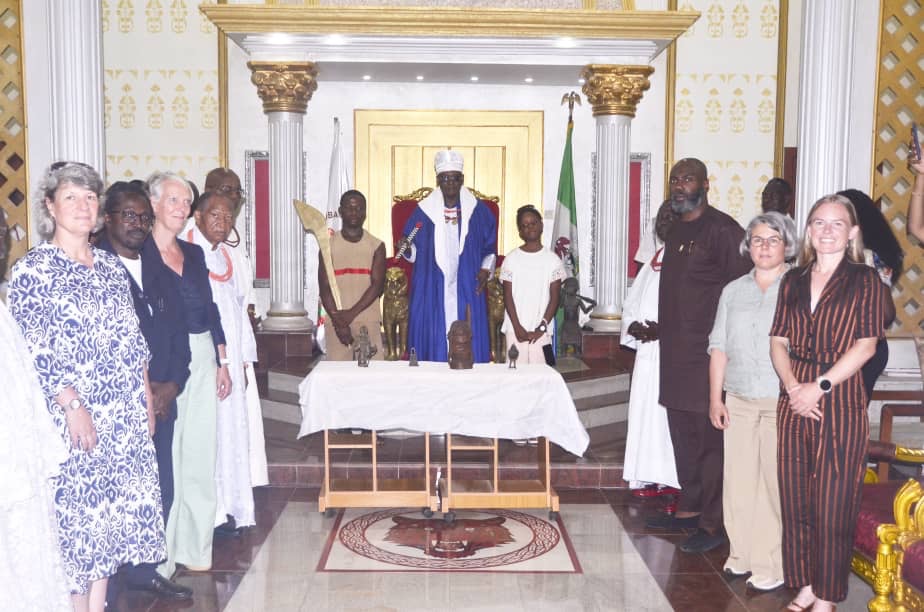
Oba Ewuare II (Benin monarch): As traditional custodian, he insisted on palace involvement, cultural protocols, and Edo traditions in the restitution process. His presence gave ceremonies profound meaning.
Governor Godwin Obaseki and Edo State Government: The state supported museum projects, infrastructure, and ceremonies for receiving the bronzes, with media reporting extensively on the new Museum of West African Art (MOWAA).
Local groups and trusts (e.g., Legacy Restoration Trust): Cultural advocates mobilized funds and public support for the artefacts’ return.
Together, these Nigerian actors demonstrated that Nigeria was fully prepared to receive, conserve, and celebrate the artefacts in ways that honor local culture.
Today, as the world awaits the formal celebration of the odyssey of Benin artefacts in October 2025, one question resonates: What does this historic restitution truly mean for the people of Benin and for Nigerians at large?