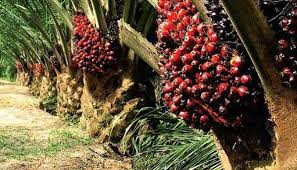
ABUJA – The Federal Government has said that Nigeria produces approximately 1.4 million metric tonnes of palm oil annually, while domestic demand exceeds 2.5 million metric tonnes.
The Minister of Agriculture and Food Security, Sen. Abubakar Kyari, disclosed this on Thursday at the National Stakeholders Meeting on the Joint Development of Nigeria’s Palm Oil Production Capacity in Abuja.
Kyari was represented by his Senior Technical Assistant, Mr Ibrahim Alkali.
He described the meeting as a strategic platform requiring clarity of purpose, alignment of interests and decisive action to reposition the palm oil sector.
The minister recalled that Nigeria was a global leader in palm oil production in the 1960s, accounting for over 40 percent of global supply.
According to him, palm oil was a major export commodity and a key driver of rural livelihoods and industrial development at the time.
He, however, noted that the country’s production capacity had declined over the years.
“Today, Nigeria produces approximately 1.4 million metric tonnes of palm oil annually, while domestic demand exceeds 2.5 million metric tonnes,” he said.
Kyari said the shortfall of more than one million metric tonnes annually has led to the expenditure of between 500 million and 600 million dollars on imports.
“What this means is that we are exporting opportunities and importing what we have the capacity to produce,” he said.
He added that Nigeria has over three million hectares of land suitable for oil palm cultivation, much of which remains underutilised.
Kyari also noted that global demand for palm oil continues to rise, with the market valued at over 70 billion dollars annually across food processing, cosmetics, pharmaceuticals and biofuels.
He stressed that Nigeria’s challenge was not lack of potential, but the scale and coordination of its response.
The minister said the Federal Government, under President Bola Tinubu, was prioritising agriculture as part of its economic diversification agenda under the Renewed Hope Agenda.
He said the ministry had taken steps to reposition the oil palm sector through the validation of the National Oil Palm Development Strategy.
Kyari called on stakeholders to work together to unlock the full potential of the sector.
Earlier, the Permanent Secretary, Ministry of Agriculture and Food Security, Dr Marcus Ogunbiyi, said the meeting was timely and necessary to transform the palm oil industry.
He said the presence of stakeholders reflected a shared commitment to reposition the sector for sustainable growth, national prosperity and global competitiveness.
Ogunbiyi was represented by Mr Abba Waziri, Director of Farm Input Support Services in the ministry.
In a presentation, the Managing Director of Mass Industrial Development and Logistics, Mr Emmanuel Anyaralu, outlined strategies for strengthening the palm oil sector through strategic partnerships.
He said the development strategy was designed to stimulate rural economies, create jobs and enhance food security.