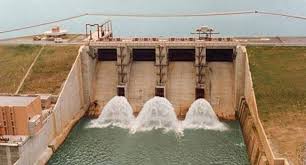
The Jattu Dam in Etsako West local government area of Edo State might have been viewed by many, as just another federal water scheme. But under the very watchful eyes of Governor Monday Okpebholo, this is one water project with a sharper meaning—one that speaks directly to the realities of access, productivity, and sustainability in our state.
At its nucleus, the dam is not merely about storing water; it is about reshaping livelihoods and anchoring a more resilient future for Edo North senatorial and even beyond. The dam is one that is strategically positioned to serve a cluster of communities that have long contended with unreliable water supply. For many residents, access to potable water is still defined by boreholes, seasonal streams, and improvised storage systems. The implications go beyond inconvenience.
Globally, water scarcity is a major hindrance to quality of life as it affects health outcomes, household spending, and the overall quality of life. In that context, it is understandable why the Jattu Dam for the governor represents a structural intervention—one capable of delivering consistent, treated water at scale to the people.
Governor Okpebholo’s emphasis on the project is a shift in both tone and intent. His administration’s project SHINE vision frames the dam as a priority within its broader push on water infrastructure. And he is aligning it with ongoing national efforts under President Bola Ahmed Tinubu’s Renewed Hope agenda to expand access to basic services.
But beyond policy alignment, the governor’s position reflects a pragmatic understanding: without water, other sectors—from health to agriculture—struggle to function efficiently. And there is also the agricultural dimension of the Dam, which is perhaps its most transformative feature. Edo North is endowed with arable land and a population deeply engaged in farming, yet productivity has remained largely rain-dependent in time.
This dependence introduces volatility, with planting cycles tied to uncertain weather patterns and yields fluctuating accordingly. By enabling irrigation across thousands of hectares, the dam has the potential to shift the locality from subsistence farming to a more stable, year-round agricultural system. Such a transition carries economic weight. Irrigation does not just increase output; it changes the nature of farming itself. It allows for multiple planting seasons, diversification of crops, and the introduction of higher-value produce.
Over time, this can stimulate agro-processing, create value chains, and attract investment into rural economies. For a state seeking to broaden its economic base, the ripple effects could be substantial. Yet, the importance of the dam is not limited to production metrics. It also intersects with employment. Large-scale irrigation schemes typically generate direct and indirect jobs—from farm labour to logistics, storage, and processing.
In an area where youth unemployment remains a concern, the project could provide a pathway to more structured economic participation. The linkage between water access and job creation is often understated, but in this case, it is central. Governor Okpebholo’s intervention also highlights a recurring challenge in Nigeria’s infrastructure landscape: the gap between construction and preservation. His concern over vandalism at water facilities underscores a reality that many projects face—assets are built, but not always protected.
Pipelines are tampered with, equipment is damaged, and investments are gradually eroded. By proposing enhanced security measures, including a Forward Operating Base in vulnerable areas, the governor is effectively acknowledging that infrastructure delivery must be paired with infrastructure protection. For him this focus on security is critical. Without it, the economic and social returns on the dam could be compromised. Water projects, by their nature, rely on interconnected systems—reservoirs, treatment plants, distribution networks. A breach at any point can disrupt the entire chain. Ensuring the integrity of these systems is therefore as important as completing them.
Funding, too, remains a decisive factor. The Jattu Dam is structured as a joint federal–state project, with Edo State government expected to contribute a counterpart share. Historically, such arrangements have been prone to delays, often stalling progress when one party falls short of its obligations. Governor Okpebholo’s assurance that the state will meet its 25 percent contribution is significant in this regard. It suggests an awareness that timely financing is not just procedural, but essential to maintaining project momentum.
The broader significance of the Jattu dam also lies in its role as a development signal. Infrastructure projects of this scale often serve as indicators of government priorities. By placing the Jattu Dam at the forefront, the Governor is sending a message about where it intends to focus its energy. It is on projects that deliver tangible, everyday benefits. In a political environment where large announcements do not always translate into visible outcomes, such clarity can shape public expectations and accountability.
There is also a vital dimension to consider. Edo North like other parts of the state have, at various times, articulated concerns about equitable distribution of development projects within the state. The successful completion of the Jattu Dam would not only address water needs but also reinforce a sense of inclusion. Development, in this sense, is not just about infrastructure; it is about perception and balance.
From a technical standpoint, dams are long-term assets. Their value accrues over decades, provided they are properly managed.
This introduces another layer of responsibility—maintenance. Beyond construction, there must be systems in place for monitoring, desilting, and operational oversight. The true test of the Jattu Dam will therefore extend beyond its commissioning to how effectively it is integrated into the state’s water management framework. For now, the project sits at a critical juncture. Progress has been made, as completion will depend on sustained coordination between the Federal Government and Edo State, as well as consistent funding and oversight. To this Governor Okpebholo is committed:100 percent!
The presence of the Minister of Water Resources and Sanitation, Joseph Terlumun Utsev in Benin City reflects an active federal interest. Ultimately, the importance of the Jattu Dam can be measured in layers. At the most immediate level, it promises water—clean, reliable, and accessible. At a broader level, it offers agricultural stability, economic opportunity, and improved living standards. And at the highest level, it represents a test of governance: the ability to move from commitment to completion.
For Governor Okpebholo, the dam is more than a project; it is a marker. It reflects his administration’s willingness to engage with complex, capital-intensive infrastructure and to see it through. In doing so, it becomes part of a larger narrative—one centred on delivery, alignment with national priorities, and a deliberate push toward Edo development that is both visible and impactful.
When completed as envisioned, the Jattu Dam will stand not just as a physical structure, but as a lasting intervention in the state’s development trajectory. Its waters will flow through farms, households, and industries, but its real significance will lie in what it enables: a more secure, productive, and balanced future for Edo State.
______________________
Dr Ebojele is the Chief Press Secretary to the Edo State Governor Senator Monday Okpebholo.