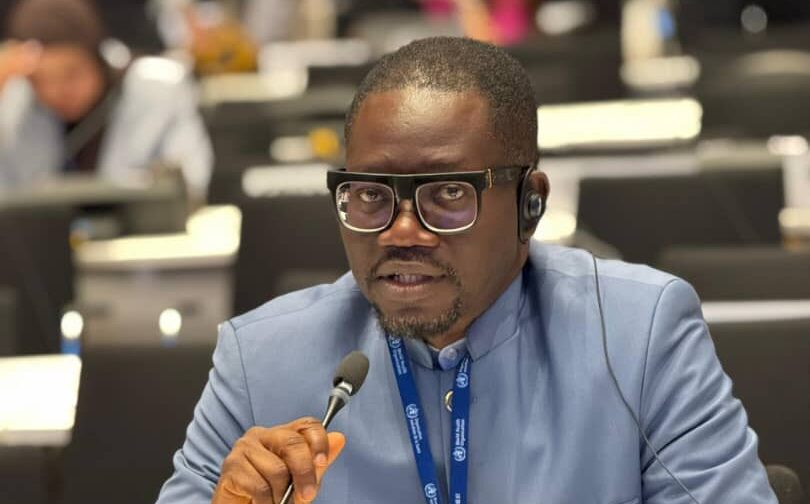
GENEVA, SWITZERLAND — Nigeria has renewed its advocacy for accelerated global action on Universal Health Coverage (UHC), stronger primary healthcare systems, and the ethical integration of Artificial Intelligence (AI) in healthcare delivery at the 79th World Health Assembly in Geneva, Switzerland.
Speaking on behalf of Nigeria at the high-level global health summit, the Edo State Commissioner for Health, Dr. Cyril Adams Oshiomhole, called for urgent and coordinated efforts to meet health-related Sustainable Development Goals (SDGs), warning that access to essential healthcare services remains beyond the reach of billions of people worldwide.
Dr. Oshiomhole said Nigeria fully aligns with the position presented by the Democratic Republic of Congo on behalf of the African region, stressing that despite years of reforms and interventions, global healthcare systems continue to face mounting pressure.
He disclosed that approximately 4.5 billion people globally still lack access to essential health services, adding that dwindling official development assistance has further deepened the challenges confronting healthcare systems, especially in developing countries.
According to him, Nigeria is championing stronger domestic healthcare financing, resilient people-centred health systems, and inclusive healthcare policies designed to guarantee equitable access to quality medical services for citizens.
The commissioner stressed the importance of sustaining national-level healthcare progress despite tightening financial pressures affecting the global health sector.
On digital health and emerging technologies, Dr. Oshiomhole described digital transformation as a major catalyst for strengthening healthcare delivery and achieving Universal Health Coverage in Nigeria.
He revealed that Nigeria has adopted a National Digital Health Strategy, implemented the Nigerian Data Protection Act, and expanded disease surveillance systems nationwide as part of efforts to modernise the country’s healthcare architecture.
Outlining Nigeria’s priorities for future global health frameworks, he advocated stronger health data systems and interoperability, ethical regulation of Artificial Intelligence, equitable access to precision medicine, increased investment in digital and AI-driven healthcare manpower, and sustainable financing for health technologies.
Dr. Oshiomhole further called for broader regional consultations in shaping global health policies to ensure they adequately reflect the realities, peculiarities, and healthcare challenges facing countries across different regions.
The World Health Assembly, the highest decision-making body of the World Health Organization (WHO), convenes health leaders and government representatives from member states to deliberate on critical global health policies, emerging health threats, and strategies for strengthening healthcare systems across the world.