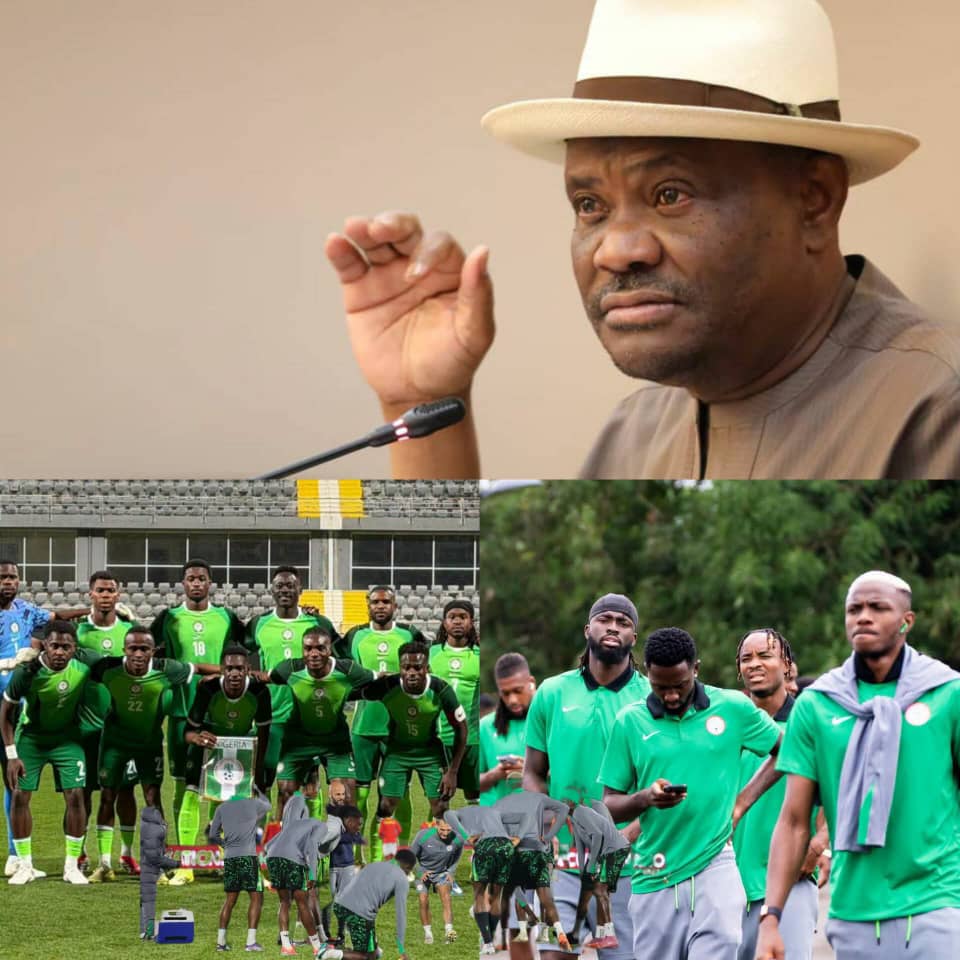
The Nigeria Football Federation elections are set for September, and the anger is louder than ever. Nigerians are still in pain over missing the 2026 World Cup — the biggest World Cup in history with 48 teams and 10 African countries represented. This absence has forced every fan, ex-international, and stakeholder to ask one painful question: who is to be held accountable?
Elections without benchmarks are just ceremonies. Corporations have KPIs. Governments have manifesto scorecards. Football federations must have accountability thresholds. Without them, failure becomes policy and excuses become the manifesto.
For a board that controls the emotions of over 250 million Nigerians worldwide, there must be professionalism. It cannot be business as usual or a group of men with half-baked credentials. Football is a billion-dollar industry with massive job opportunities for our youths. It should not be administered by passion without substance.
If, as an administrator, you have failed to meet a basic benchmark, we must enter the next election with a clear plan. If you want to lead the NFF for four years, the minimum should not be negotiable. These are not “aspirations”. They are the baseline for any serious football nation. In my view, these five benchmarks should determine the accountability threshold:
*Benchmark 1: World Cup qualification for Men and Women.* The World Cup is the global shop window. It is where talent is advertised and sold; where nations are respected, and where sponsorship and development money flows. Missing it is not a “bad cycle”. It is systemic collapse. Failure to qualify is a recipe for resignation. This must be stated clearly when contestants present their manifestos.
*Benchmark 2: At least one international trophy.* For Nigeria, that means AFCON for men, WAFCON for women. The current board reached the AFCON final in 2023 and lost. Close is not a trophy. Silver medals don’t build legacies. The board promised dominance. They delivered heartbreak.
WAFCON has been equally disappointing. The Super Falcons, Africa’s most successful women’s team, have been left underprepared and undervalued. A trophy in 4 years should be the floor, not the ceiling. That’s Nigeria’s standard. We have WAFCON next month, which also serves as qualification for the World Cup in Brazil next year. How prepared is the team?
*Benchmark 3: Consistent youth tournament qualifications. The U-17, U-20, U-23 are the pipelines. These are the platforms where the development of Osimhen, Okocha, Mikel Obi and Kanu were made. Under this board, age-grade football has been chaos: FIFA bans for age fraud, disqualifications, poor funding, and zero transition and continuity. Qualification has become a problem and we can no longer qualify for the U-17 World Cup consistently.
You cannot claim to build for the future when you keep destroying the future. Youth teams are not “projects”. They are the factories. The factory is shut, and the conveyor belt is empty.
*Benchmark 4: Continental club success. A CAF Champions League or Confederation Cup finalist every cycle proves your domestic league is alive. Our NPFL clubs have been early exits for years. No structure, no investment, no results. We keep hearing about billions coming into the league, but how professionally are the clubs run? Can they measure up with the giants of South and North Africa?
*Benchmark 5: International exposure for local coaches and referees. A federation must export and import knowledge, not just players. Our coaches and referees should be leading CAF and FIFA courses. Under this board, exposure has been minimal, political, and reserved for a few.
Measure this outgoing board with that 5-point matrix and the verdict is clear. They failed. World Cup: missed. Trophy: none in four years. Youth teams: banned and disqualified. Club football: invisible. Coaches and referees: sidelined.
Results collapsed. Process collapsed. Yet the response is always the same: “We tried”, “It was close”, “Give us four more years”. In any other profession, 0/5 on KPIs means exit. In Nigerian football, it means a re-election campaign.
But September’s vote is not just about personalities. Bad boards are a symptom. The disease is the NFF Statute. The rulebook that governs elections is designed to protect incumbents, not performance and patriotism.
Elections are decided by state FA chairmen. A small, compromised pool of voters most of whom depend on the board for grants, FIFA/FIFA Forward trips, and survival. You cannot expect independence from people whose jobs depend on the incumbent.
When the electorate is handpicked, the outcome is pre-determined. You don’t get professional administrators. You get survivalist;men who know how to win votes, not how to run football development.
That’s why we keep recycling the same faces every September. New names, same structure. New promises, same statute. The faces change but the system protects them. The system is the real opponent.
A small group of men should not hijack the soul of our football. They will keep calling failure “learning” and ask Nigerians for four more years to learn more without accountability.
It hasn’t brought air. It hasn’t brought growth. It hasn’t brought accountability. It has brought contracts, allowances, and press releases. Nigerian football deserves more than photo ops and “retreats”.
So, yes, we can say vote them out in September. But voting alone won’t work if the rules remain the same. Vote them out, but first vote the statute out. Amend it. Broaden the electoral college before ballots are cast.
Ex-internationals who bled for the jersey must vote. NPFL clubs that fund the league must vote. Coaches who train the players must vote. Referees who protect the game must vote. Women’s football must vote. Until the gate opens, fresh heads cannot get in.
A campaign to move Nigerian football forward must start with structural reform in September, then personnel change. Accountability is not an insult. Benchmarks are not too much to ask. The NFF board has failed the test. Nigeria’s interest is bigger than any board’s second term. The party for the bourgeoisie must end. Football belongs to the people.