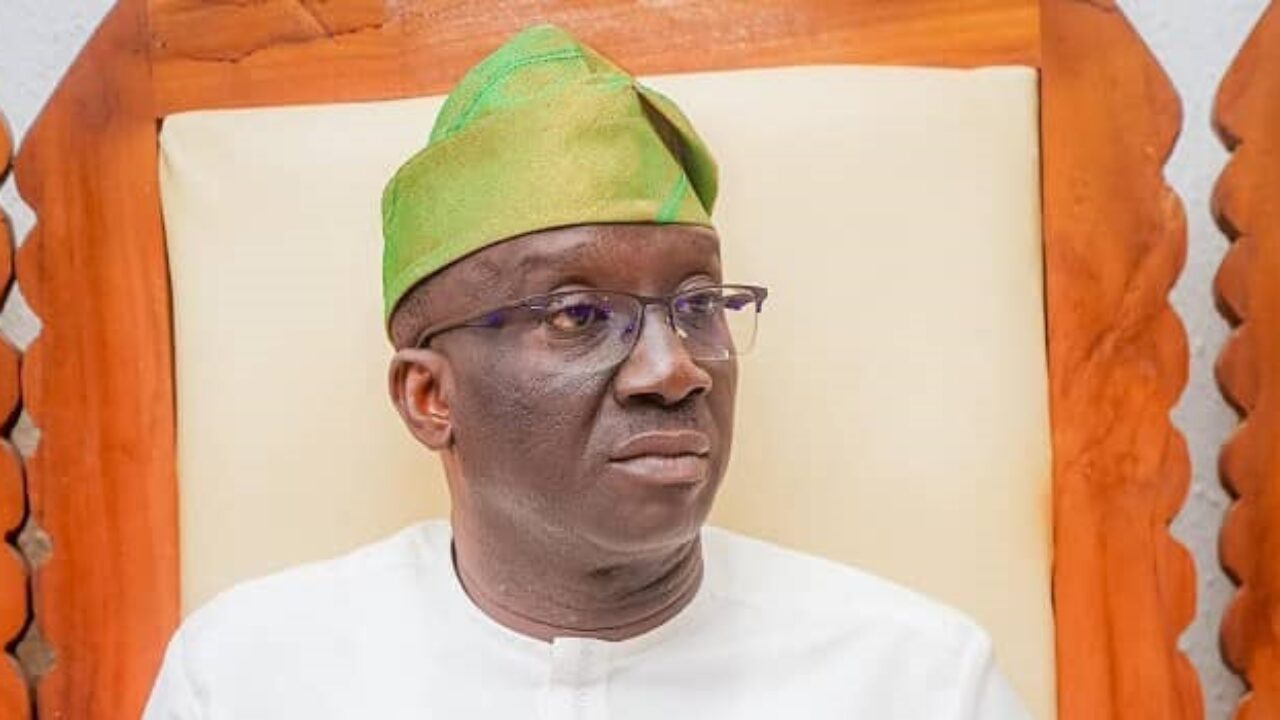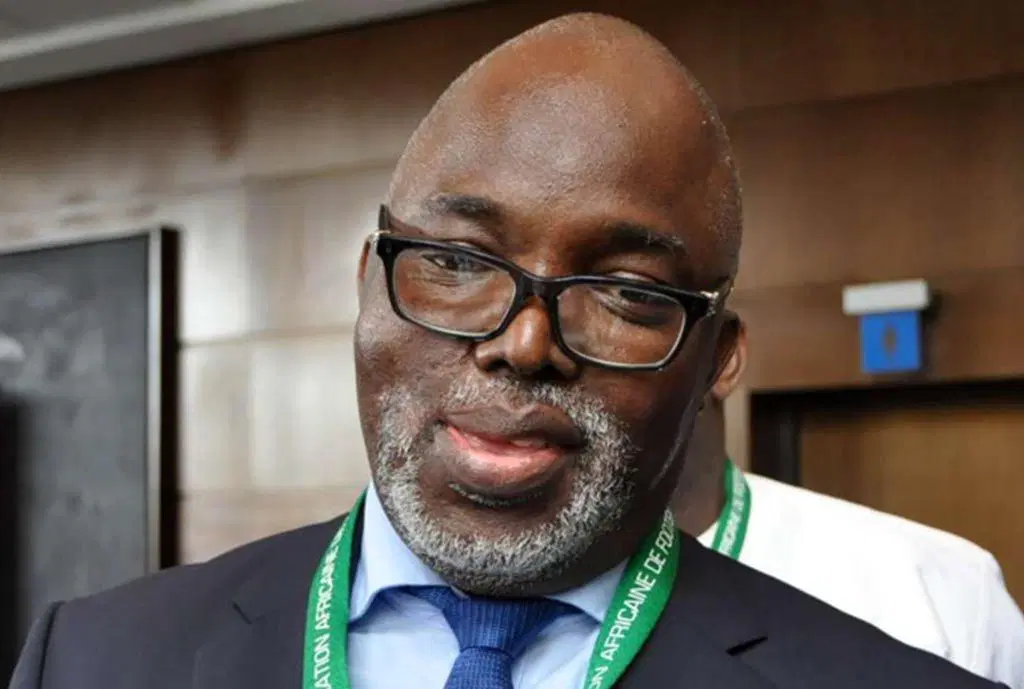
As Nigerians watch the ongoing FIFA World Cup in hurt following the absence of Nigeria’s Super Eagles, a video has sparked discussion from one of the men who should be quietly easing himself out of the leadership system of Nigerian football. He is the former NFF president Amaju Melvin Pinnick.
Amaju Pinnick, speaking recently on a TV station on the affairs of Nigeria’s football governing body, is quoted to have said: “we work together, I work with them, and I don’t have any regret.” He added: “I can call the players, I talk to them. I don’t wait to me, I’m the life president of the Nigerian Football Federation. So, I can also speak. I’m a very critical stakeholder.”
That “life president” declaration is less funny than it is revealing. A title like that belongs in a monarchy, not in a modern football federation that should run on accountability and term limits. Even if he is allowed access to the federation’s inner workings, he should be out of our notice.
Words matter when you’ve led an institution for 8 years. Calling yourself “life president” sounds like reality to him, but it reads like mocking our collective intelligence and sensibility as Nigerians who have watched NFF politics for decades. No one doubts his passion and love for Nigerian football, but he remains a sad part of our recent football development history.
Passion for football is not the same as competence in administration. Love for the game is common. The boy who treks two kilometres just to pay 100 naira to watch a local league game has that passion in equal measure, if not more. He knows all Nigerian players overseas and at home.
The difference is responsibility. Millions of fans carry the passion. Only a few are entrusted with structures, budgets, and decisions that determine whether that passion translates to results on the pitch. If you cannot provide the leadership that provides results then you can keep your passion at home as an administrator.
Before Amaju Pinnick arrived in 2014, Nigerian football already had problems: inconsistent planning, funding gaps, and poor grassroots development. He inherited those challenges. But leadership is judged by what changes during your watch. How did our youth teams fare? What was the state of the league? Did any referee get into a continental tournament? How many mini stadiums were built for the development of the game? These are some of the questions he needs to provide answers.
After eight years at the helm, the structure he handed over to Ibrahim Gusau in 2022 looked remarkably similar to the one he met. Same committees, same bottlenecks, same reliance on last-minute interventions.
The most painful marker came under his tenure: Nigeria failed to qualify for the 2022 World Cup after three consecutive appearances from 2010. The team now faces the same fate in 2026. For a nation of 200+ million people and a deep football culture, missing Qatar was a national disappointment and now missing out again in the North America 2026, is an administrative disaster.
That failure cannot be blamed on one man alone. Players miss chances, coaches make errors, opponents improve. But the administrator sets the environment. And the environment under his eight years did not produce a World Cup ticket.
Saying “I don’t have any regret” may be honest, but honesty without reflection is not leadership. Every tenure should end with lessons, not just self-praise. This is what happens when there is no accountability. The FIFA grant running into millions of dollars which Amaju Pinnick used in building a non-existing mini stadium in Ogborodudu would have been refunded if Nigeria had accountability.
“I can call the players, I talk to them. I don’t wait.” Direct access is good. But calling players cannot replace building academies, enforcing club licensing, or stabilizing the domestic league.
The federation is bigger than any individual. No one should position themselves as indispensable. Football survived before Amaju Pinnick, and it must survive after him.
Equating personal passion to administrative competence is a dangerous shortcut. Passion does not audit accounts. Passion does not negotiate broadcast deals. Passion does not design youth development pathways.
The boy paying 100 naira to watch a match in Jos or Benin shows up every week without cameras or press releases. His loyalty deserves more humility from those who once held power, especially when they claim titles like “life president.”
Leadership in football administration requires sobriety. The moment you leave office, the honorable path is to let new leaders work, offer private counsel if asked, and allow institutions to breathe.
Chasing microphones and headlines after handing over power blurs the line between stakeholder and shadow administrator. It confuses the public about who is actually in charge currently.
Ibrahim Gusau inherited the same structure in 2022. If the structure was flawed, that is part of the legacy conversation. If it was sound, then results should have been better. Either way, self-declaration as “life president” does not help fix it.
Nigeria’s football problems are structural, not personal. Solutions will come from reforms, data, investment in coaches, and protection of the domestic league, not from titles claimed in interviews.
However,Amaju Pinnick did some good things during his time: improved NFF visibility, better sponsorship conversations, and stronger CAF relations. Those should be part of his record. But they do not cancel the misses, and they do not justify crowning oneself “life president.”
So let the reminder be simple: the “life president” tag is a joke that landed on the wrong milieu. Remain a critical stakeholder, yes, but do it from behind the scenes. Nigeria’s football deserves sober builders, not loud echoes of the past.